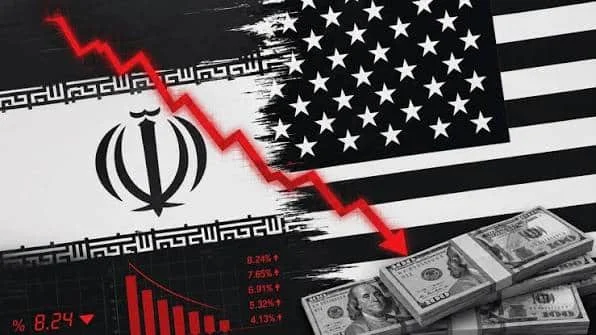




As high-level diplomatic delegations convene in Switzerland to formalize a memorandum of understanding (MoU) establishing a 60-day ceasefire, global markets are beginning to assess the massive financial windfalls generated during the four-month conflict between the United States, Israel, and Iran. While the military campaign severely disrupted global supply chains and sent energy prices soaring, corporate financial filings for the first quarter of 2026 reveal that a select group of multinational sectors captured historic, record-breaking profits driven entirely by wartime volatility.
From the end of February—when the first US-Israel strikes were launched—through the height of the escalation in April, global markets faced severe operational friction. Yet, for energy conglomerates, defense contractors, maritime insurers, and Wall Street investment banks, the geopolitical crisis served as an unprecedented revenue accelerator.
Energy Giants: Bypassing Hormuz and Capturing the Crude Windfall
The primary driver of wartime wealth generation was the energy sector. Prior to the outbreak of hostilities, approximately 20% of the world’s petroleum and liquefied natural gas (LNG) transited the narrow Strait of Hormuz. Initial strikes and subsequent shipping disruptions sent Brent crude spiking to a four-year high of $126 per barrel, before retracting to its current pre-war baseline of roughly $72 per barrel following the Switzerland diplomatic breakthroughs. This massive price spread generated an immediate multi-billion-dollar cash flow windfall for producers insulated from the immediate combat zone.
An independent analysis by Rystad Energy confirmed that Saudi Aramco emerged as the largest financial beneficiary of the conflict. By utilizing its 1,200km East-West pipeline terminating at the Red Sea, Aramco completely bypassed the volatile Strait of Hormuz, maintaining its export capacity of 7 million barrels per day while selling its crude at peak global prices.
Similarly, France’s TotalEnergies mitigated a 15% reduction in its regional production across Qatar, Iraq, and the UAE by routing 210,000 barrels per day of onshore UAE crude through the Fujairah Terminal. Even companies sustaining physical infrastructure damage benefited from the market disruption; Shell’s co-owned Pearl GTL plant in Qatar suffered extensive damage to its Train 2 processing unit following regional strikes, requiring a year of repairs, yet the group still reported a net profit jump to $6.9 billion due to soaring global spot prices.
Defense Contractors: Munitions Depletion and the $700 Billion Pentagon Pipeline
Within days of the initial strikes in late February, the chief executives of the world’s leading aerospace and defense firms—including Lockheed Martin, RTX, Boeing, Northrop Grumman, BAE Systems, L3Harris, and Honeywell—convened at the White House to coordinate an emergency ramp-up in manufacturing. The conflict rapidly depleted active US munitions stockpiles, transforming corporate backlogs into multi-year revenue guarantees.
This industrial mobilization coincided with a massive $500 billion increase in US baseline defense funding requested by Secretary of Defense Pete Hegseth, followed by an emergency $200 billion supplemental request to Congress in March. Corporate balance sheets immediately reflected this capital injection:
-
Northrop Grumman reported an all-time record backlog of $95.6 billion, driven by classified weapon programs and accelerated F-35 lightning components.
-
Boeing posted a 14% revenue surge to $22.2 billion for the quarter, significantly narrowing its net losses to just $7 million.
-
RTX and L3Harris both raised their full-year corporate guidance, citing an insatiable global demand for air defense systems, precision-guided munitions, and counter-drone technologies.
Maritime Shipping and Insurance: The 500% Spike in War-Risk Premiums
By effectively removing nearly 7% of the global tanker fleet from routine circulation due to rerouting and security bottlenecks, the conflict forced maritime freight rates to historic highs. On the benchmark Middle East Gulf to East Asia shipping lane, freight pricing skyrocketed from a pre-war baseline of 100 Worldscale points to an unprecedented 500 points. Specialist very large crude carrier (VLCC) operators, such as Frontline and DHT Holdings, immediately capitalized on this disruption, with Frontline capturing over $536 million in quarterly revenue and DHT locking in charter rates exceeding $100,000 per day per vessel.
Concurrently, the marine insurance sector experienced an extraordinary surge in profitability. War-risk premiums for hulls transiting the Persian Gulf jumped fivefold almost overnight, climbing from a baseline of 0.15% to 1.5%, and occasionally touching 10% of total vessel value.
Leading maritime underwriters, including Gard, Skuld, and NorthStandard, were able to instantaneously reprice policy portfolios. Under this emergency pricing structure, a single transit for a modern $100 million crude tanker commanded up to $1.5 million in mandatory insurance coverage. Financial analysts note that because civilian vessel losses remained relatively low during the active phase of the fighting, these elevated premiums translated almost entirely into pure underwriting profit.
Wall Street Trading Desks and the Polymarket “Insider Trading” Crisis
On Wall Street, extreme price fluctuations across commodities, sovereign bonds, and foreign exchange lines generated a massive surge in institutional trading volumes. The six largest US banking institutions—JPMorgan Chase, Bank of America, Citigroup, Morgan Stanley, Goldman Sachs, and Wells Fargo—leveraged their Fixed Income, Currencies, and Commodities (FICC) trading desks to generate a combined $48 billion in net income during the first three months of 2026. Market leader JPMorgan Chase led the pack, reporting a 13% profit expansion to $16.5 billion.
However, the most controversial financial windfall emerged within decentralized prediction markets. Platforms like Polymarket and Kalshi witnessed unprecedented speculative volumes that are now the subject of federal scrutiny.
Critical Analysis: The Structural Asymmetry of Geopolitical Capital
The financial data emerging from the four-month US-Iran conflict highlights a stark, systemic reality of modern global economics: geopolitical instability does not destroy capital; it redistributes it with extreme velocity. The corporate windfalls recorded in the first quarter of 2026 demonstrate how the corporate and financial architectures of developed markets are engineered to absorb, price, and monetize structural shocks. While small-scale commercial entities and developing economies faced devastating inflation and severe supply chain blockages, multinational firms utilized geographic flexibility, advanced financial derivatives, and state-backed procurement pipelines to turn a major international crisis into an incredibly lucrative business cycle.
The energy sector’s performance provides a clear case study in this structural asymmetry. Companies like Saudi Aramco and TotalEnergies succeeded because they possessed the physical infrastructure necessary to bypass the Strait of Hormuz entirely. This effectively allowed them to manipulate supply routes while selling their products at prices driven up by the panic affecting less adaptable competitors.
In the defense sector, the relationship between state policy and corporate profit was even more direct. The rapid consumption of munitions in the Middle East instantly transformed into long-term, taxpayer-funded revenue streams for the defense industry. This highlights a highly effective business model where private defense contractors face virtually zero market risk, as their primary customer—the state—is legally and strategically obligated to replenish its stockpiles at any cost.
The most concerning aspect of this wartime economy, however, is the rapid growth of prediction markets like Polymarket as unregulated avenues for insider trading. The Yale University forensic analysis provides clear evidence that the line between confidential state diplomacy and private financial speculation has been blurred.
When anonymous accounts can consistently front-run official ceasefire announcements to capture hundreds of millions of dollars in profits, prediction markets cease to function as simple tools for tracking public sentiment. Instead, they transform into anonymous clearinghouses for leaked state intelligence. This represents a dangerous new development in wartime profiteering, where access to classified diplomatic timelines can be instantly converted into digital cash, completely hidden from traditional regulatory oversight.
Conclusion
As negotiators in Switzerland iron out the technical details of the 60-day ceasefire, the temporary drop in crude prices back to $72 per barrel suggests that the period of extreme market volatility may be drawing to a close. However, the financial lessons of early 2026 will leave a lasting impression on corporate strategy.
The defense backlogs built over the last four months guarantee record production runs for years to come, maritime insurers have successfully established a permanently higher risk premium for the Gulf region, and financial institutions have fine-tuned their trading desks to extract maximum profit from regional instability. Ultimately, the conflict confirms that while a diplomatic resolution is essential for maintaining global trade and consumer stability, the financial machinery of global capital remains highly incentivized to capitalize on geopolitical chaos.