

The fragile diplomatic architecture established under the hard-fought Islamabad Memorandum of Understanding (MoU) faces an existential crisis. Today, senior Iranian leadership issued a severe warning to Washington and Tel Aviv while simultaneously confirming a fresh cycle of kinetic military engagements along Iran’s southern coast and the Lebanese border.
The sharp escalation comes as high-level diplomatic teams are actively convening in Switzerland to negotiate a permanent extension to the 60-day ceasefire. The current round of talks aims to establish a sustainable framework for Iran’s nuclear program, comprehensive sanctions relief, and a joint security layout for the highly volatile Strait of Hormuz.
Leader’s advisor warns US, Israel of high casualties in any future aggression against Iran https://t.co/MqiQcme49i
— Press TV 🔻 (@PressTV) June 27, 2026
Tehran Threatens Asymmetric Consequences and Reaffirms Red Lines
Speaking directly to the American public via US-based NewsNation television, Mohsen Rezaei—a senior adviser to Iran’s Supreme Leader Mojtaba Khamenei and former commander-in-chief of the Islamic Revolution Guards Corps (IRGC)—declared that Iran has integrated new, undisclosed military capabilities that will fundamentally alter the nature of any future confrontation.
“If the United States or Israel makes even the slightest threat against Iran, the next war will not resemble the previous one,” Rezaei warned. He cautioned US President Donald Trump directly, stating that any new military miscalculation would result in “extensive human losses” for the American military apparatus.
Rezaei accused the Trump administration of using the Switzerland talks as a stalling tactic to manage its domestic economic challenges rather than pursuing an authentic path toward peace. He outlined Tehran’s non-negotiable conditions for a sustainable treaty:
-
International Legal Recognition: Washington must acknowledge Iran’s legitimate rights under the Nuclear Non-Proliferation Treaty (NPT) for a peaceful nuclear program.
-
Economic Indemnity: The immediate, verifiable lifting of all unilateral US economic sanctions and the release of billions in Iranian state assets frozen in foreign banks.
-
Strait of Hormuz Sovereignty: Complete recognition of the strategic waterway as a purely regional matter under the exclusive management of Iran and Oman. “The Strait of Hormuz has nothing to do with the US,” Rezaei added.
BREAKING: Iran’s Ministry of Foreign Affairs has condemned the US strikes on several locations along Iran’s southern coastline, accusing Washington of violating the UN Charter and the Memorandum of Understanding on ending the war.
🔴 LIVE updates: https://t.co/6kiKmb23ji pic.twitter.com/F3mLREqNEi
— Al Jazeera English (@AJEnglish) June 27, 2026
Coastal Firefights: US Coastal Strikes Met with Iranian Retaliation
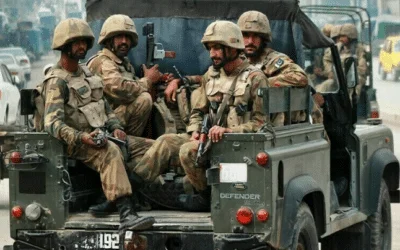
The diplomatic gridlock in Europe was mirrors by heavy kinetic activity in the Persian Gulf. On Saturday, the Iranian Foreign Ministry formally condemned a series of targeted US military strikes launched against multiple installations along Iran’s southern coastline, branding the actions a blatant violation of both the UN Charter and the newly signed peace pact.
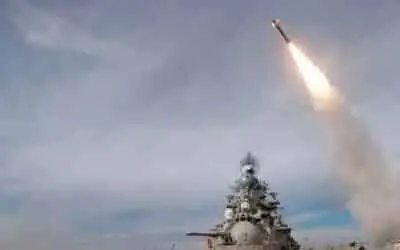
The ministry confirmed that while the US strikes targeted coastal surveillance facilities, Iran’s armed forces immediately exercised their legitimate right to self-defense by launching coordinated retaliatory strikes against US-linked naval and logistical targets across the sector.
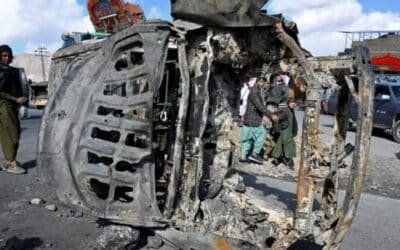
Concurrently, regional media channels, including Mehr and Al Jazeera, reported explosions inside the premises of the strategic Sirik port in eastern Hormozgan. The strikes followed an earlier incident where a commercial cargo vessel was struck by an Iranian drone. The head of ports in eastern Hormozgan later issued a statement confirming that despite the blasts, Sirik port suffered no permanent structural damage and remained fully operational.
Regional Shifts: The Franco-American Framework and Lebanon’s Sovereignty
As the conflict threatens to re-ignite, Iranian Foreign Minister Abbas Araghchi held an emergency telephone consultation with his United Arab Emirates counterpart, Abdullah bin Zayed Al Nahyan, to review the rapidly deteriorating security landscape. The Emirati diplomat stressed the absolute necessity of maintaining open diplomatic channels and utilizing constructive dialogue to prevent a total collapse of regional stability.
Critical Analysis: Strategic Delays, Drone Warfare, and the Beirut Decoupling
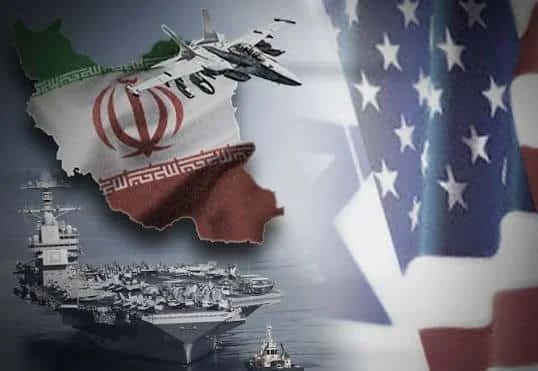
The overlapping military actions and diplomatic statements of June 2026 highlight a dangerous reality: the Islamabad MoU is functioning less as a definitive peace treaty and more as a highly fragile pause in a broader, regional war. The core of the problem lies in an asymmetrical approach to negotiation. While Iran enters diplomatic talks expecting immediate, structural concessions on banking access and sovereign maritime rights, the Trump administration appears to be employing a policy of integrated deterrence—combining limited coastal strikes with slow-moving diplomacy to contain Iran’s regional influence without offering major sanctions relief.
The military engagements along Iran’s southern coast illustrate the changing face of asymmetric naval warfare. The drone strike on a commercial cargo vessel and the subsequent US strikes on Iranian coastal surveillance infrastructure show that control over the Strait of Hormuz is no longer just about conventional naval tonnage. It is defined by drone networks, fast-attack capabilities, and decentralized coastal defenses. By maintaining its capacity to strike shipping lines, Tehran is reminding Western markets that a collapse of the Switzerland negotiations will immediately trigger severe shocks in the global energy trade, driving Brent crude back toward the $126 threshold.
However, the most significant geopolitical shift may be occurring outside Iran’s borders. The separate framework agreement signed between Israel and Lebanon represents a serious blow to Tehran’s regional deterrence strategy. For decades, Iran used Lebanon as a forward base through Hezbollah to deter direct strikes on its mainland.
The political statements from figures like Ashraf Rifi in Beirut reveal that Lebanon’s political establishment is seizing this moment of Iranian economic vulnerability to decouple itself from Tehran’s influence. If the Lebanese state successfully reasserts its monopoly on military decisions and neutralizes Hezbollah’s independence, Iran will lose its most vital regional proxy. This reality explains why Mohsen Rezaei is adopting an aggressive rhetorical posture on American television: as its regional proxies face immense political pressure abroad, Tehran must overcompensate by projecting absolute military readiness at home.
Conclusion
The current escalation along the southern coastline serves as a stark reminder that diplomacy cannot succeed in a vacuum of operational trust. The Islamabad MoU provided a valuable framework to halt a full-scale war, but it cannot survive continuous violations on the ground.
If the negotiators in Switzerland fail to bridge the gap between Washington’s demands for regional containment and Tehran’s insistence on economic normalization, the current cycle of retaliatory strikes will likely spiral out of control. This outcome would render the 60-day ceasefire obsolete and push both nations into a destructive, high-casualty conflict that neither side can afford.