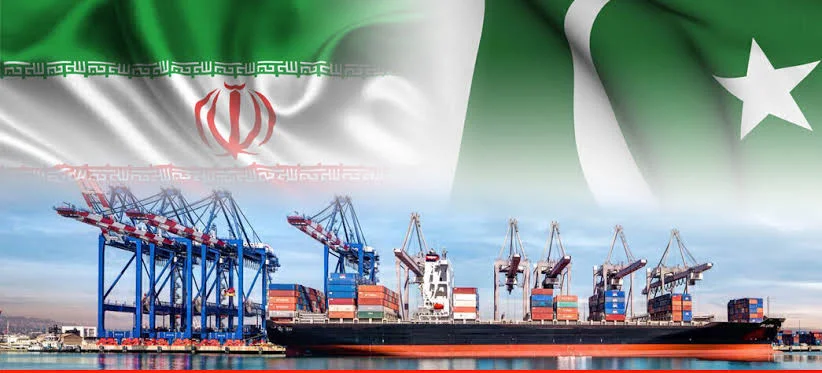




The prospect of a temporary easing of United States sanctions on Tehran has injected fresh momentum into discussions regarding the normalization of economic ties between Pakistan and Iran. With both nations previously articulating a long-term ambition to scale bilateral trade to $10 billion, the current geopolitical window offers a significant opportunity to restructure regional commerce. This potential opening comes after more than a decade of stringent international financial and banking restrictions that severely dismantled what was once a highly integrated trade relationship.
Historical records highlight the extent of this economic contraction. In fiscal year 2010, formal bilateral trade between Islamabad and Tehran crossed $1.2 billion. However, as international compliance mandates tightened, formal channels evaporated, leaving cross-border economic activity heavily reliant on fragmented, informal networks. A comprehensive analysis by Topline Securities suggests that a structured revival is entirely feasible if supported by deep state-level institutional engagement and the accelerated development of border Special Economic Zones (SEZs). Yet, senior market analysts caution that turning this diplomatic vision into a commercial reality will require overcoming deeply entrenched regulatory, structural, and logistical barriers.
Transport ministers agree to revive Joint Transport Committee, remove logistical hurdles and strengthen cross-border links amid growing economic cooperation between the neighbouring states.
Read more at:https://t.co/mBPsqtNJWU pic.twitter.com/nbxfPqCv0l— Profit (@Profitpk) June 25, 2026
Strategic Trade Asymmetry and Immediate Growth Verticals
From an export perspective, Pakistan stands well-positioned to capitalize on a normalized Iranian market. Iranian domestic demand aligns closely with sectors where Pakistani exporters possess a distinct competitive advantage and substantial surplus capacity. These include agricultural bulk goods like rice, maize, fruits, and vegetables, alongside manufactured commodities such as textiles, pharmaceuticals, and surgical instruments. Prior to the enforcement of systemic sanctions, these goods formed the core of Pakistan’s Western export footprint, while imports from Iran primarily consisted of industrial chemicals, plastics, petroleum products, iron, and steel.
However, financial and energy sector experts emphasize that a sudden surge to the $10 billion target is highly improbable. Fawad Basir, Head of Research at KTrade, notes that expanding formal trade volumes will be a gradual process. The immediate challenge for both governments lies not in creating new demand, but in formalizing and regulating existing illicit smuggling routes, particularly those driving the unauthorized flow of Iranian petrol and diesel into Balochistan and mainland Pakistan.
While the food and agricultural trade is expected to see an immediate uptick due to more flexible regulatory oversight, the true value driver of this bilateral relationship will inevitably be energy. Sourcing discounted Iranian energy could provide immediate relief to Pakistan’s heavy import bill, which saw nearly $17 billion spent on global petroleum and fuel imports in 2025 alone. Consequently, analysts argue that while the $10 billion long-term target serves as a useful diplomatic goal, a more realistic, intermediate objective for the next 24 to 36 months hovers around $2 billion. Once the core operational, legal, and financial clearing modalities are verified, trade can securely expand into high-value industrial sectors.
The Barter Conundrum: Lessons from Failed Export Contracts
The absence of standardized banking channels remains a major bottleneck, forcing traders into highly complicated, non-standard arrangements that introduce extreme commercial risk. The mechanics of these friction points were illustrated by Transtrade Global CEO Hassan Ahmed, who detailed how a multi-million-euro rice export contract with Iran’s state-backed Government Trading Corporation (GTC) ultimately collapsed under the weight of regulatory bureaucracy.
Because Iran remains largely isolated from international banking communication networks like SWIFT, state contracts are often drafted exclusively in Persian, presenting an initial legal hurdle for international traders. In this specific case, an export transaction valued at 18.675 million euros was structurally tied to a complex, multi-layered barter framework. Under the proposed terms, payments for the Pakistani rice exports were not to be settled in hard currency; instead, they were to be offset against electricity imported from Iran. This arrangement required continuous financial synchronization between Iran’s state power utility, TAVANIR, and Pakistan’s Central Power Purchasing Agency-Guaranteed (CPPA-G).
This inter-agency dependency transformed a standard commercial transaction into a highly bureaucratic process. Furthermore, the contract included rigid conditions rarely seen in conventional international trade agreements. Most notably, the terms required multiple layers of quality inspections, culminating in a mandatory final clearance by an Iranian regulatory agency at the port of Bandar Abbas.
This condition exposed Pakistani exporters to asymmetric financial risks. Because the final inspection occurred only after the cargo had physically left Pakistani waters and arrived at an Iranian port, any arbitrary rejection by inspectors would leave the exporter completely exposed to catastrophic freight and storage losses with virtually no legal recourse. The failure of the state to negotiate the removal of such high-risk clauses highlights the urgent need for a more robust, state-backed trade diplomacy framework to protect private sector interests.
Refining Dynamics and Technological Barriers to Heavy Crude Processing
The prospective lifting of sanctions has also revived interest in sourcing discounted Iranian crude oil, a strategy that could yield substantial macroeconomic benefits. Historical data from 2009 to 2012 shows that Pakistan consistently imported Iranian crude at a discounted realized price compared to standard market rates from the United Arab Emirates and Saudi Arabia. Financial models indicate that if Pakistan were to source even 10% to 20% of its total national petroleum requirements from Iran, the combined price discount and freight savings would generate a direct import cost reduction of $170 million to $340 million annually.
Yet, translating these theoretical savings into actual refinery throughput introduces significant technical and commercial challenges for Pakistan’s domestic refining sector. While entities like Pakistan Refinery Limited (PRL) historically processed Iranian crude under long-term contracts with the National Iranian Oil Company (NIOC), domestic processing operations have shifted over the last 16 years. To maximize margins, most local refineries modified their configurations to move away from heavy, sour crude grades toward light, sweet crude recipes.
A senior downstream energy expert and former refinery chief executive explained that while Pakistani plants are technically capable of processing Iranian light crude, the financial viability is severely undermined by the resulting product yield. Processing heavy or light Iranian crudes under basic refinery configurations produces an exceptionally high volume of Furnace Oil (FO). This creates a commercial dead-end in the current domestic market, as Pakistan’s power sector has almost entirely phased out furnace oil in favor of liquefied natural gas (LNG), coal, and hydro-generation. Without a domestic market or a viable export channel for low-value furnace oil, refining un-discounted Iranian crude becomes economically unviable.
This situation contrasts sharply with the refining strategy seen in India. Indian downstream companies operate highly sophisticated, deep-conversion refineries equipped with advanced hydrocrackers, hydrocokers, and residue fluid catalytic cracking units (RFCCUs). This advanced industrial infrastructure gives Indian refiners the technical flexibility to process cheap, heavy crude grades and efficiently convert the residual heavy fuel oil into high-value, Euro VI-compliant diesel and petrol.
Apart from the Pak-Arab Refinery Limited (PARCO), which operates a mild hydrocracker, Pakistan’s refining sector lacks the deep-conversion assets needed to make heavy crude processing profitable. This limitation has left local refiners highly vulnerable to shifting fuel demands. For example, local refineries currently meet 80% of domestic high-speed diesel (HSD) demand, but the sector is facing intense demand destruction. National diesel sales for May fell to 455,000 tonnes—a sharp 32% decline year-on-year and a 17% drop month-on-month—leading to dangerously high domestic inventories despite maximum refinery throughput.
To address these structural gaps, PRL is actively advancing its Refinery Expansion and Upgrade Project (REUP). According to recent corporate filings, the project is designed to double PRL’s processing capacity from 50,000 barrels per day to 100,000 barrels per day. More importantly, the upgrade aims to completely eliminate high-sulphur furnace oil from its production cycle, shifting the yield entirely toward cleaner, high-value Euro V petrol and diesel. However, the successful execution of this capital-intensive project remains contingent on ongoing negotiations with the federal government regarding brownfield refinery policy amendments and the long-term tax status of petroleum products.
Infrastructure Realities: Cross-Border SEZs and the Gas Pipeline
To establish a more resilient, documented trade infrastructure, Pakistan’s Board of Investment has focused on operationalizing five key cross-border trading hubs designed to facilitate formal commerce at preferential customs rates:
-
Taftan-Minjaveh
-
Ladgasht-Jalaq
-
Parome-Kuhak
-
Mand-Peshin
-
Santsar-Nobandan
Recent diplomatic engagements between the Ministry for Investment and the Iranian ambassadorship have focused heavily on fast-tracking the joint Rimdan-Gabd border Special Economic Zone (SEZ). While Iran has finalized the geographic and legal demarcation of the zone on its side, Pakistan’s side requires cross-provincial alignment, which is currently being routed through the Special Investment Facilitation Council (SIFC) to resolve local coordination bottlenecks. Operationalizing these SEZs is crucial for restoring cross-border freight traffic, which recently saw a sharp decline from its historical average of 700 to 800 trucks per day.
In contrast, the long-delayed Iran-Pakistan (IP) gas pipeline faces a much more difficult path forward. Designed to transport up to 750 million cubic feet of natural gas per day to alleviate Pakistan’s chronic industrial energy deficit, the project remains stalled. Energy analysts note that a simple easing of geopolitical sanctions will not be enough to revive the pipeline. Given the significant shift in global energy dynamics over the last decade, any future progress will require a complete renegotiation of original pricing formulas and contractual indemnity terms to ensure the project is commercially viable for Pakistan’s fiscal framework.
Conclusion
The potential opening of trade channels with Iran offers a valuable opportunity for Pakistan to diversify its export markets and lower its national energy import bill. However, achieving the ambitious $10 billion trade target will require much more than high-level diplomatic protocols or memoranda of understanding.
To unlock the true potential of this regional corridor, the state must take a proactive role in establishing reliable barter clearinghouses that insulate private traders from asymmetric contractual risks. Simultaneously, Pakistan must prioritize the technical modernization of its downstream refining infrastructure through projects like PRL’s expansion. Without deep-conversion upgrading capabilities and formalized financial clearing mechanisms, Pakistan will remain unable to fully capitalize on discounted regional energy, keeping its formal border economy constrained well below its true capacity.