

Following a lethal terrorist assault on a paramilitary installation in Karachi, Pakistan has initiated a fundamental transformation of its western frontier defense policy. The brazen attack on the Pakistan Rangers (Sindh) local headquarters has solidified a structural pivot within Islamabad’s national security apparatus. Moving past a posture of strategic patience, the state has linked high-level geoeconomic diplomacy with a calculated, zero-tolerance doctrine targeting cross-border threat networks sheltered by the Afghan Taliban administration.
The immediate execution of Operation Ghazab lil-Haq overnight demonstrates Pakistan’s sovereign resolve to eliminate threats at their origin. By combining highly targeted ground maneuvers with cross-border precision air strikes, Islamabad has delivered a clear message to Kabul: the continued use of Afghan soil to orchestrate asymmetric warfare inside Pakistan will face swift, severe, and undeniable kinetic costs.
The 48-Hour Tactical Chronology
-
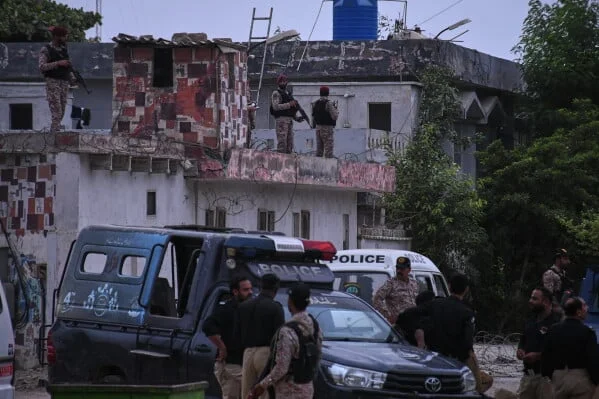
Saturday Night, June 27: A heavily armed militant cell attempts to storm the provincial headquarters of the Pakistan Rangers (Sindh) in the Gulistan-i-Jauhar area of Karachi. Utilizing firearms and explosives, the attackers kill three paramilitary personnel and wound four others. Rapid retaliatory action by security forces eliminates three terrorists on-site.
-
Sunday Morning, June 28: Intelligence and security agencies isolate the perimeter and capture a wounded operative alive. Identified as Usman Ali, an Afghan national, the suspect reveals during interrogation that he entered Pakistan from Jalalabad a week prior. He details his specialized training in Afghanistan under the direct supervision of Jamaatul Ahrar (JuA) commander Ahrar Moulvi.
-
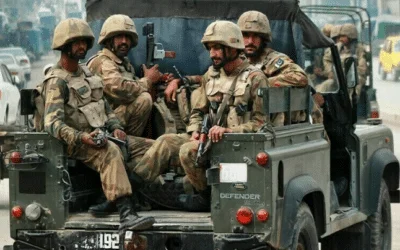
Sunday Night, June 28 (Overnight): Backed by actionable intelligence, Pakistani security forces execute a synchronized border operation. Ground units eliminate four active insurgents, including high-value commander Khan Farosh (alias Zabal), in the Bajaur district.
-
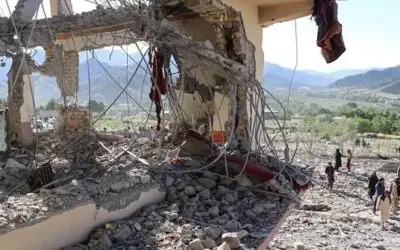
Monday Early Hours, June 29: In a direct continuation of Operation Ghazab lil-Haq, Pakistani air assets execute calibrated precision strikes against established militant infrastructure in eastern Afghanistan. The operations successfully dismantle three major centers (marakiz) in Kunar, Paktia, and Paktika provinces, neutralizing 25 terrorists and destroying major weapon stockpiles.
-
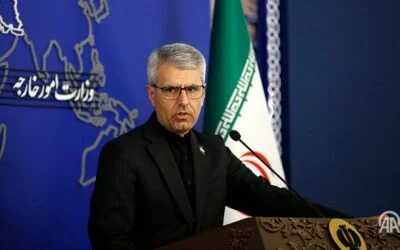
Monday Afternoon, June 29: Pakistan’s Foreign Office (FO) Spokesperson Tahir Andrabi confirms that the Afghan chargé d’affaires has been summoned to the Ministry of Foreign Affairs (Mofa) in Islamabad. A strong official demarche is delivered, while Pakistan’s Ambassador Ubaidur Rehman Nizamani serves a parallel diplomatic protest directly to the Taliban ministry in Kabul.
🔊PR No.1️⃣5️⃣6️⃣/2️⃣0️⃣2️⃣6️⃣
Statement by the Spokesperson https://t.co/eI70LICLBM
🔗⬇️ pic.twitter.com/QNdPCZk15B
— Ministry of Foreign Affairs – Pakistan (@ForeignOfficePk) June 29, 2026
The Karachi Breach and Pakistan’s Kinetic Mandate
The attack in Karachi highlights the complex, cross-border security challenges emanating from a destabilized western border. Information Minister Attaullah Tarar confirmed that the overnight ground and air strikes were direct responses to recent coordinated campaigns targeting innocent civilians and security personnel across Khyber Pakhtunkhwa, Balochistan, and Sindh. The primary actor behind the Karachi raid, Jamaatul Ahrar, is a UN-sanctioned splinter faction of the banned Tehreek-i-Taliban Pakistan (TTP)—publicly referred to by the state as Fitna al Khawarij.
The live capture of Usman Ali provides irrefutable proof for Islamabad’s long-standing diplomatic arguments. For over two years, Pakistan has shared detailed intelligence portfolios with the interim Afghan administration, urging Kabul to honor its international commitments to prevent its territory from being used as a launchpad for regional terrorism. Despite these repeated demarches, including a major diplomatic warning in May following a suicide strike on a police post in Bannu, the Taliban regime has consistently failed to take action against these border sanctuaries.
Faced with this ongoing lack of cooperation, Pakistan’s leadership has moved to enforce its own security mandates. While Kabul’s state media attempted to shift attention by alleging civilian infrastructure damage in the Chamkani and Giyan districts, Islamabad has stood firm on the legality and precision of its actions. The Ministry of Foreign Affairs made it clear that the destruction of the JuA and TTP strongholds was a measured, legally justified exercise of national self-defense.
Critical Analysis: Imperative of Kinetic Enforcement
The strategic environment surrounding the Pak-Afghan border requires a sophisticated analysis of how sub-state proxy groups operate. The arrest of an active insurgent trained in Jalalabad shows that the security threats facing Pakistan are not isolated, local grievances. Instead, they are part of a centralized proxy network that exploits the open geography of eastern Afghanistan. By utilizing sub-factions like JuA, external networks can maintain a degree of plausible deniability. The interim Taliban administration can continue to claim it does not support regional terrorism, while simultaneously allowing these groups to maintain the logistical facilities necessary to project violence deep into Pakistan’s economic centers.
This dynamic reveals why traditional diplomatic engagement with Kabul has reached a point of diminishing returns. The internal restructuring of Fitna al Khawarij and its shifting alliances with groups like JuA show an adaptive threat model designed to bypass conventional border defenses. When Pakistan exercises restraint, these proxy networks interpret it as an opportunity to regroup and launch fresh urban operations, such as the raid in Karachi.
Consequently, Pakistan’s transition to the active hot-pursuit framework of Operation Ghazab lil-Haq represents a calculated correction. By targeting command hubs and eliminating high-value assets like Khan Farosh, Pakistan is actively dismantling the leadership structures that Kabul refuses to police. The pro-active use of precision military options serves as a necessary stabilizing tool, re-establishing clear boundaries where diplomatic appeals have repeatedly gone unheeded.
Strategic Outlook: Three-Pronged Plan for Long-Term Border Stabilization
To comprehensively secure its western border and establish clear accountability with Kabul, Pakistan is implementing a structured, three-pronged operational strategy:
-
Institutionalization of the Cross-Border Hot-Pursuit Doctrine: Pakistan will maintain a policy of immediate kinetic response. By establishing a clear pattern that any proxy infiltration will result in rapid strikes against safe havens inside Afghanistan, Islamabad is significantly raising the strategic cost for any state or sub-state actor harboring these networks.
-
Geoeconomic Conditioning of Transit and Trade Agreements: Islamabad will look to utilize its position in regional economic forums and transit trade agreements to protect its national security. All future border access, trade concessions, and diplomatic cooperation with the Afghan administration will be strictly tied to verifiable, independent evidence showing the active dismantling of TTP and JuA infrastructure.
-
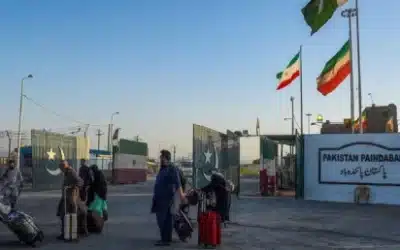
Absolute Border Isolation and Biometric Control: The state is accelerating the deployment of strict border management systems across the entire frontier. By establishing total biometric verification at all international crossings and economically isolating unregulated border corridors, Pakistan will effectively cut off the cross-border movement and logistical support lines that feed these insurgent cells.