




The delicate security balance between Islamabad and Kabul collapsed into direct military confrontation overnight following a high-profile terrorist attack on a paramilitary installation in Karachi. In a swift, multi-theater response, Pakistani security forces executed a high-intensity, intelligence-based ground operation in the border district of Bajaur, immediately followed by “calibrated precision strikes” inside eastern Afghanistan.
The military response, coming less than three weeks after a brief lull in hostilities, was triggered by a Saturday night assault on the local headquarters of the Pakistan Rangers (Sindh) in Karachi’s Gulistan-i-Jauhar area. The evolving situation has sparked a heavy diplomatic showdown, with both capitals summoning each other’s envoys and issuing aggressive demarches, threatening to dissolve international mediation efforts led by China and regional partners.
The 48-Hour Tactical Chronology
-
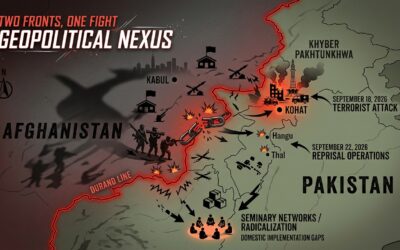
Saturday Night, June 27: Heavily armed militants launch a coordinated assault using guns and explosives on the Pakistan Rangers (Sindh) local headquarters in Gulistan-i-Jauhar, Karachi. Three paramilitary personnel are martyred and four others are wounded. Retaliatory fire by security forces eliminates three attackers on-site.
-
Sunday Morning, June 28: Security forces apprehend a fourth, wounded attacker in Karachi. Identified as Afghan national Usman Ali from Jalalabad, the suspect confesses during initial interrogation to operating under the command of Afghan-based Jamaatul Ahrar (JuA) leader Ahrar Moulvi.
-
Sunday Night, June 28 (Overnight): Pakistan army units initiate an intelligence-based ground operation in the Bajaur border region, killing four militants, including high-profile commander Khan Farosh (alias Zabal). Concurrently, Pakistani air assets conduct precision strikes targeting JuA and Fitna al Khawarij (TTP) strongholds in the Afghan provinces of Paktia, Paktika, and Kunar, neutralizing 25 militants.
-
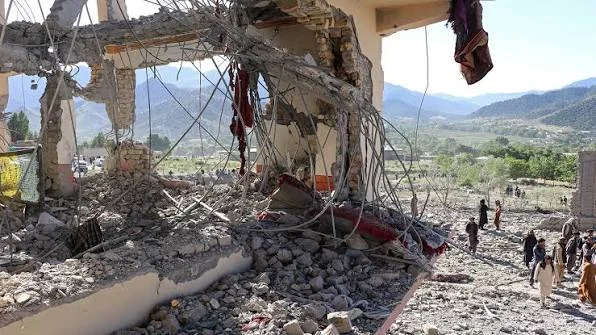
Monday Morning, June 29: The Afghan Taliban’s deputy spokesman, Hamdullah Fitrat, issues a statement claiming the strikes hit civilian homes in Chamkani district (Paktia) and Giyan district (Paktika), alleging 36 civilian fatalities and 163 injuries.
-
Monday Afternoon, June 29: Pakistan’s Foreign Office (FO) spokesperson Tahir Andrabi confirms the formal summoning of the Afghan chargé d’affaires to Mofa in Islamabad to issue a strong demarche. Simultaneously, Afghanistan’s Ministry of Foreign Affairs summons Pakistan’s chargé d’affaires in Kabul to hand over an official protest note regarding airspace violations.
🔊PR No.1️⃣5️⃣6️⃣/2️⃣0️⃣2️⃣6️⃣
Statement by the Spokesperson https://t.co/eI70LICLBM
🔗⬇️ pic.twitter.com/QNdPCZk15B
— Ministry of Foreign Affairs – Pakistan (@ForeignOfficePk) June 29, 2026
Diplomatic Warfare and Regional Spillover
The political aftershocks of the kinetic engagements triggered immediate diplomatic maneuvering in both capitals. In Islamabad, FO Spokesperson Tahir Andrabi stated that the formal demarche issued to Kabul’s envoy was based on undeniable operational intelligence linking the Karachi grid directly to Afghan sanctuaries. A parallel diplomatic note was delivered directly to the Taliban regime in Kabul by Pakistan’s Ambassador Ubaidur Rehman Nizamani.
According to Pakistani information minister Attaullah Tarar, the overnight operations successfully dismantled key logistical hubs (marakiz) and destroyed large stockpiles of advanced weaponry. However, the operational success was immediately challenged by Kabul’s rhetoric. The Afghan Taliban leadership condemned the cross-border strikes as an “act of brutality,” warning that the violation of their territorial sovereignty would meet a calculated response in due time.
The resurgence of terrorism has steadily intensified since the Taliban’s return to power in Kabul in 2021. This current flashpoint breaks a one-month period of relative calm that followed Operation Ghazab lil-Haq—a large-scale cross-border military campaign launched by Pakistan on February 26 to suppress unprovoked border firing and neutralize TTP bases. Despite high-level trilateral diplomacy hosted by China in April, alongside de-escalation appeals from Turkey, Qatar, and Saudi Arabia, the persistent lack of counter-terrorism cooperation from Kabul has pushed the bilateral relationship back into an active conflict footing.
Critical Analysis: Safe Havens, Proxy Dynamics, and the Failure of Sub-State Deterrence
The Karachi attack and subsequent border operations expose deep structural flaws in the region’s security layout. The core issue is the structural asymmetry between Pakistan’s conventional counter-terrorism strategy and the Afghan Taliban’s sub-state defense doctrine. For years, Islamabad has operated under the assumption that diplomatic pressure and economic levers would compel Kabul to dismantle the safe havens of Fitna al Khawarij (TTP) and its breakaway factions like Jamaatul Ahrar. However, the arrest of Usman Ali—an Afghan national trained in Jalalabad who moved into Karachi just a week before the strike—demonstrates that these cross-border networks are not merely passive refugees; they are highly integrated, operational proxy assets.
By specifically pointing out that JuA belongs to an “Indian proxy” network, the Inter-Services Public Relations (ISPR) is highlighting a dangerous layer of narrative warfare. The alliance dynamics between JuA and the core TTP command have historically been unstable; UN Security Council data shows a patterns of splits and reunions, such as their re-merger in 2024 followed by major leadership disputes in early 2025. By utilizing a fluid, decentralized group like JuA for an urban strike in Karachi, hostile actors can exploit the gaps between different militant factions. This strategy allows the primary TTP leadership in Kabul to claim plausible deniability, while still managing to hit a high-value paramilitary target deep inside Pakistan’s economic hub.
Furthermore, the contrasting narratives surrounding the airstrikes in Paktia and Paktika reveal a calculated public relations strategy by the Taliban regime. While Pakistan’s military targets specific command nodes to suppress drone and missile infrastructure, Kabul instantly shapes the media landscape by highlighting high numbers of civilian casualties. This strategy is designed to build domestic anti-Pakistan sentiment and pressure international mediators like China to force a ceasefire.
As long as Kabul treats these militant networks as strategic depth rather than security threats, Pakistan’s reliance on periodic cross-border strikes will only yield short-term tactical pauses instead of a definitive resolution.
Strategic Outlook and Conclusion
The current border crisis indicates that the transition from a state of cold peace to open conflict can happen almost instantly along the Durand Line. The diplomatic mechanisms that were set up during the Beijing and Doha consultations are proving incapable of handling the continuous flow of cross-border asymmetric attacks.
If the current diplomatic demarches do not lead to a verifiable verification mechanism on the ground, the current standdown will remain highly unstable. Pakistan will likely maintain its doctrine of hot pursuit, asserting its right to strike cross-border targets whenever urban centers like Karachi are threatened. This reality leaves the region stuck in a destructive cycle of tit-for-tat strikes, where a single tactical miscalculation could easily spark a conventional border war that neither country is prepared to manage.