Pakistan has long been on the frontlines of the global war on terror, enduring immense sacrifices in its fight against various militant organisations. While significant kinetic operations have dismantled overt structures, the nation is now grappling with a more insidious and evolving threat, i.e., the reorganisation of terror networks in clandestine sleeper cells. This shift in the tactics employed by terrorists presents a profound challenge, demanding re-evaluation of counter-terrorism strategies and a deeper understanding of how these resilient networks adapt under sustained pressure.
…numerous terrorist activities. More recently he was involved in planning and execution of terrorist attacks in Shaktu area which led to martyrdom of several soldiers & offrs including Lt Nasir (Shaheed) and Capt Sabih (Shaheed). (2/2) pic.twitter.com/lh1fnFB51o
— DG ISPR (@OfficialDGISPR) September 13, 2020
The Evolving Landscape of Terrorism in Pakistan
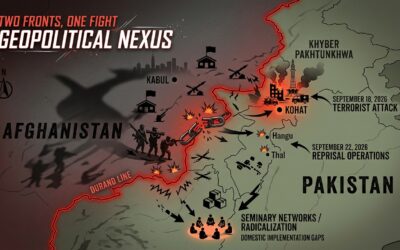
After successful military operations against terrorists, Pakistan witnessed a decline in major terror incidents. These extensive military operations included Zarb-e-Azb. However, after the Taliban’s takeover of Afghanistan in August 2021, the security landscape of the region significantly altered. It became a sanctuary for militant groups like Fitna-al-Khawarij. This resurgence is evident in the increasing number of attacks inside Pakistan, with the frequency of terrorist incidents rising from 268 in 2021, to 365 in 2022, 528 in 2023, 790 in 2024, and 502 in 2025 so far.
The Fitna-al-Khawarij has become decentralised. Its factions often disagree on policy, yet its main objectives—fighting Pakistan’s security forces, resisting Western influence, and implementing their version of oppressive laws—remain consistent. Decentralisation has given FAK operational flexibility, meanwhile, making it difficult to target militant leadership or disrupt communications. The Islamic State Khorasan (IS-K), responsible for nearly 100 attacks against civilians in Afghanistan and Pakistan since January 2017, also uses sleeper cells to plan and execute visible and disruptive attacks in key cities.
Beyond the FAK and IS-K, Pakistan faces many challenges from Fitna-tul-Hidustan and their associated insurgent groups. Since early 2025, these groups have intensified their operations, employing sophisticated tactics including suicide bombings and temporary occupation of suburban areas. The Jaffar Express hijacking involved taking hundreds of passengers hostage. This event exemplifies the growing operational sophistication of Fitna-tul-Hidustan and the evolving nature of threats.
The Dynamics of Reorganisation
Under pressure, terror networks operating in Pakistan have adopted several strategies for reorganisation:
- Decentralisation and Splintering: Faced with direct military operations, large, hierarchical structures become vulnerable. Groups splinter into smaller, autonomous cells, often operating independently with minimal central coordination. This makes intelligence gathering and targeting far more challenging.
- Networking and Alliances: While outwardly splintered, these smaller cells often maintain informal links or forge new alliances with other like-minded groups. The collaboration between different militant factions, facilitated by external actors, allows for resource sharing, tactical knowledge exchange, and coordinated attacks.
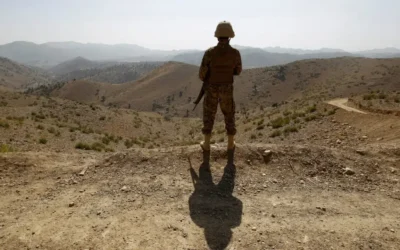
- Exploiting Porous Borders and Safe Havens: The border regions with Afghanistan, particularly, have served as crucial safe havens for militant groups operating in Pakistan. This allows them to regroup, train, and plan attacks with relative impunity.
- Adapting Funding Mechanisms: Counter-terrorism financing efforts disrupt traditional funding channels. Reorganised cells adapt by relying on local extortion, kidnappings for ransom, and illicit trade, making financial tracking more difficult.
- Propaganda and Recruitment: Modern propaganda techniques, including extensive use of social media and encrypted communication platforms, are employed to radicalise and recruit new members, often exploiting local grievances and socio-economic disparities.
Countering the Invisible Threat
Pakistan’s counter-terrorism efforts have traditionally focused on kinetic operations. While effective in disrupting overt militant strongholds, the rise of sleeper cells necessitates a multi-faceted approach:
- Enhanced Intelligence Gathering and Sharing: The key to dismantling sleeper cells lies in robust intelligence networks capable of identifying clandestine operatives and their links. This requires improved human intelligence, advanced technological surveillance, and seamless information sharing between federal and provincial agencies. Current challenges include a lack of coordination and funding for Provincial Counterterrorism Departments (CTDs).
- Legal Framework and Law Enforcement Reform: Pakistan’s existing counter-terrorism legal framework needs revamping to effectively address the evolving nature of the threat. There is a need for laws that allow for proactive interception and surveillance, as well as reforms in police and judicial systems to ensure effective investigation and prosecution of terror-related cases.
- Community Engagement and Counter-Narratives: Addressing the underlying grievances and ideologies that fuel radicalisation is crucial. This involves community engagement, promoting counter-narratives through media and educational institutions, and reforming madrassa curricula to counter extremist indoctrination.
- International Cooperation: Given the transnational nature of terror networks, particularly those operating across the Pakistan-Afghanistan border, sustained international cooperation is essential. This includes intelligence sharing, coordinated border management, and pressure on states providing sanctuary to militant groups.
The sleeper cell crisis represents a critical phase in Pakistan’s fight against terrorism. The resilience and adaptability of these networks demand an equally agile and comprehensive response that moves beyond traditional kinetic operations to encompass robust intelligence, legal reforms, socio-economic interventions, and strong international partnerships. Only then can Pakistan effectively dismantle these reorganising threats and secure its future.