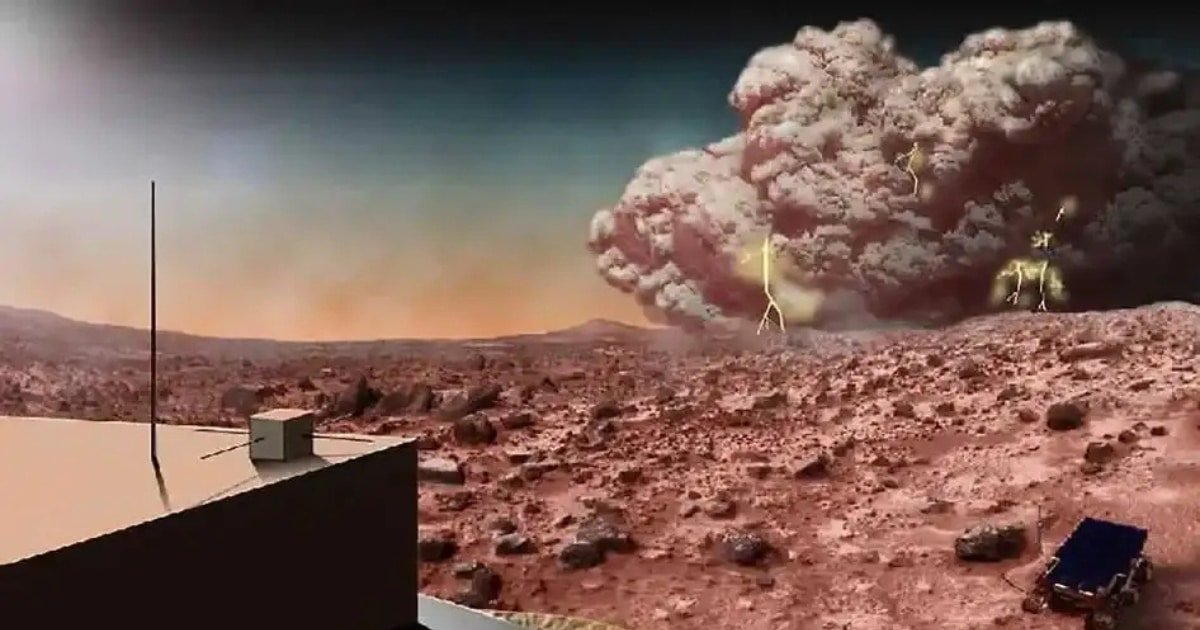





Scientists have made the first detection of electrical discharges; miniature lightning bolts on Mars, a breakthrough that solves a major Red Planet mystery and has significant implications for the search for ancient life. The discovery was made by analyzing data from a surprising source: the microphone on NASA’s Perseverance rover.
NASA’s Perseverance rover has captured the first clear evidence of lightning on Mars, recording faint “zaps” created during frequent dust storms on the planet.
Image is AI generated and is just for reference#NASA #Mars #Perseverance #SpaceResearch #MartianClimate #Astronomy pic.twitter.com/Jp9uNy80f1
— Startup Pakistan (@PakStartup) November 30, 2025
Researchers found 55 distinct electrical events, spread across two Martian years of recordings, emanating from dust-storm fronts and whirling dust devils near the rover. These discharges are not like Earth’s large, forked lightning, but are instead closer to static shocks, generated by friction between airborne dust particles in the thin, carbon dioxide-rich atmosphere.
This finding resolves the long-standing question of the origin of oxidants like hydrogen peroxide on Mars. These chemicals, generated by the lightning, can react with and potentially destroy organic molecules (biosignatures), complicating the search for evidence of past life. Conversely, the discharges might also create new organic molecules.
You May Like To Read: Body of 3-Year-Old Recovered from Open Manhole in Karachi, Sparking Political Outcry
The study also has practical benefits: the data on the energy of these discharges will inform the design of future Martian electronics and astronaut space suits. While the tiny bolts are difficult to capture visually, scientists believe this newfound electrification plays a crucial role in Mars’s global dust cycle and climate.