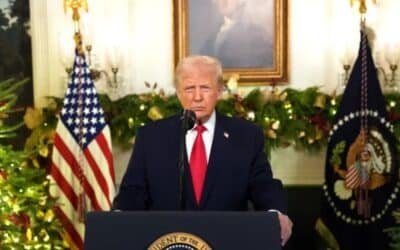



Marking exactly 109 days since the outbreak of a devastating, trade-crippling resource war, U.S. President Donald Trump announced on Tuesday that the initial framework memorandum of understanding (MoU) with the Islamic Republic of Iran has been officially and electronically signed.
The White House and international intelligence agencies confirmed the text bears the digital signatures of President Trump, U.S. Vice President JD Vance, and Iran’s chief negotiator and Parliament Speaker Mohammad Bagher Ghalibaf.
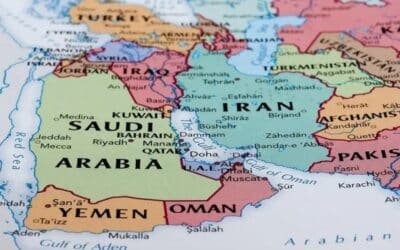
The electronic breakthrough sets an absolute deadline for Friday, June 19, when the Strait of Hormuz will be “completely open to all” shipping traffic, coinciding with the formal, in-person signing ceremony hosted by Pakistan in Geneva, Switzerland.
#BREAKING Memorandum of understanding ‘already signed’ by Trump, Vance on US side, parliament speaker Ghalibaf on Iranian side, senior US official says pic.twitter.com/2ibP0UrWr0
— Anadolu English (@anadoluagency) June 15, 2026
The Textual Architecture: 1.5 Pages and the Sanctions Standoff
While the complete text of the accord remains classified ahead of Friday’s physical summit, high-level officials have leaked the foundational parameters of what Vice President JD Vance calls a “win-win general document” spanning roughly a page and a half:
-
The Strategic Mandate: The MoU dictates an immediate, permanent cessation of military operations on all fronts—explicitly including the Lebanese theater—alongside the immediate lifting of the U.S. naval blockade on Iranian ports.
-
The 60-Day Testing Window: All primary negotiations regarding Iran’s comprehensive nuclear enrichment limits and permanent Western sanctions relief are strictly deferred to a 60-day diplomatic testing period managed by international mediators.
-
The Toll-Free Waterway: Vice President Vance confirmed that the United States will enforce a strict zero-toll policy across the Strait of Hormuz for the duration of the 60-day period, directly overriding last-minute attempts by regional factions to levy transit fees.
-
The Financial Contradiction: A severe narrative war has erupted over the treaty’s economic lubricants. A senior Iranian official told Reuters that Washington has quietly agreed to release $25 billion in frozen Iranian oil revenues and issue targeted sanctions waivers. President Trump and VP Vance have fiercely denied the claim, with Trump branding reports of American cash transfers as “Fake News put out by the Dumocrats!!!”
Regional Realities: The Blockade Breaks and the Seafarer Crisis
Inside Iran, the electronic signing has been framed as an absolute victory of sovereign endurance, triggering immediate logistical movements:
-
The First Tanker Transits: Speaker Ghalibaf declared on X that Tehran has achieved a “great step toward final victory” through historic resistance. Instantly validating the text, the U.S. Navy pulled back its blockade, allowing at least three Iranian crude oil tankers and multiple commercial cargo vessels to successfully cross the Strait of Hormuz.
-
The 22,000 Stranded Seafarers: Saman Rezaei, head of Iran’s merchant marine union, revealed the human cost of the 109-day war, confirming that 22,000 international seafarers have been trapped aboard vessels in the Persian Gulf for nearly four months. Rezaei stressed that the immediate priority is an international humanitarian evacuation corridor, warning that the Strait’s transit system “will never return to its pre-war condition” without extensive, incident-free security cycles.
The Israeli Rebellion: Netanyahu Rejects the Ceasefire
The primary threat to the stability of the Islamabad-mediated accord has emerged from Tel Aviv, where the Israeli security cabinet has moved into open opposition against the White House:
-
The Southern Lebanon Occupation: In a defiant public address, Israeli Prime Minister Benjamin Netanyahu declared that despite the electronic US-Iran agreement, Israeli Defense Forces (IDF) will continue to actively occupy southern Lebanon.
-
The Cabinet Backlash: Cabinet ministers inside Netanyahu’s coalition have publicly rejected the text, stating they are “not bound” by Donald Trump’s digital signature and calling for immediate, unilateral airstrikes against Hezbollah positions in Beirut.
-
The Kinetic Reality: Proving their detachment from the text, Israeli strikes killed two people in Gaza and at least one person in southern Lebanon on Monday, even as Hamas leadership expressed hope that the deal would eventually halt the destruction in the Palestinian territories.
Critical Analysis
The electronic finalization of the 1.5-page MoU represents a masterful display of minimalist crisis management by the Trump administration, yet it contains severe structural fault lines that could shatter before Friday’s Geneva summit.
The Blumenthal Warning: A Modern Suez Crisis for the West
The biting historical critique leveled by U.S. Senator Richard Blumenthal—likening the outcome of this 109-day war to the 1956 Suez Canal Crisis—exposes a profound geopolitical reality. In 1956, Britain, France, and Israel launched a joint invasion of Egypt, only to be forced into a humiliating, chaotic retreat when the United States weaponized economic leverage against its own allies to prevent a wider global war.
In June 2026, we are witnessing a stunning inversion of history. This time, it is the United States itself that has executed a rapid kinetic campaign alongside Israel, only to realize that the closure of the Strait of Hormuz introduced an unsustainable macroeconomic collapse that threatened Western domestic stability. By bypass-signing a 1.5-page document with Ghalibaf, Trump has prioritized global supply chain survival over the absolute military objectives of Tel Aviv, effectively forcing a geopolitical retreat that leaves Israel isolated on the northern front.
The Asymmetry of the $25 Billion Denials
The intense, public contradiction between Iran’s claims of a $25 billion asset release and Vice President Vance’s absolute insistence that “not a single dollar” has been unfrozen is an intentional piece of diplomatic ambiguity. This represents the implementation of the “De-escalation Workaround” engineered during last week’s secret IRGC meetings at Sheikh Tahnoon’s guest house in Abu Dhabi.
The United States is technically telling the truth: Washington is not releasing a single dollar of American taxpayer money, nor is it officially dissolving its core sanctions registry during the 60-day window. Instead, third-party regional intermediaries—specifically the UAE and Qatar—are being permitted to clear localized commercial ledgers and release long-immobilized Iranian banking deposits. This allows the White House to maintain absolute political deniability at home while giving the Iranian clerical establishment the immediate, massive liquidity injection required to halt its regional drone and missile operations.
The Netanyahu-AIPAC Veto and the Geneva Spoiler Window
The declaration by AIPAC that the MoU must “preserve Israel’s ability to carry out attacks,” combined with Netanyahu’s vow to maintain an army of occupation in southern Lebanon, establishes an incredibly dangerous 72-hour spoiler window before Friday’s formal gathering in Switzerland.
By refusing to acknowledge the Lebanese ceasefire clause signed by Ghalibaf, Netanyahu is attempting to decouple the maritime trade track from the Levant security theater. The IDF’s continued kinetic operations in southern Lebanon are designed to provoke a retaliatory rocket barrage from Hezbollah. If triggered, such an exchange would allow hardline elements in the U.S. Congress—led by senators demanding a formal vote on the text—to claim that Tehran has violated the MoU before the ink on Friday’s physical document can even dry.
The Takeaway: Donald Trump has successfully unblocked the world’s most critical energy artery with a page and a half of digital text, but the hard work of statecraft has only just begun. The visual of Iranian oil tankers moving freely through Hormuz proves that the economic blockade is broken. However, with Israeli forces actively occupying Lebanese territory and rejecting the framework, Pakistan’s diplomatic corps in Geneva faces an immense task. They must maintain absolute control over the summit’s architecture to ensure that a historic breakthrough is not undone by a localized regional provocation before Friday’s formal signing.