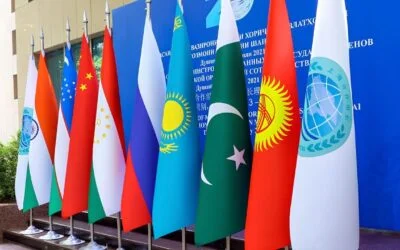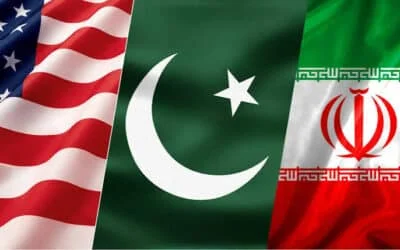


As the diplomatic machinery prepares for Friday’s historic, Pakistan-hosted physical summit in Switzerland, the hidden financial framework of the 1.5-page US-Iran Memorandum of Understanding (MoU) has been exposed.
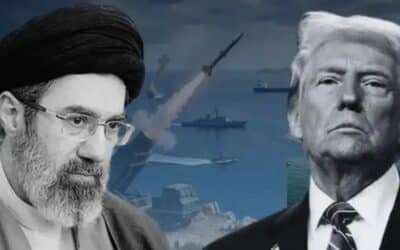
US officials say the US-Iran memorandum of understanding has been signed by President Trump, Vice President JD Vance, and Iranian parliament speaker Mohammad Bagher Qalibaf.
Al Jazeera’s Tohid Asadi and @AlanFisher has more. pic.twitter.com/n1HPciP8R1
— Al Jazeera English (@AJEnglish) June 15, 2026
At the center of the text is a massive, performance-conditioned $300 billion investment fund designed to permanently reintegrate Iran into the global economic structure.
The scale of this economic carrot has sent shockwaves through global markets, triggering sharp political spin in Washington and a complex narrative war in Tehran.
While U.S. President Donald Trump and Vice President JD Vance fight to control the domestic optics of the deal at the G7 Summit in Evian, France, Iranian state planners are weighing the immediate economic relief against what critics call a sovereign “dignity problem.”
1. The $300 Billion Fund: Private Tranches and Gulf Risks
To protect President Trump from political attacks regarding financial concessions to Tehran, the White House has constructed a clever corporate buffer:
-
The Gulf Coast Alliance: Vice President JD Vance confirmed that the $300 billion fund will not contain a single dollar of U.S. taxpayer money. Instead, it will be underwritten by a “Gulf Coast Coalition” of private entities and regional capital markets eager to enter the Iranian energy and infrastructure sectors.
-
The Compliance Ledger: Access to these immense investment tranches is strictly tied to Iran’s “performance” during the 60-day testing window. Tehran must provide immediate verification of its nuclear enrichment rollbacks, surrender its 440kg (970lbs) stockpile of enriched uranium, and accept rigorous, unannounced international inspections.
-
The No-Lose Solution: Analysts from the Middle East Council on Global Affairs note the genius of the design: “If Iran reforms, the Trump administration owns the peace; if it doesn’t, the U.S. loses nothing and the Gulf carries the risk.”
2. The Optics War: Frozen Assets vs. Conditional Cash
A fierce narrative battle has erupted over the immediate fate of Iran’s immobilized sovereign wealth, estimated to exceed $100 billion globally since the 1979 revolution:
-
The $24 Billion Denial: Following reports from Tehran’s state-affiliated Mehr News agency claiming that the 14-point MoU mandates the immediate release of $24 billion in frozen oil assets, VP Vance flatly rejected the figure, stating it “just doesn’t appear anywhere” in the negotiated text.
-
The Dignity Dilemma: Strategic experts point out that the investment fund was explicitly designed to bypass the negative political optics of handing raw cash back to the Islamic Revolutionary Guard Corps (IRGC). However, this has created a major “dignity problem” for Tehran. Hardline elements read the fund as highly supervised, conditional charity rather than the sovereign sanctions relief they are legally owed.
3. The Internal Fault Lines: Birthday Gifts and Battlefield Realities
Despite approval from Iran’s Supreme National Security Council and President Masoud Pezeshkian to “test America’s genuine commitment,” deep fractures are emerging within both capitals:
-
The Tehran Backlash: Iran’s new Supreme Leader, Mojtaba Khamenei, has maintained an ominous silence. Meanwhile, conservative factions in Tehran have reacted with fury over the timing of the electronic signature, which coincided with Donald Trump’s birthday. Conservative voice Parisa Nasr openly questioned on X whether “giving a birthday gift to the killer of the martyred Leader [Ayatollah Ali Khamenei]” was an unwritten condition of surrender.
-
The Toll-Free Long Game: Speaking to CNBC, Vice President Vance admitted that significant sticking points remain unresolved regarding the Strait of Hormuz. While Trump triumphantly declared, “Let the oil flow!”, technical teams are still locked in fierce arguments over Washington’s demand for a permanent, toll-free passage through the waterway.
-
The G7 Consensus: Speaking from the G7 summit in France on Tuesday, President Trump firmly defended the deal as “fair” and “good,” bluntly adding that under its terms, Iran “can’t have a nuclear weapon” or “they get blown up.” Qatar’s Emir, Sheikh Tamim bin Hamad Al Thani, standing alongside Trump, strongly backed the momentum, calling it a vital baseline to achieve great things in the region.
Critical Analysis
The unfolding details of the $300 billion investment fund expose the fragile reality of the Geneva accord: both sides are talking past each other to manage their own domestic audiences.
The Structural Ambiguity of Private Capital Injection
The reliance on a privately funded, corporate investment mechanism rather than direct state-to-state sanctions relaxation is a brilliant but unstable diplomatic maneuver. For President Trump, this structure completely neutralizes criticism from hawkish congressional elements and groups like AIPAC. It allows the White House to claim it extracted total nuclear disarmament without spending a dime.
However, for corporate entities and international firms, entering the Iranian market remains a massive compliance risk. Unless the United States permanently dismantles its primary sanctions registry—a move Vance explicitly stated is deferred to the 60-day technical negotiations—global compliance boards will block their capital from entering the $300 billion fund. This dynamic creates a dangerous mismatch: Tehran expects immediate infrastructure investment, while Western capital will remain frozen until absolute nuclear compliance is achieved.
The Sovereign Loss Matrix of the 109-Day War
The financial numbers surrounding the treaty reveal the immense pressure driving President Pezeshkian to accept these strict terms. The 109-day war inflicted an estimated $29 billion in direct structural damage on Iran, pushing its domestic economy into its highest inflationary spiral since 1942.
Tehran is negotiating with a financial gun to its head. This explains why Foreign Minister Abbas Araghchi is attempting to manage expectations by stating that Iran will not rely solely on Western economic benefits. The clerical establishment recognizes that if it rejects this conditional lifeline, the domestic economy risks absolute, structural collapse.
The Looming Israeli Veto on the Lebanon Front
The primary kinetic threat to this economic architecture remains the unyielding stance of Tel Aviv. While Iran insists that any permanent agreement must include a full ceasefire for its regional allies, Israeli Defense Minister Israel Katz shattered any illusion of a regional truce by declaring that the IDF will continue operating in Lebanon regardless of any text signed in Switzerland.
By actively striking Hezbollah targets while the US and Iran iron out technical details, Israel is testing the boundaries of the text. If the IRGC feels compelled to respond to continuous Israeli strikes to preserve its regional credibility, the entire 60-day testing window could collapse before a single dollar from the $300 billion fund can be deployed.
The Takeaway: The $300 billion fund is a masterpiece of economic illusion, allowing Donald Trump to project total strength while giving Masoud Pezeshkian a vital financial escape hatch. However, because both sides must sell this deal as a complete victory to their domestic audiences, they have built the treaty on conflicting interpretations. As the diplomatic corps converges on Geneva for Friday’s formal signing ceremony, Pakistan’s hosts face the delicate task of holding these two opposing narratives together long enough to turn a fragile electronic signature into a permanent, enforceable reality.