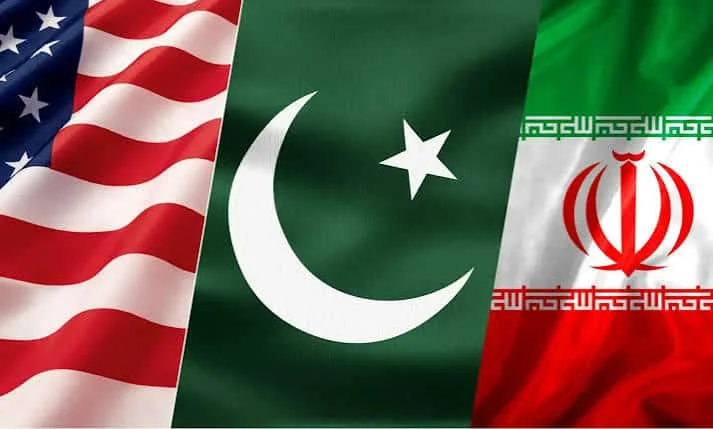





With the electronic ratification of the 1.5-page US-Iran Memorandum of Understanding (MoU) complete, Pakistan’s state planners have breathed a massive sigh of relief. The preliminary truce, set to be formally signed on Friday, June 19 in Geneva under Pakistani hosting, has successfully halted the country’s slow slide back into deep macroeconomic decline.
US officials say the US-Iran memorandum of understanding has been signed by President Trump, Vice President JD Vance, and Iranian parliament speaker Mohammad Bagher Qalibaf.
Al Jazeera’s Tohid Asadi and @AlanFisher has more. pic.twitter.com/n1HPciP8R1
— Al Jazeera English (@AJEnglish) June 15, 2026
The International Monetary Fund (IMF), in its April 2026 World Economic Outlook, had already laid bare the catastrophic toll of the 109-day war, projecting global growth to slow to a crawls of 3.1 percent in 2026 and 3.2 percent in 2027.
At home, the geopolitical relaxation arrives just in time to rescue a fragile federal budget that is actively walking an economic tightrope. Finance Minister Muhammad Aurangzeb recently revised the national growth target down from 4.0 percent to 3.7 percent under crushing IMF conditionalities.
As the shipping lanes prepare to fully clear, a comprehensive strategic map reveals exactly how this peace changes the status quo, and the devastating costs if the treaty fractures.
The Best-Case Horizon: Global Oil Depressurization and the IP Pipeline
If the peace holds over the 60-day testing window, Pakistan stands to inherit an immediate, multi-billion-dollar macroeconomic dividend:
-
The Crude Windfall: Oil markets have already begun factoring in the peace, with Brent futures settling down to $87 a barrel—their lowest levels since early March. Analysts project that if the UAE continues its independent production trajectory outside OPEC and the U.S. sustains its active marketing of domestic shale, a massive global supply glut will rapidly depress international crude prices.
-
The Domestic Multiplier: Lower international oil prices mean immediate relief at the local fuel pump. This significantly eases inflation, lowers the national import bill, and gives the finance ministry the fiscal space to maximize its Rs15 trillion tax collection target and 2% primary surplus without destroying domestic consumer demand.
-
The Tehran Energy Corridor: Renowned economist Kaiser Bengali emphasizes that a permanent US-Iran settlement opens the door for long-overdue sanctions relief. This would allow Islamabad to finally resurrect the long-stalled Iran-Pakistan (IP) gas pipeline, securing dirt-cheap, direct natural gas to revive the country’s struggling industrial sectors.
The Plan B Inflow: The $10 Billion Diaspora Shift
The conflict has fundamentally altered the real estate and wealth-preservation strategies of the 10-million-strong Pakistani diaspora.
-
The Dubai De-valuation: Hassan Bakshi, Chairman of the Association of Builders and Developers (ABAD), notes that global tensions have stripped the security luster off the Dubai property market. Overseas Pakistanis are increasingly treating their homeland as “Plan B.”
-
The Property Insurance Policy: Remittances have experienced a massive, temporary surge because expats are aggressively buying local real estate as a hedge in case they are forced to abruptly exit the Gulf. Real estate leaders argue that with a stable, 10-to-15-year legislative policy that protects investors from arbitrary FBR harassment, Pakistan can attract billions in direct expatriate capital—dwarfing the historic inflows of the Roshan Digital Accounts.
The Nightmare Contingency: The Empty Pump Scenario
Conversely, if the Geneva framework breaks down and military strikes resume within the 60-day window, the economic fallout will be apocalyptic.
-
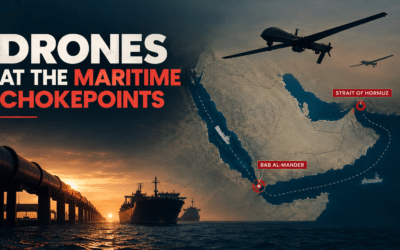
The Total Maritime Choke: A collapse would instantly re-block the Strait of Hormuz. Simultaneously, Yemen’s Iran-aligned Houthis would execute their threats against the Red Sea route, targeting the Saudi port of Yanbu, which currently handles over 70 percent of the Kingdom’s redirected daily crude exports.
-
The Empty Pumps: Kaiser Bengali delivers a sobering, raw warning for this scenario: “Even if we are willing to pay Rs1,000 for a litre of petrol, the pumps will be empty, and people will resort to walking or cycling.” The temporary spike in property-driven remittances would dry up as wage earners face massive layoffs in a paralyzed Gulf economy.
-
The Captive Taxpayer Mini-Budget: Ehsan Malik, Chief Executive of the Pakistan Business Council (PBC), warns that the federal budget’s entire survival rests on provincial governments generating massive cash surpluses promised to the IMF. If a renewed energy crisis hits, those provincial targets will shatter, instantly triggering an emergency mini-budget. This would slam the captive taxpayer sector with an immediate, inflationary hike in the petroleum levy and a total reversal of all current relief measures.
Critical Analysis
The intersection of Pakistan’s economic survival and its sudden geopolitical prominence reveals a state operating on sheer adrenaline, navigating between terminal risk and unprecedented structural opportunity.
The Remittance Illusion and the Provincial Trap
The economic analysis provided by Bengali and Malik exposes a deeply concerning vulnerability within the current federal budget. The recent surge in remittances is not an indicator of organic economic health; it is a panic response—fear capital fleeing a volatile Persian Gulf security matrix. If the peace agreement is finalized on Friday, this specific real-estate investment surge will likely taper off over the next quarter.
This means the government cannot rely on diaspora inflows to artificially suppress the current account deficit. If the provincial governments fail to deliver their mandated cash surpluses—a distinct possibility given the structural inefficiencies in provincial agricultural tax collection—the finance ministry will have no choice but to launch a mini-budget, choking off the very 3.7 percent growth rate Muhammad Aurangzeb is trying to protect.
The Strategic Pipeline Autonomy
The true litmus test of the Islamabad MoU’s success lies in whether Pakistan can convert its hosting role in Geneva into permanent energy autonomy. For over a decade, Washington has used the threat of secondary sanctions to freeze the Iran-Pakistan gas pipeline, forcing Islamabad to rely on incredibly expensive, dollar-denominated LNG imports.
If the 60-day testing window transition succeeds, Pakistan’s diplomatic corps must aggressively demand a formal, written sanctions waiver from the Trump administration as a direct compensation fee for brokering the peace. Securing direct, piped Iranian gas is the only structural mechanism that can permanently lower Pakistan’s industrial input costs, allowing it to break free from its chronic, cyclical dependence on IMF bailouts.
The Takeaway: Pakistan is currently standing in the eye of a global geopolitical storm. The electronic signatures of Trump and Ghalibaf have provided a temporary, vital shield for the national economy, but the domestic structural cracks remain wide open. Whether the future holds the industrial revival of the IP pipeline or the catastrophic reality of Rs1,000-a-litre empty petrol pumps depends entirely on the durability of the pages signed this week. The civilian and military leadership have successfully bought the country time; now, they must execute internal structural reforms before the geopolitical tides shift once again.
US Iran peace agreement Pakistan economy impact, PM Shehbaz Sharif Geneva MoU hosting budget, Kaiser Bengali empty petrol pumps scenario, Ehsan Malik Pakistan Business Council budget targets, Strait of Hormuz reopening oil prices Brent, Iran Pakistan gas pipeline sanctions relief 2026, Muhammad Aurangzeb 3.7 percent growth rate revision, IMF World Economic Outlook April 2026 growth, Saudi crude export Yanbu port Red Sea, Hassan Bakshi ABAD diaspora property investment, Rs15 trillion tax collection primary surplus, Roshan Digital Accounts Dubai real estate shift, Macroeconomic stabilization corridor development, transnational maritime supply chain resilience, remittance fueled real estate capitalization, structural fiscal deficit containment matrices, provincial revenue surplus validation frameworks, sovereign debt service shock mitigation