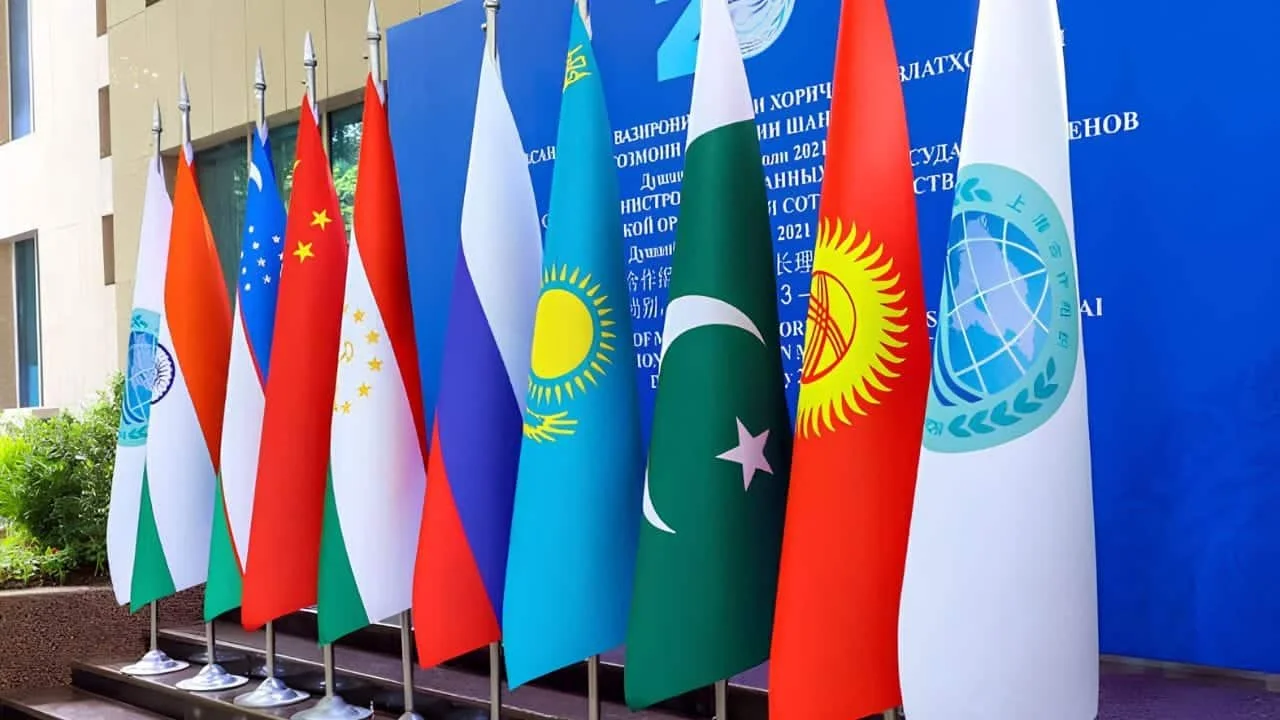





In a major diplomatic milestone confirming its central role in Eurasian geopolitics, the Government of Pakistan has announced it will formally assume the Chairmanship of the Shanghai Cooperation Organisation’s (SCO) Council of Heads of State (CHS) in September 2026.
The announcement, timed alongside the Silver Jubilee (25th Anniversary) of the SCO, confirms that Pakistan will also serve as the host nation for the prestigious 2027 CHS Summit.
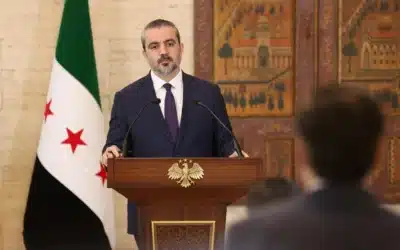
Commemorating the landmark, Deputy Prime Minister and Foreign Minister Ishaq Dar released a comprehensive ministerial statement outlining Pakistan’s transition from an observer state to a full, proactive driver of regional economic connectivity, counter-terrorism execution, and de-dollarized financial systems.
🔊 PR No. 144/2026
Message from the Deputy Prime Minister and Foreign Minister of Pakistan Senator Mohammad Ishaq Dar @MIshaqDar50 on the 25th Anniversary of the Shanghai Cooperation Organization (SCO)
🔗⬇️ pic.twitter.com/fvmh94pyl6
— Ministry of Foreign Affairs – Pakistan (@ForeignOfficePk) June 15, 2026
1. The Chairmanship Ascent: From Observer to Eurasian Driver
Pakistan’s elevation to the pinnacle of the SCO’s supreme decision-making body marks the culmination of a decade-long diplomatic strategy:
-
The Leadership Mandate: Following the upcoming September transition at the Bishkek Summit in Kyrgyzstan, Pakistan will wield direct agenda-setting authority over a 10-nation bloc that includes global heavyweights China, Russia, India, and Iran, alongside Central Asian republics and Belarus.
-
The Structural Evolution: Since attaining full membership in 2017, Islamabad has methodically secured key institutional strongholds. Pakistan is currently serving as the Chair of the SCO Regional Anti-Terrorist Structure (RATS) for the 2025–2026 term, giving it operational leadership over the bloc’s collective counter-security coordination.
-
The Poverty Alleviation Anchor: Solidifying its socio-economic leverage, Pakistan has also secured the position of Permanent Chair of the SCO Working Group on Poverty Alleviation, establishing a direct policy mechanism to share domestic social safety models across Eurasia.
2. Financial Autonomy and Infrastructure Integration
The ministerial brief by Deputy PM Ishaq Dar explicitly highlights that the SCO has evolved past its original 2001 security-only framework into a dense network for trade, digital innovation, and currency sovereignty:
-
The CPEC Multiplier: The China-Pakistan Economic Corridor (CPEC) was formally designated by the Foreign Office as the foundational model for trans-regional economic and trade integration across the wider SCO footprint, acting as the primary warm-water maritime gateway for landlocked Central Asian member states.
-
The De-Dollarization Architecture: Highlighting a structural shift in regional financial systems, Dar lauded the SCO’s progressive implementation of mutual payments in national currencies. This mechanism bypasses Western clearing networks to build a highly resilient, sanctions-insulated regional economy.
-
The Threat Matrix: As a frontline state, Pakistan reaffirmed its commitment to the SCO framework to systematically combat the “three evils” of terrorism, separatism, and extremism, utilizing the RATS network to share real-time intelligence and coordinate cross-border security protocols.
CRITICAL ANALYSIS: THE STRATEGIC TRAPEZE OF THE ISLAMABAD CHAIRMANSHIP
Pakistan’s upcoming assumption of the SCO Council of Heads of State chairmanship offers an unparalleled platform for sovereign projection, yet it introduces intense diplomatic challenges that will test the Foreign Office’s real-world execution.
Navigating the Sino-Indian Friction Zone
The most complex challenge under Pakistan’s upcoming tenure will be managing the deeply entrenched, structural hostilities between its member states—most notably the volatile relationship between New Delhi and Beijing, as well as Islamabad’s own bilateral issues with India. As the chair of both the CHS and the RATS counter-terror architecture, Pakistan cannot use the forum for purely bilateral point-scoring.
Instead, the Foreign Office must adopt a highly disciplined role as an institutional mediator. Islamabad will have to guide regional security dialogues in a manner that keeps both Indian and Chinese leadership actively engaged at the table, ensuring that cross-border security protocols do not stall due to localized geopolitical friction.
The Currency De-Dollarization Reality Check
Ishaq Dar’s focus on “mutual payments in national currencies” hits right at the heart of the SCO’s long-term goal: building an economic system independent of Western financial infrastructure. For a Pakistani economy continuously dependent on dollar-denominated IMF structural adjustment loans, a shift toward trading in Yuan, Rubles, or Rials is highly attractive but logistically complex.
While utilizing local currencies for regional energy imports from Central Asia or Russia helps preserve precious central bank foreign exchange reserves, the Ministry of Finance and the State Bank of Pakistan must ensure these multi-currency payment channels are built carefully. They must prevent any negative ripple effects on Pakistan’s standing with Western commercial banks or international regulatory bodies like the FATF.
Leveraging the RATS Mandate Against Regional Instability
Holding the chair of the Regional Anti-Terrorist Structure (RATS) for 2025–2026 gives Pakistan an excellent tool to directly address the security vacuum along its western borders. With Afghanistan currently sitting as an official SCO observer state, Islamabad possesses the institutional mechanics to hold the interim administration in Kabul accountable to the collective standards of the 10-nation bloc.
By framing its counter-security concerns through the shared SCO lens of combating the “three evils,” Pakistan can build a unified regional consensus. This allows it to demand actionable counter-terror compliance from Kabul, backed by the shared political weight of Beijing, Moscow, and Tashkent.
The Takeaway: The upcoming September handover marks a definitive turning point for Pakistan’s regional standing. The state is no longer merely participating in international forums; it is actively steering the primary security and economic engine of Eurasia. From the deployment of national currency trade channels to the strategic expansion of CPEC linkages into Central Asia, Islamabad holds the keys to a highly ambitious integration agenda. If executed with absolute institutional precision, this chairmanship can transform Pakistan into an indispensable diplomatic and economic bridge connecting the energy-rich fields of Central Asia with the maritime trade lanes of the global south.