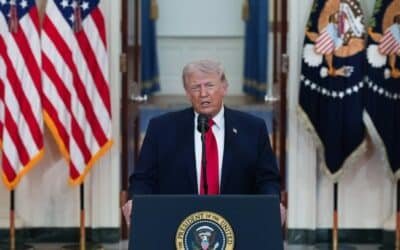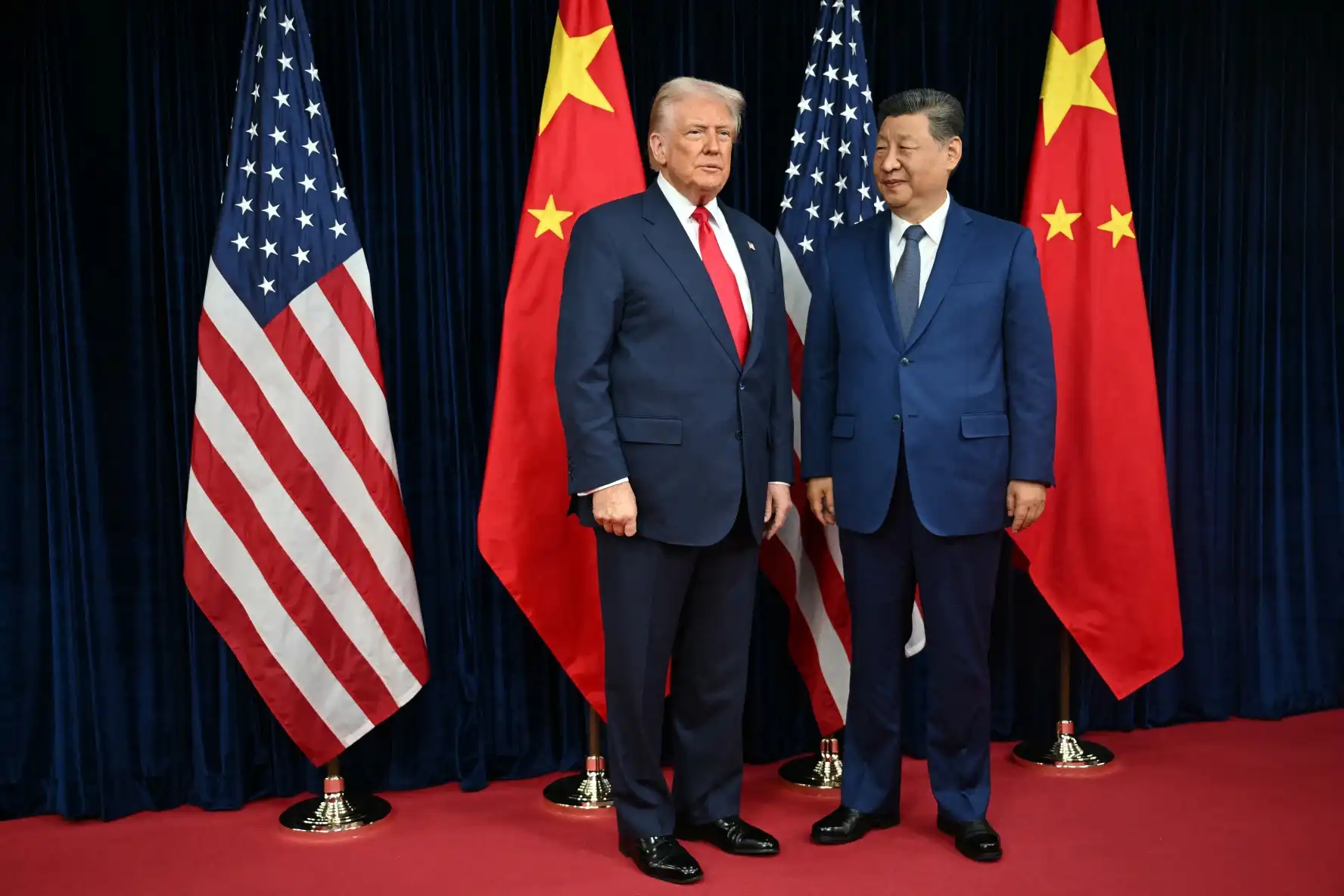




United States President Donald Trump arrived in Beijing on Wednesday for critical meetings with Chinese President Xi Jinping, signaling a pivotal moment in the complex relationship between the world’s two largest economies. The summit, taking place amidst ongoing trade disputes and escalating geopolitical tensions, is anticipated to address a range of pressing issues, including trade imbalances, the conflict in the Middle East, and the status of Taiwan.
.@POTUS is officially wheels down in Beijing ahead of his historic Summit.
It’s the first state visit of a sitting U.S. president to China since President Trump’s last visit in 2017. pic.twitter.com/AFeGoAJvfE
— Rapid Response 47 (@RapidResponse47) May 13, 2026
President Trump, accompanied by a delegation of top CEOs including Nvidia’s Jensen Huang and Tesla’s Elon Musk, emphasized his intention to urge President Xi to further open China’s markets to American businesses. “I will be asking President Xi, a Leader of extraordinary distinction, to ‘open up’ China so that these brilliant people can work their magic, and help bring the People’s Republic to an even higher level!” Trump stated on social media.
— Rapid Response 47 (@RapidResponse47) May 13, 2026
The visit, the first by a U.S. president to China in nearly a decade, is set to include high-level talks, a state banquet, and other ceremonial events. Discussions are expected to cover topics such as U.S. arms sales to Taiwan, China’s rare earth export policies, and artificial intelligence rivalry. Both sides are also expected to explore extending a one-year truce in their tariff war.
Despite the focus on trade, political friction remains a significant factor. The ongoing war in the Middle East and the status of Taiwan, a self-governing democracy claimed by China, are potential points of contention. Trump indicated he would discuss Iran with Xi, whose country is a major buyer of Iranian oil.
The summit is taking place during a period of economic uncertainty for China, which is facing sluggish domestic spending and a property sector debt crisis. The meetings represent an opportunity for both nations to seek stability in their relationship despite growing competition and geopolitical differences.
Analysis
This summit carries significant implications for global trade, security, and geopolitics. Trump’s focus on opening China’s markets to American firms suggests a desire to rebalance the trade relationship, potentially leading to new agreements and opportunities for U.S. businesses. However, political disagreements over Taiwan and the Middle East could complicate negotiations.
China’s perspective is likely focused on maintaining economic stability and addressing domestic challenges. President Xi may seek assurances regarding U.S. policy on Taiwan and seek to foster a more predictable relationship amid broader geopolitical uncertainties.
The presence of prominent CEOs signals the importance of economic issues in the summit. Any progress on trade could have a positive impact on global markets and investor confidence. The summit will be closely watched by Taiwan, Asian allies, and other nations concerned about the evolving dynamics between the United States and China. The mention of China’s foreign minister urging Pakistan to step up mediation efforts between Iran and the United States reveals China’s desire for regional peace. The summit takes place in an uncertain time for China’s economy, which has struggled in recent years with sluggish domestic spending and a protracted debt crisis in the once-booming property sector.