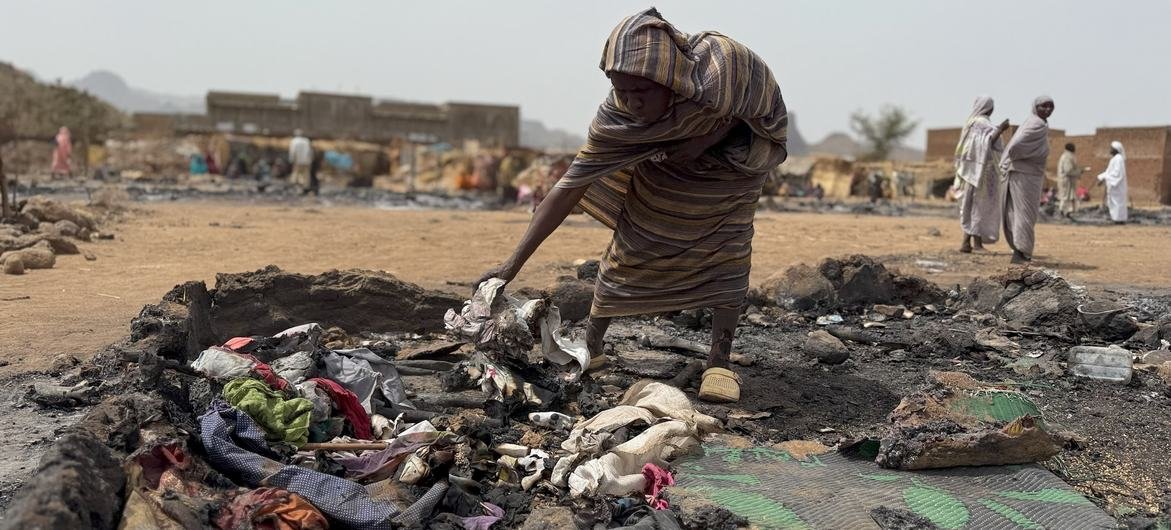


Nearly three years of sustained conflict have pushed Sudan into the largest humanitarian emergency on the planet, United Nations agencies warned today. New projections for 2026 indicate that 33.7 million people—two-thirds of the nation’s population—will require urgent humanitarian assistance as the country faces a catastrophic convergence of war, famine, and disease.
The United Nations warned on Saturday that Sudan’s humanitarian catastrophe has become the world’s largest, with nearly 34 million people—almost two-thirds of the population—now dependent on life-saving aid as the war enters its 1,000th day.https://t.co/aYLmG4kWwm pic.twitter.com/tYMnRLX9ek
— Sudan Tribune (@SudanTribune_EN) January 11, 2026
A Health System Under Siege
The World Health Organization (WHO) reports that Sudan’s medical infrastructure is at a breaking point. Following 201 verified attacks on healthcare facilities since April 2023, more than one-third of the nation’s health centers are non-functional.
“One thousand days of conflict have driven the health system to the brink of collapse,” said Shible Sahbani, WHO Representative in Sudan. “Under the strain of disease, hunger, and lack of access to basic services, the Sudanese people are facing a devastating situation that the world cannot afford to ignore.”
Key Statistics:
- 21 Million: People facing acute food insecurity.
- 20 Million: People requiring immediate health assistance.
- 13.6 Million: Displaced persons, making Sudan the world’s largest displacement crisis.
The Heaviest Burden: Sudan’s Children
UNICEF reports that children represent half of those in need of aid. The scale of the nutritional crisis is staggering; in North Darfur alone, a child was treated for severe acute malnutrition every six minutes throughout 2025.
“Children continue to be killed and injured in a war they did not start,” said Edouard Beigbeder, UNICEF Regional Director for the Middle East and North Africa. “Only an end to the fighting can halt the erosion of safety, health, and hope for an entire generation.”
Call to Action
WHO and UNICEF are jointly calling on all parties to the conflict and the international community to:
- Grant Unimpeded Access: Allow safe and sustained humanitarian corridors to reach the 33.7 million in need.
- Protect Infrastructure: Immediately cease attacks on hospitals, schools, and water systems, which constitute violations of international humanitarian law.
- Increase Funding: Address the massive funding gap that currently hampers lifesaving operations.
- Prioritize Peace: Recognize that humanitarian aid is a temporary lifeline, not a substitute for a political resolution.
“Humanitarian action cannot substitute for peace,” Dr. Sahbani concluded. “We need the violence to stop so that we can begin the work of healing a nation.”