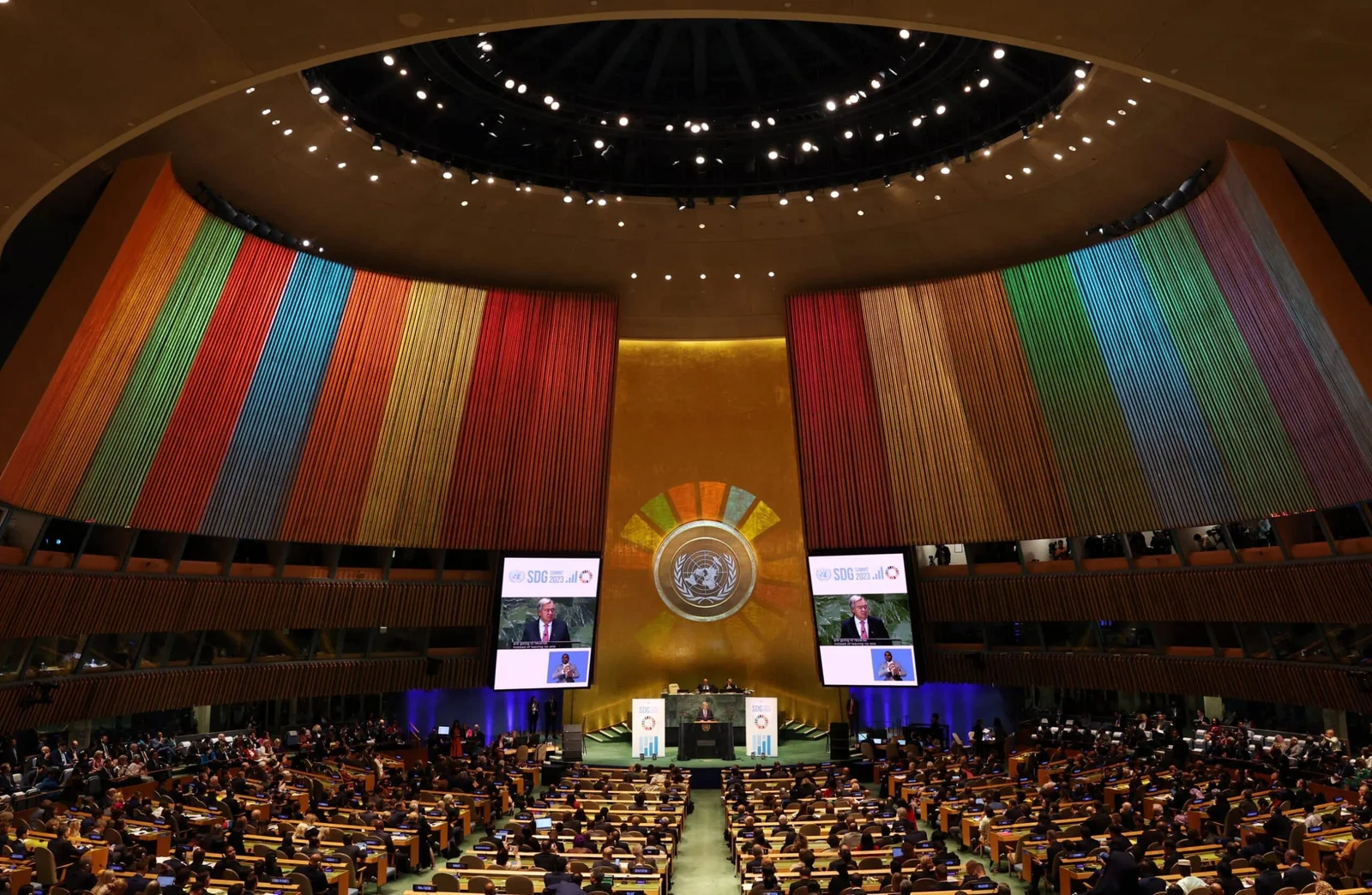



The United Nations General Assembly conducted highly competitive secret ballot elections on Wednesday, selecting five nations to serve as non-permanent members on the powerful 15-member UN Security Council. Austria, Kyrgyzstan, Portugal, Trinidad and Tobago, and Zimbabwe were elected to fulfill two-year terms, which will officially commence on January 1, 2027.
The United Nations General Assembly on Wednesday elected Austria, Portugal, Trinidad and Tobago and Zimbabwe to the 15-member U.N. Security Council for two-year terms starting on January 1, 2027. https://t.co/DCQBpq4Nvt
— Reuters Africa (@ReutersAfrica) June 3, 2026
The election delivered a major diplomatic upset in the Western European and Others Group (WEOG). Germany, which had mounted an aggressive, multi-year lobbying campaign for a seat, was decisively defeated. Berlin secured only 104 votes, failing to match the diplomatic leverage of Portugal and Austria, which claimed the two available seats with 134 and 131 votes, respectively.
Meanwhile, an intense, deadlocked battle emerged within the Asia-Pacific Group. The head-to-head contest between the Philippines and Kyrgyzstan stretched across four gruelling rounds of voting. Kyrgyzstan ultimately crossed the mandatory two-thirds majority threshold, securing its first-ever seat on the Security Council by a final tally of 142 votes to 49.
Under the UN’s rotational framework, the newly elected quintet will replace outgoing members. Zimbabwe will replace Somalia, Trinidad and Tobago takes over from Panama, while Portugal and Austria succeed Denmark and Greece. Notably, Kyrgyzstan will assume the Asia-Pacific seat currently held by Pakistan. This voting session closely follows Tuesday’s General Assembly election, which appointed Bangladeshi Foreign Minister Khalilur Rahman as President of the body’s upcoming 81st session.
Critical Analysis: Strategic Realignments and the Changing Guard of Global Governance
The outcome of the 2026 UN Security Council elections offers profound insights into shifting geopolitical alliances, middle-power diplomacy, and the changing structural dynamics of the UN’s sole legally binding decision-making organ:
The European Shift: Rebuffing Berlin’s Geopolitical Ambitions
Germany’s failure to secure a seat is a significant blow to Berlin’s foreign policy apparatus. As Europe’s largest economy, Germany has long advocated for a permanent seat on a reformed Security Council, viewing non-permanent terms as vital stepping stones to demonstrate its global leadership.
However, its elimination by Portugal and Austria indicates a clear diplomatic pushback from developing nations within the General Assembly. Many member states have grown increasingly fatigued by Germany’s rigid stances on contemporary European conflicts and rigid economic policies. By electing Portugal and Austria—two traditional bridge-builders known for more flexible, neutral diplomacy—the General Assembly is signaling a preference for consensus-driven mediation over heavy-handed major-power posturing.
Kyrgyzstan’s Landmark Victory and Central Asian Centrality
Kyrgyzstan’s historic, four-round triumph over the Philippines marks a massive geopolitical milestone for Central Asia. Entering the Security Council for the first time in its history, Bishkek’s victory highlights the growing diplomatic assertiveness of the landlocked region.
The achievement is particularly significant given the ongoing strategic competition between Russia and China for influence over the Central Asian belt. In the four rounds of voting, Kyrgyzstan successfully leveraged its position as a neutral diplomatic hub. Conversely, the Philippines’ defeat suggests that its explicit defense alignments with the United States in the South China Sea may have alienated non-aligned voting blocs within Africa and Latin America, who prefer non-permanent members untethered to active superpower flashpoints.
Structural Transition: The Outgoing Pakistani Influence
Kyrgyzstan’s upcoming replacement of Pakistan in January 2027 marks a critical transition for South Asian and Middle Eastern representation. Throughout 2025 and 2026, Pakistan actively used its Security Council platform to shape international law—most notably drafting and passing Resolution 2788, which codified a stronger role for preventive mediation under Chapter VI.
Islamabad also utilized its seat to act as a vital backchannel intermediary in the explosive U.S.-Iran conflict. Kyrgyzstan’s entry means the Council is losing a highly experienced, nuclear-armed diplomatic heavy-hitter with deep institutional memory of Middle Eastern security architecture, shifting the regional focus of the Asia-Pacific seat further north toward the Eurasian heartland.
A South Asian Helm: The Rise of Bangladesh’s Diplomatic Influence
The election of Bangladeshi Foreign Minister Khalilur Rahman as President of the 81st General Assembly session adds a fascinating dynamic to the upcoming UN calendar. With Bangladesh presiding over the General Assembly and a fresh cohort of non-permanent members entering the Security Council, the global south will possess unprecedented structural leverage.
Rahman will oversee a fractured 193-member body at a time when the permanent five veto-wielding members (the U.S., UK, France, Russia, and China) are deeply paralyzed by deadlocks over Ukraine and the Middle East. This alignment provides a unique window for middle powers like Bangladesh, Kyrgyzstan, and Zimbabwe to aggressively push for structural reforms, climate financing mandates, and a return to multi-lateral diplomacy.