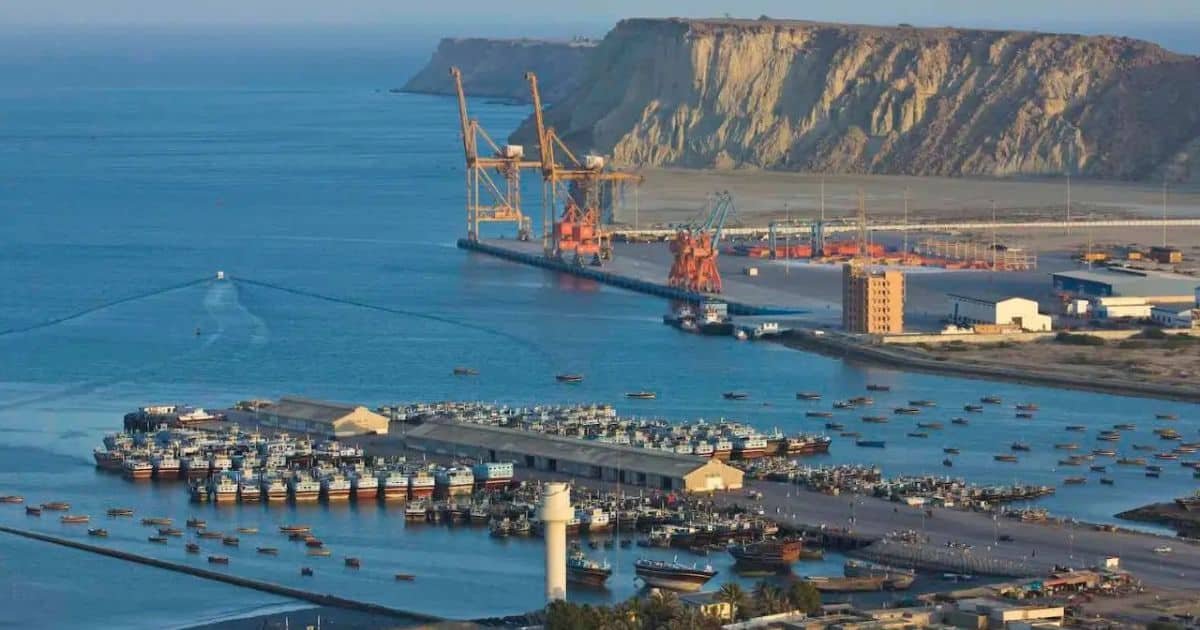



Pakistan and China have agreed to a comprehensive five-year maritime action plan (2025-2029) aimed at significantly expanding trade and connectivity by operationalizing the strategic China-Gwadar-Africa shipping corridor. The ambitious framework, which includes five feeder routes and bonded warehouses, is set to transform Gwadar into a model “Green Port” and a pivotal regional trade hub.
The agreement was reached during high-level discussions, with Federal Minister for Maritime Affairs, Muhammad Junaid Anwar Chaudhry, reaffirming Pakistan’s commitment to strengthening maritime cooperation under the China-Pakistan Economic Corridor (CPEC). The plan outlines a multi-faceted approach to advance marine economy development, promote sustainable resource use, and foster scientific research and environmental protection.
Gwadar’s Development as a Regional Trade Hub
Under the new action plan, Gwadar will be developed as a major trade hub for Central Asian Republics (CARs), Afghanistan, and West Asia. Key initiatives to achieve this goal include:
- Infrastructure Enhancement: Feasibility studies will be completed, and short-route infrastructure will be developed to enhance connectivity, linking Gwadar with the Islamabad-Türkiye-Iran rail and road corridors.
- Port Expansion: Major infrastructure projects, such as the expansion of Gwadar Port and the completion of Free Zone Stage II, will be fast-tracked. The plan also prioritizes the fast-tracking of East Bay Expressway Phase II and the integration of the New Gwadar International Airport to strengthen multi-transit connectivity.
- Smart Port Technologies: The framework promotes the adoption of electronic data interchange and smart port technologies to seamlessly link Gwadar with Chinese and global shipping networks.
Industrial and Economic Growth
The action plan includes significant provisions for industrial development and job creation. A total of 15 industries will be established in the Gwadar North Free Zone, including seafood, dates, and tuna processing plants, as well as petrochemical facilities. The plan also includes the expansion of Single Point Mooring connectivity and the anticipated relocation of car manufacturing and other industries from China.
These initiatives are projected to generate approximately 25,000 jobs and contribute 30% to Gwadar district’s GDP by 2027. To ensure the sustainability of these projects, Pakistan and China will launch a “blue economy” training program for 1,000 locals in fisheries, aquaculture, and logistics at the Gwadar Blue Economy Center. Memorandums of Understanding (MoUs) will be signed with Pakistani business entities to formalize collaboration in the operationalization of the Gwadar Port and Free Zone.
Pakistan and China have agreed to operationalise the China-Gwadar-Africa shipping corridor under the five-year maritime action plan for 2025-2029, a leading English daily has reported.
Detail: https://t.co/h9bAndxhZX#TheCurrent pic.twitter.com/5co8q2v9Qf
— The Current (@TheCurrentPK) September 18, 2025
Comprehensive Cooperation and Sustainability
Beyond infrastructure, the plan supports broader cooperation in science, industry, and tourism. Proposed initiatives include the establishment of joint marine science research centers, CPEC Industrial Parks for fisheries and shipbuilding, and maritime tourism ventures such as cruises and water sports along Balochistan’s coast.
A strong emphasis on education and sustainability is central to the plan, with academic partnerships and training exchanges between Pakistani and Chinese institutions aimed at developing a skilled workforce. The framework aligns with the Belt and Road’s “green energy and ocean” goals, demonstrating a commitment to balancing economic growth with environmental protection.
Minister Chaudhry stressed that the 2025-2029 Action Plan demonstrates Pakistan’s resolve to build a resilient maritime economy and consolidate its strategic ties with China, solidifying the two nations’ enduring partnership.
You May Like To Read:
- Mammoth Corruption | “Al-Qadir Trust Case” | Shahzad Akbar and Embezzlement of £190 Million.
- The Growing Alliance: Russia’s Strategic Engagement with the Afghan Taliban
- The Defamation Battle: Adil Raja’s Legal Woes and Shahzad Akbar’s Witness Role
- Modi’s Vision for a Reformed BRICS—Building Resilience and Innovation for Cooperation and Sustainability
- Balancing Defense Priorities with Social Sector Development