




In February 2026, the United States Environmental Protection Agency (EPA) officially revoked its 2009 “endangerment finding,” a landmark scientific and legal determination that concluded greenhouse gases such as carbon dioxide and methane pose a threat to public health and welfare. This finding, originally adopted under the administration of President Barack Obama, had served for nearly two decades as the cornerstone of U.S. federal authority to regulate emissions that contribute to climate change. Its revocation marks one of the most sweeping environmental policy shifts in recent American history, profoundly impacting climate regulations and sparking intense legal and political debates.
What Was the 2009 Endangerment Finding?
The endangerment finding stemmed from a 2007 U.S. Supreme Court decision (Massachusetts v. EPA) that clarified greenhouse gases qualify as “air pollutants” under the Clean Air Act, a key environmental law in the United States. Based on this, the EPA in 2009 determined that six greenhouse gases, including carbon dioxide, methane, and nitrous oxide “endanger” human health and welfare due to their role in accelerating climate change. This legal finding provided the basis for numerous federal rules aimed at limiting emissions from automobiles, power plants, industrial facilities, and other major sources of pollution. Without this finding, the EPA’s authority to regulate greenhouse gases under the Clean Air Act essentially collapses.
By revoking the finding, the EPA has removed its own authority to regulate greenhouse gas emissions under the Clean Air Act unless Congress passes a new law. This is not a technical adjustment; it is a structural retreat. Regulations governing vehicle fuel efficiency, power-plant emissions, oil and gas methane leaks, and industrial reporting requirements now lack a federal legal anchor. The rollback strips climate policy of enforcement teeth at the national level.
The Trump Administration’s Argument
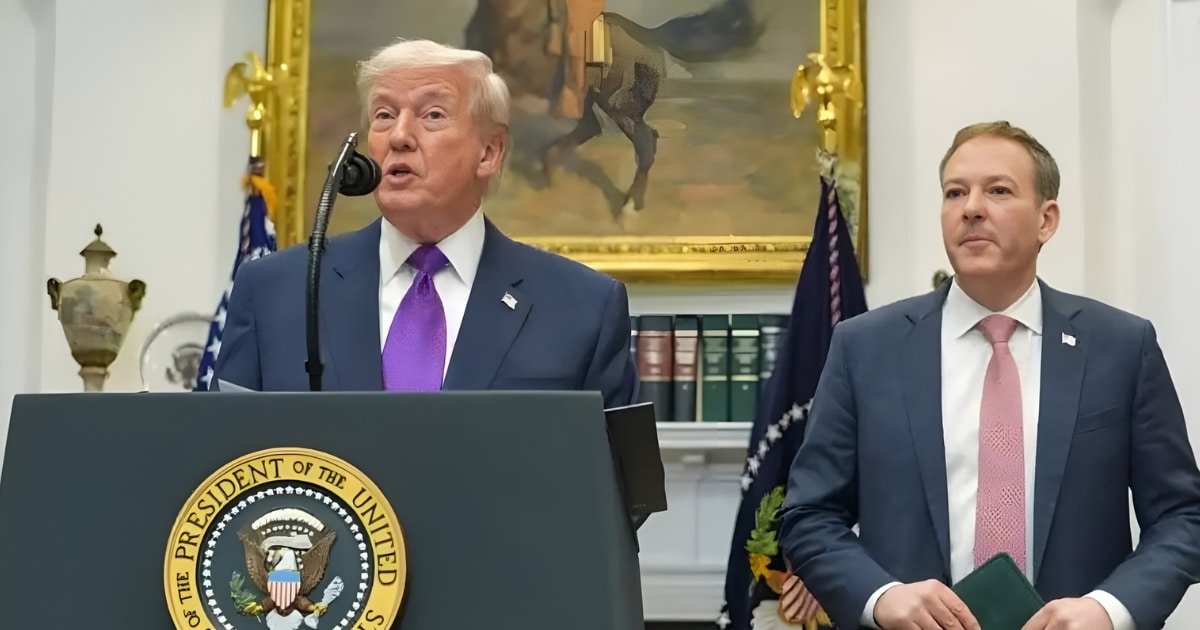
The Trump administration, led by President Donald Trump and EPA Administrator Lee Zeldin, justified revoking the endangerment finding as a deregulatory victory, arguing that previous climate rules had imposed unnecessary economic burdens on American industries and consumers. The administration labelled the 2009 finding as flawed and claimed that the Clean Air Act did not provide clear authority for regulating pollution that affects the global climate rather than local air quality. Officials said removing what they see as excessive regulation could save the U.S. economy money, particularly by reducing costs for vehicle manufacturers and simplifying compliance requirements.
During the formal announcement at the White House, President Trump declared the rollback as “the single largest deregulatory action in American history.” EPA officials also contended that shifting scientific and legal interpretations, particularly after recent U.S. Supreme Court decisions, justified the move. According to them, the statute did not clearly allow the EPA to regulate greenhouse gas emissions on the scale previously pursued, and the policy had drifted beyond what Congress originally authorized.
Immediate Policy Impacts
With the endangerment finding rescinded, many existing climate regulations tied to it have lost their legal foundation. Most notably, greenhouse gas emission standards for cars and trucks, which had required automakers to improve fuel efficiency and limit carbon emissions, have been eliminated. This will affect vehicle designs, reporting requirements, and compliance practices across the auto industry. Regulations for emissions from power plants, oil and gas facilities, and industrial operations are also now on shaky ground. In practical terms, federal limits on greenhouse gases could be rolled back or weakened, dependent on future legal battles and regulatory actions.
In addition, the EPA is proposing to end mandatory greenhouse gas emissions reporting for many sources, reducing the volume of data the government collects on pollution trends. This change will diminish the federal government’s ability to track progress in reducing emissions, complicating efforts to assess the environmental and public health impacts of climate change.
Scientific and Public Health Concerns
Critics of the rollback, including scientists and environmental groups, argue that it blatantly ignores decades of peer-reviewed research showing that greenhouse gas emissions are driving rapid changes in the Earth’s climate. Numerous studies have linked rising global temperatures to extreme weather events, sea-level rise, heatwaves, wildfires, and health risks such as respiratory and cardiovascular illnesses. Under the original endangerment finding, these scientific assessments helped justify federal action to reduce emissions and protect public welfare.
Many climate scientists emphasize that evidence of climate harm is now stronger than ever, with recent years among the hottest on record globally. These scientists say removing the legal basis for regulating greenhouse gases hampers efforts to mitigate future temperature rises and increases the vulnerability of communities worldwide, especially in developing countries that lack resources for adaptation.
Political and Legal Backlash
Senior Democrats in Congress have also voiced fierce criticism. Former President Barack Obama, whose administration originally issued the endangerment finding, condemned the repeal in a blunt statement, warning that it “will make Americans less safe, less healthy and less able to fight climate change, all so the fossil fuel industry can make even more money.” Meanwhile, prominent U.S. lawmakers such as Senator Sheldon Whitehouse have described the rollback as a politically motivated attack on science and law, framing it as a gift to fossil fuel interests and a betrayal of legal precedent upheld by the Supreme Court since 2007.
On the legal front, environmental groups and public health organisations are preparing immediate lawsuits. National advocacy organisations including the Natural Resources Defense Council, Earthjustice, and the Sierra Club have announced plans to challenge the repeal in federal court, arguing that the EPA’s reasoning is inconsistent with both the Clean Air Act and more than a decade of case law that has repeatedly affirmed the endangerment finding. David Doniger, a senior attorney with the Natural Resources Defense Council, called the EPA’s action a “kill shot” aimed at dismantling climate rules and indicated legal filings would be lodged without delay.
For over a decade, the Endangerment Finding has protected Americans from dangerous climate pollution. The EPA’s authority to regulate greenhouse gas emissions has been upheld time and time again, and we’ll see them in court to defend it. https://t.co/EG4bXhzzBH
— NRDC 🌎🏡 (@NRDC) February 15, 2026
Economic Calculations and Contested Claims
The Trump administration’s assertions about economic savings have also been challenged. While officials claim reduced regulatory costs will benefit American consumers and industries, independent analyses suggest eliminating emission standards could result in higher fuel consumption, greater energy costs, and increased economic burdens related to climate impacts. Some estimates indicate that increased gasoline expenses alone could offset any short-term manufacturing savings. Moreover, modelling by environmental advocacy groups warns that ignoring climate costs could result in trillions of dollars in long-term damages from heatwaves, storms, and health care impacts.
International energy market analysts also note that deregulating greenhouse gas emissions in the United States, the world’s largest historic emitter, may slow global investment in renewable energy and clean technology, potentially delaying broader global climate action.
Global and Long-Term Implications
From a global perspective, the U.S. rollback of key climate authority arrives at a critical moment. Most countries are working under international frameworks such as the Paris Agreement to reduce emissions and limit global warming. The United States, already withdrawn from the Paris framework under the Trump administration, now eliminates one of its domestic legal tools for climate action. This has concerned climate diplomats and experts abroad, many of whom argue that strong national policies in major economies are essential for meaningful climate progress.
Even within the U.S., states can still pursue emissions limits and climate policies independent of federal action. Several states have their own regulations for vehicles, power plants, and clean energy targets. However, without federal backing, achieving the scale of greenhouse gas reductions scientists say is necessary to avoid catastrophic warming becomes significantly more difficult.
You May Like To Read: Health and Environmental Coalition Sues Trump Administration to Restore Landmark Climate Science Finding
Conclusion
The EPA’s decision to revoke the 2009 endangerment finding represents a watershed moment in climate policy. By overturning the legal basis for federal greenhouse gas regulation, the Trump administration has ignited fierce political debate, scientific criticism, and legal challenges that are likely to unfold for years. While the rollback may deliver regulatory relief for some industries and align with the administration’s deregulatory agenda, its long-term effects on public health, environmental quality, and global climate efforts remain deeply contested. With climate change accelerating and its impacts intensifying around the world, the consequences of this policy shift will be felt far beyond U.S. borders.
Check out our latest video: