

Regional Overview: Afghanistan’s Drug Hub and Pakistan’s Transit Corridor
Afghanistan remains the world’s primary producer of illicit opium and heroin, accounting for over 90% of global supply and supplying most of Europe and Asia. Despite a Taliban-imposed ban in April 2022, opium cultivation surged 19% in 2024 to around 12,800 hectares, recovering from earlier declines but still far below the pre‑ban peak of over 232,000 hectares in 2022—reported Reuters.
Source: Reuters
Pakistan’s porous border and strategic position make it one of the main transit corridors for Afghan narcotics. A significant share is often estimated at two-thirds of Afghan opiates traffic, through Pakistani territory en route to global markets revealed the Vanity Fair.
Source: Vanity Fair
Smuggling organizations and insurgent-linked networks, notably the Quetta Shura Taliban, directly tax, produce, and transport drugs across the Durand Line into Pakistan and beyond, primarily through the Golden Crescent.
Source: The International Affairs Review
Smuggling Methods and Network Structures
Pakistan hosts a wide array of organized criminal groups operating with distinct structures and objectives. In major urban centers like Karachi, powerful syndicates dominate the retail drug trade, engage in protection rackets, and often benefit from political patronage that shields them from law enforcement scrutiny.
In the tribal regions of Balochistan and Khyber Pakhtunkhwa, smuggling is largely controlled by influential clans that rely on kinship-based networks and local influence to manage cross-border illicit flows. These borderland groups exploit the region’s porous terrain and weak governance to sustain long-standing smuggling routes.
Compounding the threat, several militant-linked groups; including the Fitna-al-Khawarij (FAK), Fitna-al-Hindustan (FAH), and the Haqqani network, have developed hybrid models that blend extremist ideology with criminal enterprise. These organizations fund their operations through drug trafficking, extortion, and the illegal movement of people and goods.
A key enabler of this ecosystem is the extensive use of illicit financial networks, particularly the hawala system, which allows for the untraceable transfer of funds across borders—reported UNODC. This convergence of militancy, smuggling, and shadow finance poses a significant challenge to Pakistan’s internal security and regional stability.
Human Smuggling and Migrant Trafficking: An Overlapping Threat
Pakistan is both an origin and transit country for human smuggling and trafficking. The human costs are both local, bonded labour, sexual exploitation, organized begging, and international, as migrants are funneled through Iran, Turkey, and beyond toward Europe. Each year, 80,000 to 100,000 Pakistanis attempt irregular migration via these criminal networks, with many trafficked into debt‑bondage or sexual exploitation.
From 2022 to 2025, over 5,000 Pakistanis were deported from Saudi Arabia for organized begging; in 2022 alone, authorities identified around 26,539 trafficking victims; 75% female. A tragic example is the Atlantic crossing from West Africa to Spain’s Canary Islands.
In January 2025, 44 Pakistani migrants died during a fishing-boat journey organized via complex smuggling routes spanning Pakistan, Ethiopia, Senegal and Mauritania. Survivors described severe abuse, captivity, and human rights violations during the months-long ordeal. Pakistani authorities have arrested only low-level participants, leaving ringleaders and cross-border organizers untouched.

Source: AP News
Impact on Pakistan’s Security and Governance
The intersection of drug trafficking and human smuggling networks has profound implications for Pakistan’s national security and governance.
Illegal smuggling routes provide critical financial lifelines for militant and extremist groups. Insurgent-connected organizations such as the FAK and FAH exploit criminal proceeds, particularly from narcotics, to fund operations, procure weapons, and underwrite logistics, effectively forging a narco-terror nexus that amplifies insurgency and regional instability.
Economically, illicit trade inflicts severe damage. Pakistan reportedly loses about Rs 3.4 trillion annually (approximately 26% of the annual tax target) to smuggling, counterfeit goods, and trade-based fraud, with nearly Rs 1 trillion linked to abuses of the Afghanistan Transit Trade route.
In the fiscal year 2023–24, the Federal Board of Revenue seized smuggled commodities worth Rs 106 billion, up from Rs 63 billion the previous year, highlighting the escalating volume of illicit goods and gaps in enforcement. This informal economy; which undermines formal trade, fuels corruption, and distorts price mechanisms, threatens macroeconomic stability and drains public revenues. Institutional weaknesses compound these challenges.
Agencies such as the FIA, ANF, Customs, and police operate largely in silos, lacking cohesive inter-agency intelligence sharing or centralized processes. Although the ANF reported seizing 176 tonnes of narcotics in 2024, follow-up prosecutions, particularly of senior organized crime leaders, and coordinated asset recovery remain limited. The absence of a unified national crime database hampers comprehensive prosecutions, intelligence-led disruption, and strategic oversight.
On the social front, Pakistan grapples with mounting drug addiction and public health crises. According to UNODC data, Pakistan is home to approximately 6.7 million drug users, with about 860,000 heroin users and around 19,000 methamphetamine users as of the 2013 survey; drug dependency affected over 4 million individuals.
Cannabis remains the most prevalent drug. Injection drug use has surged, particularly in Punjab; rising from roughly 90,000 users in 2007 to nearly 500,000 by 2014, contributing to heightened HIV rates that climbed from 11% in 2005 to 40% in 2011. Healthcare workers in government hospitals report overwhelming numbers of collapsed or terminally dependent meth and heroin users, straining already overstretched medical resources. This mounting addiction-burden not only endangers public health but also exacerbates poverty, violence, and crime within communities.
Countermeasures and Regional Cooperation
Pakistan has invested in counter-narcotics policy frameworks: laws such as the “Prevention of Trafficking in Persons Act” (2018) and “Prevention of Smuggling of Migrants Act” (2018) provide statutory grounds for prosecution.
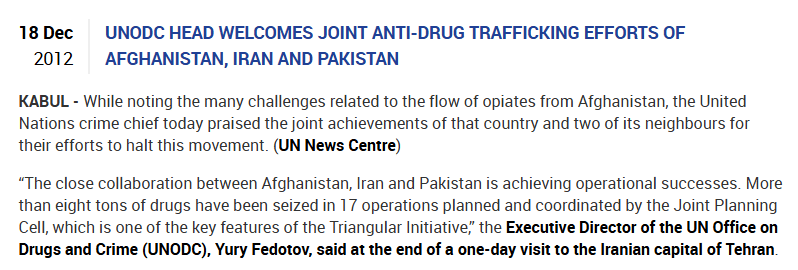
At a regional level, Pakistan has been active in the UNODC-facilitated Triangular Initiative with Afghanistan and Iran since 2007, operating under joint intelligence-sharing mechanisms and coordinated field operations targeting drug and precursor smuggling routes. Under this framework, Pakistan has overseen simultaneous counternarcotics operations, information exchange, and border patrol coordination.
Source: UNAMA
Yet capacity remains uneven. Experts emphasize the need for integrated data-driven strategies, improved training for law enforcement, adoption of digital tracking systems, and enhanced regulation of informal financial networks like hawala. Civil society organizations are also vital partners in victim support, policy advocacy, and awareness campaigns.
Strategic Measures to Combat Organized Crime
To effectively counter the growing sophistication of organized crime, Pakistan must adopt a multifaceted strategy that addresses both structural weaknesses and cross-border dynamics. Strengthening border security is paramount, particularly completing and upgrading the Durand Line barrier, which currently stretches over 2,640 kilometers and includes razor wire, surveillance towers, and drone monitoring. Despite these measures, traffickers continue to exploit vulnerable entry points such as the Khyber and Khojak passes.
Equally critical is fostering institutional synergy. This can be achieved by establishing a centralized crime intelligence database accessible to key agencies including the FIA, Anti-Narcotics Force (ANF), Customs, police, and the judiciary. Such coordination would enhance the effectiveness of investigations, prosecutions, and asset seizures. On the financial front, targeted disruption of illicit hawala corridors is essential. Pakistan must bolster its Anti-Money Laundering (AML) and Countering the Financing of Terrorism (CFT) frameworks while closely monitoring large remittance hubs, particularly those involving the diaspora and the UAE, where many transactions occur off the radar.
Legal modernization should also be prioritized through regular updates to anti-trafficking and anti-smuggling laws, along with expanded judicial protections for whistleblowers, investigators, and victims. On the demand side, Pakistan must invest in robust public health initiatives focused on drug addiction treatment, widespread awareness campaigns, HIV/AIDS prevention, and long-term rehabilitation services to reduce domestic dependency on narcotics. Finally, regional engagement remains a critical pillar of this strategy. Pakistan should deepen its cooperation with Iran and Afghanistan under UNODC mandates, strengthen maritime interdiction capabilities, and enable real-time intelligence sharing to dismantle transnational trafficking networks more effectively.
Conclusion
A growing sophistication and transnational reach characterize organized crime in the region. Drug trafficking emanating from Afghanistan and facilitated through Pakistan remains tightly interwoven with militant funding, smuggling infrastructure, and illicit marketplace dynamics. Meanwhile, human smuggling operations exploit vulnerable populations to feed ruthless migration pipelines. Addressing these intertwined threats requires fiscal resilience, legal reform, better enforcement coordination, and sustained international cooperation, to shield Pakistan’s national security and uphold regional stability.