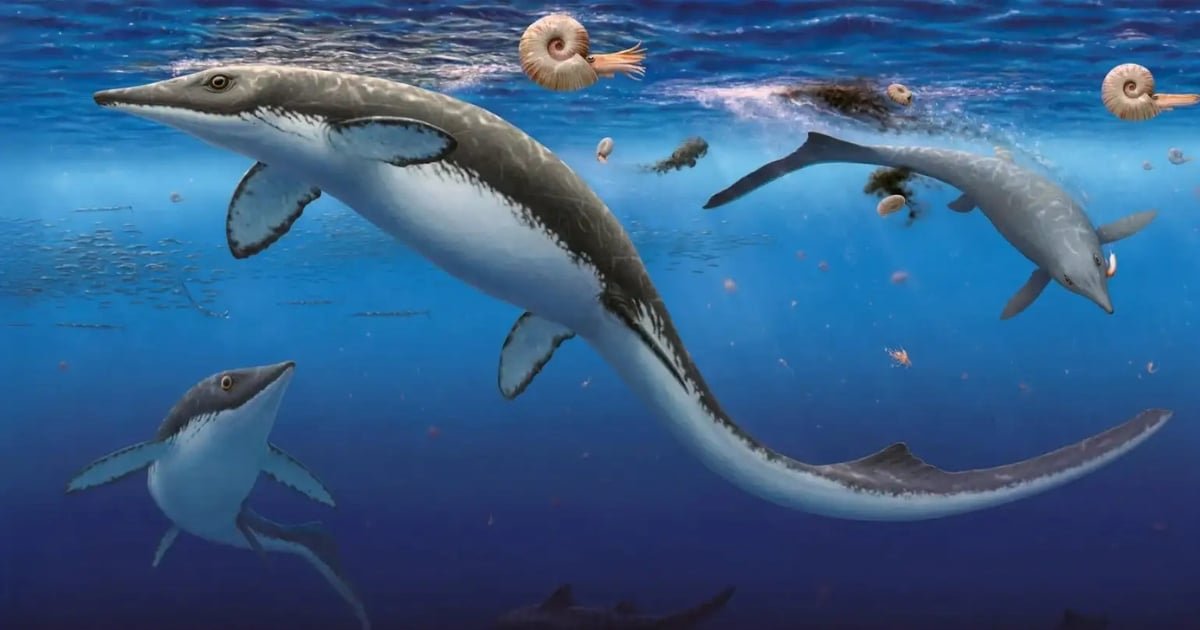





A massive paleontological discovery on the Arctic island of Spitsbergen has upended the long-held scientific theory that Earth’s oceans took nearly ten million years to recover from the “Great Dying” mass extinction. According to a study by the Swedish Museum of Natural History, researchers have identified over 30,000 fossils, including teeth, bones, and scales, dating back 249 million years. This evidence proves that a complex, thriving marine ecosystem with top-tier predators emerged just three million years after the end-Permian extinction wiped out 90% of life on Earth. The find suggests that land-dwelling animals adapted to the sea far earlier and more rapidly than previously believed, challenging the traditional “slow recovery” model taught in textbooks for decades.
You May Like To Read: Senate Confirms Billionaire Jared Isaacman as NASA Administrator
The excavation revealed an incredibly diverse food web that included bony fish, sharks, and fully aquatic reptiles such as ichthyosaurs and archosauromorphs. Most notably, the bonebed contained remains of apex predators exceeding five meters in length, alongside smaller squid-eating hunters, indicating a mature and multi-layered predatory structure. Researchers believe this “ecosystem reset,” triggered by the extreme global warming and ocean acidification of the era, created immediate ecological vacancies that were filled with unprecedented speed. This discovery, now featured in the journal Science, suggests that the evolution of marine reptiles may have actually begun before the mass extinction event, providing a new perspective on how life adapts to catastrophic climate shifts.
Check out our latest video: