


Food prices are no longer only about harvests and supermarkets. In 2025, basic staples such as wheat and rice have become instruments of geopolitics, trade policy and domestic politics, and South Asia, with its dense populations and thin social safety nets, is paying the price. While global supply figures point to adequate production in some places, local shortages, export controls and policy choices have pushed food inflation into a political and economic crisis for many households across the region.
Global Food Price Trends in 2025
Global price indexes show that food costs have risen again in 2025, driven by several commodity groups even as cereal prices broadly softened. The United Nations’ Food and Agriculture Organization reported that its Food Price Index in August 2025 averaged 130.1 points, slightly higher year-on-year, signalling renewed pressure on consumers worldwide. That headline number masks large differences: oils, sugar and meat contributed most to the rise, while cereals, including wheat and rice, showed mixed moves depending on region and policy developments.
You May Like To Read: Norway Crushes Israel 5-0 in Masterclass Performance
India’s Policy Leverage in Rice and Wheat
A major driver of the recent upheaval has been trade policy. India, the world’s largest rice exporter, moved through a period of export restrictions and then a phased lifting of some curbs. In 2025, India’s government stocks of rice and wheat are unusually large, giving New Delhi the power to influence world markets by restricting or releasing supplies at will. That leverage helped lower international rice prices at times but also created uncertainty in markets that depend on steady flows from India. For countries in South Asia that import rice or depend on cross-border trade, policy shifts in New Delhi can quickly translate into local shortages or sharp price swings.
Market Distortions in Asian Rice Supply
At the same time, supply shocks and domestic dynamics are biting. Major Asian markets have experienced odd mixes of high stockpiles and rising retail prices. Indonesia, for example, saw medium-grade rice prices surge in 2025 even after a good harvest, a result of government procurement moves and market distortions that created an artificial shortage and forced authorities to release state reserves. Such episodes show that production numbers alone do not protect consumers when procurement policies, quality rules and market incentives create tightness at the point of sale.
The Situation in Pakistan
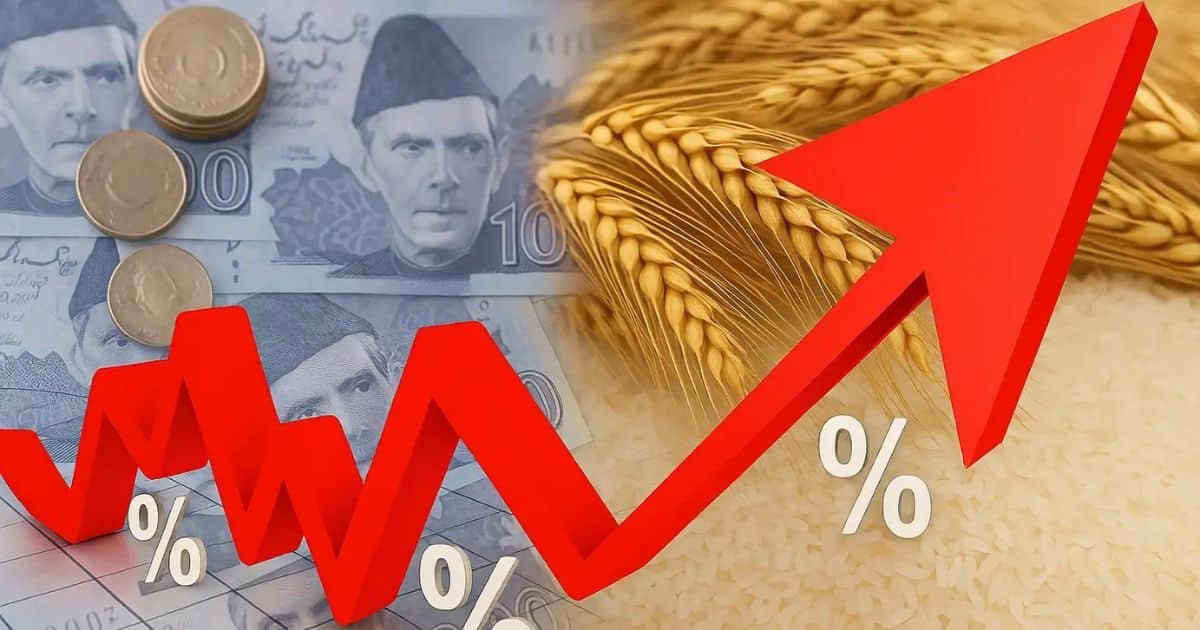
For Pakistan and its neighbours, the consequences are immediate and painful. Pakistan’s headline inflation has been volatile in 2025, surging up to 6.5%, and flood has been the main culprit behind recent spikes. Analysts warned in September that flood-damaged crops and rising prices for wheat and flour would push consumer price inflation sharply higher. When bread and rice become more expensive, poor households, who spend a large share of income on food, face immediate hunger risks, while middle-income households cope by cutting other essential spending. That squeeze reduces domestic demand and complicates economic recovery.
Global Production vs Local Shortages
The supply-side story is not uniformly bleak. Recent USDA outlooks for wheat and rice point to healthy global production forecasts for 2025/26, with world wheat production projected at record levels and rice prices pressured by larger supplies in some exporters. But those aggregate figures can hide regional bottlenecks, including transport problems, port congestion, currency swings and the timing of harvests can all produce local shortfalls even in a world with abundant harvests overall. In plain terms, global abundance does not always equal local availability at affordable prices.
Food as a Tool of Geopolitics
Geopolitics amplifies these problems. Export restrictions, stockpiling and government procurement are often political tools used to shield domestic voters from price pain. Yet when major exporters use those tools, the cost is exported to import-dependent neighbours. In South Asia, where food markets are closely interlinked and per capita buffers are small, the ripple effects are swift. Beyond short-term hardship, sustained food-price inflation worsens macroeconomic balances: central banks face trade-offs between taming inflation and supporting growth, fiscal cushions erode as subsidies rise, and social stability becomes harder to manage.
What Needs to Be Done
What can be done? First, regional cooperation on trade and transparent stock release mechanisms would help, predictable access to grains during lean months prevents panic buying and stabilises prices. Second, Pakistan and other vulnerable countries must strengthen food-targeting systems: cash transfers and food vouchers aimed at the poorest are more efficient than blanket subsidies and can blunt immediate pain without derailing budgets. Third, investments in storage, logistics and crop resilience, including better irrigation and seed varieties, reduce the frequency and severity of domestic shortfalls when global markets wobble.
None of these measures is easy. Political incentives favour visible subsidies over less visible investments. Regional diplomacy is complicated by competing priorities. But the alternative is clear: allowing food inflation to become a permanent feature will deepen poverty and increase instability across South Asia. The lesson of 2025 is stark, food is a geopolitical commodity now, and only a mix of domestic policy reform and regional cooperation can protect the most vulnerable from price shocks.
You May Like To Read: Pakistan’s Cyclon Tech, and China’s Shaanxi Water Launch Smart Water Partnership to Reshape Pakistan’s Water Management Landscape
Concluding
Citizens measure policy by what they find on their plates. For Pakistan, the task is urgent: stabilize markets, protect the poor, and build the agricultural resilience that makes the country less vulnerable to the policy swings and market power of larger exporters. Otherwise each harvest and each policy change elsewhere in the world will continue to echo painfully in Pakistani kitchens.