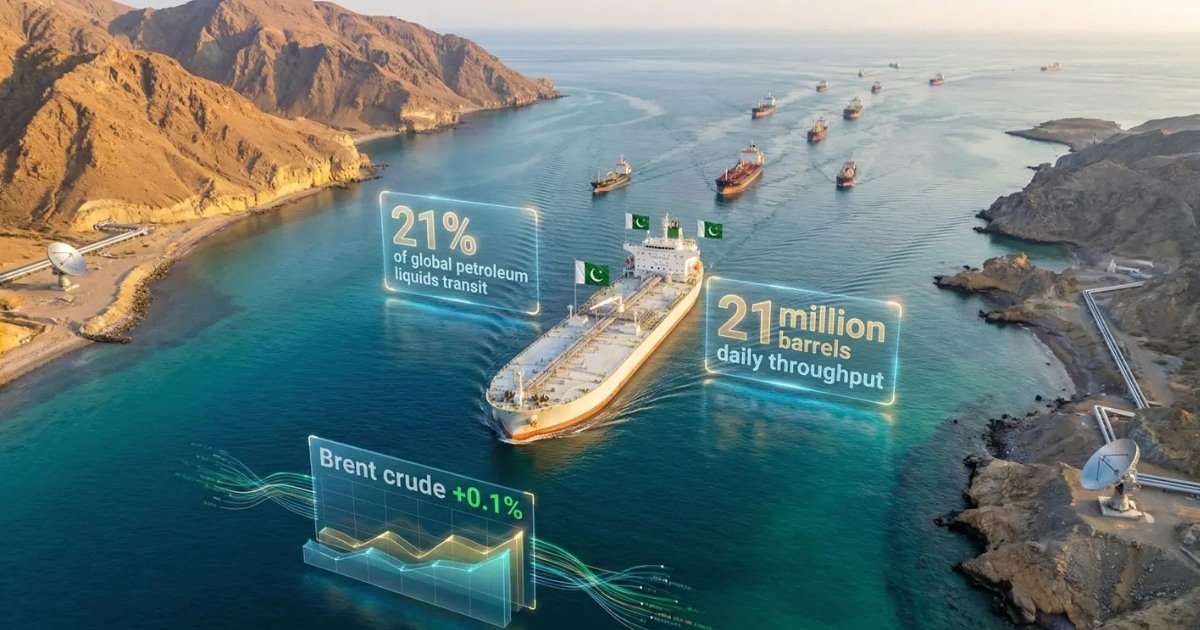





In a landmark diplomatic victory for Islamabad, Foreign Minister Ishaq Dar announced that Iran has agreed to allow 20 Pakistani-flagged vessels to transit the Strait of Hormuz. The deal, described by Dar as a “harbinger of peace,” marks the first significant breach in the maritime blockade that has paralyzed global trade since the outbreak of the US-Israel-Iran war on February 28. The agreement comes as oil prices surge past $100 a barrel and maritime traffic through the world’s most critical energy chokepoint remains down by a staggering 90%.
#Iran has agreed to allow an additional 20 Pakistani-flagged vessels to pass through the Strait of Hormuz, with two ships permitted to transit daily, Pakistan’s Foreign Minister Ishaq Dar says. #Pakistan https://t.co/GET8LfmJym
— Al Arabiya English (@AlArabiya_Eng) March 29, 2026
The Shipping Arrangement: A Daily Corridor
Under the new protocol, two Pakistani ships will be permitted to cross the strait daily, providing a vital “relief valve” for Pakistan’s domestic energy crisis.
-
The Transit Process: To secure passage, vessels must submit cargo details and crew lists to IRGC-approved intermediaries, receive a clearance code, and be escorted through Iranian territorial waters.
-
Diplomatic Signaling: Dar pointedly addressed his announcement to top US officials—including Vice President JD Vance and Secretary of State Marco Rubio—and Iranian FM Abbas Araghchi, framing the deal as a foundation for broader regional de-escalation.
The High Cost of the “Checkpoint”
Since the effective closure of the waterway following the assassination of Ayatollah Ali Khamenei, Iran has transformed the strait into a high-revenue toll zone.
-
The “Ransom” Fee: Reports indicate that vessels granted passage have paid up to $2 million per crossing, with settlements being made in Chinese yuan.
-
Legitimizing the Toll: The Iranian parliament is currently drafting legislation to permanently codify this authority, a move Emirati Minister Sultan Al Jaber has labeled “economic terrorism.”
-
Global Paralysis: Roughly 2,000 vessels remain stranded on either side of the waterway. WTO head Ngozi Okonjo-Iweala warned that global trade is experiencing its “worst disruptions in 80 years.”
Pakistan’s “Mediation Gambit”
The shipping deal is the direct result of a week of high-intensity “shuttle diplomacy” by Islamabad.
-
The Military Track: Army Chief Field Marshal Asim Munir held direct talks with President Donald Trump on Sunday to coordinate de-escalation windows.
-
The Civilian Track: FM Ishaq Dar leveraged Pakistan’s 900km border with Iran to secure terms that mirrored a similar agreement recently granted to Malaysia.
-
Host City: MOFA spokesperson Tahir Andrabi reiterated that Islamabad remains ready to host formal US-Iran negotiations, which are rumored to be scheduled for later this week.
Trump’s “Window” and the Path Forward
The transit agreement arrives at a critical juncture in the military campaign.
-
The Five-Day Pause: President Trump confirmed that Washington has eased strikes on Iranian power plants for a five-day window to allow for diplomatic movement. However, that window closes today, and Israel has maintained that its own strikes will continue regardless.
-
“The Strait of Trump”: In a notable gaffe at a Miami investor forum, Trump referred to the waterway as the “Strait of Trump” before correcting himself, highlighting the personal stakes the US administration has in reopening the route.
You May Like To Read: Israeli Police Block Catholic Head from Church of the Holy Sepulchre for Palm Sunday Mass
Check out our latest video: