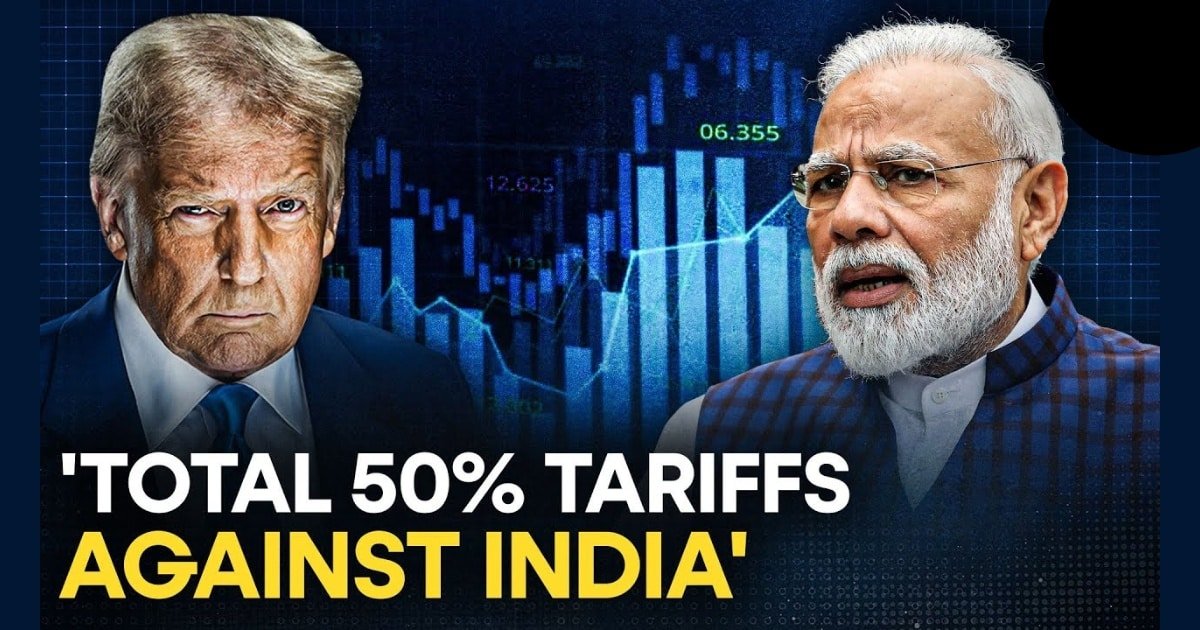



In a move that signals a significant downturn in bilateral economic relations, the United States, under the Trump administration, has sharply increased tariffs on goods imported from India to 50%. This drastic doubling of the previous 25% tariff comes amidst escalating tensions between the two nations, primarily stemming from India’s continued purchase of discounted Russian oil despite Western pressure and sanctions related to the Ukraine conflict.
The decision, announced in Washington D.C., has been met with strong reactions globally, with many analysts pointing to the deteriorating state of “US-India relations, now seemingly at their worst“. The punitive tariffs are widely interpreted as a direct attempt by the Trump administration to coerce New Delhi into altering its energy policy and aligning more closely with Washington’s stance on Russia.
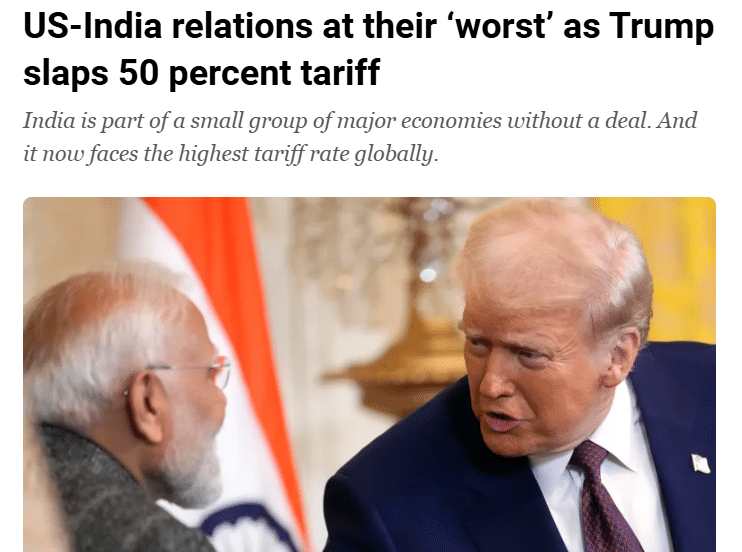
Source: Al Jazeera
A Crippling Blow to Trade Ties
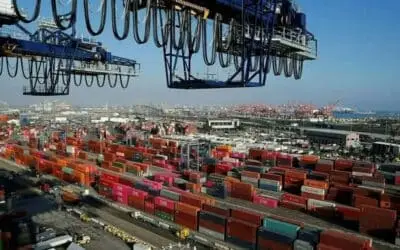
The “hike in tariffs“ is expected to have a significant impact on a wide range of Indian exports to the United States, potentially crippling sectors that rely heavily on the American market. These could include textiles, agricultural products, and various manufactured goods, making them considerably more expensive for U.S. consumers and less competitive against products from other countries.
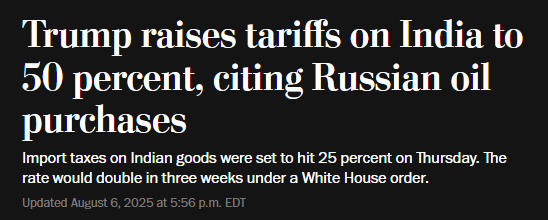
Source: Washington Post
While the specific list of affected goods has yet to be fully detailed, the sheer magnitude of the tariff increase suggests a broad application across multiple sectors. This move is likely to trigger retaliatory measures from India, further exacerbating the trade dispute and potentially leading to a full-blown trade war between two of the world’s largest economies. The implications for global supply chains and international trade dynamics could be substantial.
You May Like To Read: Prime Minister Modi to Visit China Amid US Diplomatic Tensions
The Russia Oil Factor: A Point of Contention
The primary catalyst for this aggressive trade action remains India’s continued procurement of Russian crude oil. Since the onset of the Ukraine conflict and the subsequent imposition of sanctions by Western nations, Russia has been offering its oil at significant discounts. India, seeking to secure affordable energy supplies for its massive and growing economy, has emerged as one of the largest buyers of this discounted oil.
Despite repeated warnings and implicit threats from Washington, New Delhi has consistently defended its energy policy as a matter of national interest and strategic autonomy. The Indian government has emphasized its commitment to diversifying its energy sources but has also underscored the economic imperative of securing affordable oil, particularly for its large population. Sources indicate that “India refiners are waiting for government order on Russian oil purchases“, suggesting a current state of uncertainty but no immediate indication of a policy shift despite the increased tariffs.
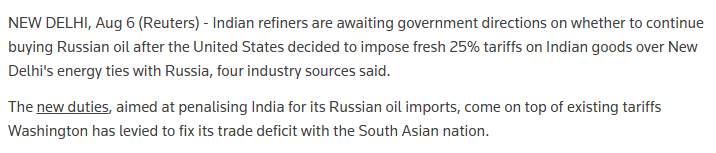
Source: Reuters
A Departure from Strategic Partnership?
The dramatic increase in tariffs marks a significant departure from the generally positive trajectory of US-India relations in recent decades. While there have been occasional trade disputes, the overall relationship has been characterized by increasing strategic convergence, particularly in the context of the Indo-Pacific and concerns about China’s growing influence.
Analysts suggest that the Trump administration’s decision prioritizes its stance on Russia and the enforcement of its sanctions regime above the strategic partnership with India. The “BBC analysis” highlights the delicate balancing act India has been attempting, navigating its relationships with both the West and Russia, and the increasing difficulty of maintaining this equilibrium in the face of assertive U.S. policy. The move could force India to re-evaluate its foreign policy choices and potentially strengthen its ties with other nations, including Russia and China.
You May Like To Read: Tragedy Strikes Off Yemen Coast as Migrant Boat Sinks, 76 Dead
Implications for the Region and Pakistan’s Perspective
From Pakistan’s vantage point in Lahore, this escalating trade war between two major regional players is likely to be viewed with a mix of concern and strategic observation. The instability in trade relations between the US and India could have ripple effects on the broader South Asian economy. Moreover, any significant shift in India’s foreign policy alignment could have implications for regional security dynamics.
The increased tariffs and the underlying tensions over Russian oil purchases underscore the complex and interconnected nature of global geopolitics. India’s defiance in the face of U.S. pressure has seemingly triggered a strong economic response, highlighting the limitations of strategic partnerships when core national interests diverge. The situation will be closely watched in Islamabad for its potential impact on the regional economic and security landscape.