


In a significant reaffirmation of their deep-rooted historical and fraternal ties, Pakistan and Indonesia are embarking on a new chapter of enhanced bilateral cooperation, with a particular focus on bolstering defence, economic, and strategic partnerships. Recent high-level meetings in Islamabad and Rawalpindi underscore a shared vision for regional stability and mutual prosperity.
The impetus for this invigorated partnership comes from the recent visit of Indonesia’s Minister for Defence, Lieutenant General (Retired) Sjafrie Sjamsoeddin, to Pakistan.3 His itinerary included pivotal meetings with top Pakistani leadership, signaling a concerted effort to explore new frontiers of collaboration.
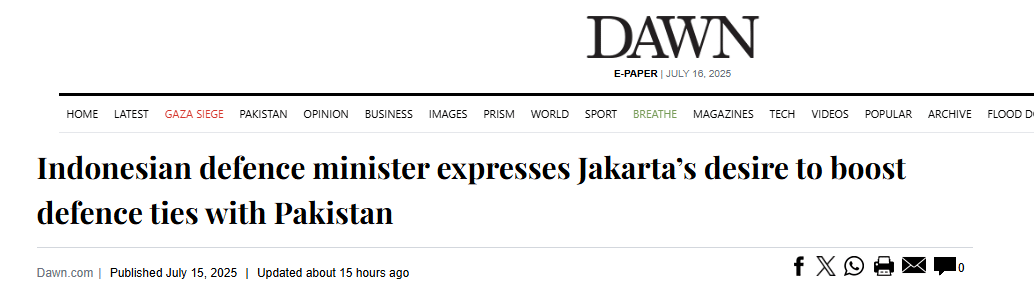
Source: Dawn
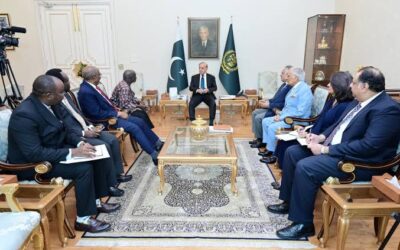
During his meeting with Prime Minister Shehbaz Sharif, Minister Sjamsoeddin expressed Indonesia’s keen interest in deepening defence ties and exploring potential cooperation, especially in defence production. Prime Minister Sharif reciprocated this enthusiasm, underscoring Pakistan’s unwavering commitment to expanding collaboration across various sectors, including economic, strategic, trade, and notably, defence and defence production.
The leaders highlighted the enduring friendship between their nations, bolstered by shared cultural, religious, and historical bonds, which have translated into mutual support on international forums. Both sides agreed to accelerate the implementation of key initiatives under the existing Pakistan-Indonesia Defence Cooperation Agreement, reviewing ongoing progress and charting a course for future endeavors.
Simultaneously, Indonesian Defense Minister Sjamsoeddin’s meeting with COAS Field Marshal Syed Asim Munir at the General Headquarters (GHQ) in Rawalpindi further solidified the military-to-military dimension of this bilateral partnership. The discussions encompassed bilateral defence collaboration and regional security dynamics.
Field Marshal Syed Asim Munir emphasized the crucial role of mutual cooperation in maintaining peace and stability in the region. The Indonesian Defence Minister particularly lauded the Pakistan Army’s professional achievements and its significant contributions to counter-terrorism efforts, reiterating Indonesia’s resolve to strengthen defence relations with Pakistan.
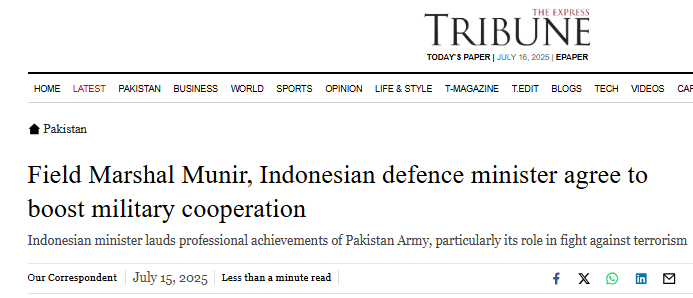
Source: Tribune
Key Avenues of Bilateral Cooperation
Defence Cooperation
The burgeoning defence partnership holds substantial implications for Pakistan’s defence industry and export potential. Pakistan has emerged as a notable exporter of military equipment, with a diverse portfolio ranging from small arms and ammunition to sophisticated platforms. These include the JF-17 Thunder fighter jet (co-developed with China), the Al-Khalid Main Battle Tank, and Super Mushshak aircraft, along with advanced drones.
Pakistan has set ambitious targets for defence exports, evidenced by the Memoranda of Understanding (MoUs) signed during the International Defence Exhibition and Seminar (IDEAS 2024), with a potential to earn approximately USD 30 billion in the coming years. Pakistan’s focus is on increasing its defence footprint globally, and Indonesia represents a crucial market in Southeast Asia.
Indonesia, while striving for greater self-reliance in its defence sector through state-owned enterprises like PT Pindad, PT PAL, and PT Dirgantara Indonesia, continues to import a significant portion of its defence hardware. Its current procurement partners include: Russia, South Korea, France, Norway, and Turkey. Furthering of defense ties with Pakistan indicates a strategy of diversifying its defence sourcing.
This scenario presents a prime opportunity for Pakistan to increase its footprint in the Indonesian defence market not just through direct sales but also through more integrated forms of cooperation.
Source: The Jakarta Post
Cooperation could extend beyond mere sales to include joint ventures in defence production, technology transfer, and collaborative research and development. Indonesia’s expressed interest in “cooperation, especially in defence production,” aligns with Pakistan’s capabilities and its efforts for enhancing technological sophistication in its defence products and exploring new markets in Southeast Asia. This could involve joint manufacturing of components or even complete systems like the JF-17, for which Indonesia has already signaled interest.
Economic and Trade Expansion
Beyond the military sphere, the deepened ties are poised to open multiple avenues for cooperation across various sectors, analyzing relevant aspects for both countries:
While Indonesia enjoyed a significant trade surplus with Pakistan in 2023, there is immense potential to balance and expand bilateral trade. The existing Indonesia–Pakistan Preferential Trade Agreement (PTA), signed in 2012, can be leveraged to explore new product categories and reduce trade imbalances. Both countries are keen on exploring joint ventures and investment in mutually beneficial projects.
The Indonesian Chamber of Commerce and Industry (Kadin) has identified food security and energy security as priority areas for enhanced collaboration, highlighting opportunities for Pakistani exports of agricultural products and other commodities. Upcoming trade missions and expos are expected to boost bilateral trade, particularly benefiting micro, small, and medium enterprises (MSMEs).
Source: The Gulf Observer
Strategic Alignment and Diplomatic Support
Both Pakistan and Indonesia, as significant Muslim-majority nations and members of various international bodies (like the OIC and ASEAN for Indonesia), share a common heritage and often support each other in international forums. This strategic alignment extends to regional peace and stability. Enhanced dialogue on regional security dynamics, counter-terrorism efforts, and broader geopolitical issues can strengthen their collective voice and influence on the global stage, contributing to a multipolar world order.
Broader Implications for Both Countries
This development is significant for both Pakistan and Indonesia in multiple dimensions;
- Economic Resilience: Diversifying trade and investment partnerships, particularly with dynamic economies like Indonesia, enhances Pakistan’s economic resilience by opening new markets for its products and services. For Indonesia, it expands market access for its goods and strengthens supply chains, contributing to overall economic stability and growth.
- Strategic Autonomy: Collaboration in defence production and technology transfer reduces reliance on limited suppliers, fostering greater strategic autonomy for both nations in their defence procurement and capabilities. This is relevant for Indonesia, which seeks to boost its domestic defence industry and reduce its dependence on imported equipment for maintenance and technology.
- Regional Influence: A stronger Pakistan-Indonesia axis can contribute to greater stability and cooperation within the broader Asian region, amid rising geopolitical complexities. Their combined diplomatic weight can be instrumental in addressing regional challenges, promoting multilateralism, and contributing to the security architecture of Indo-Pacific.
- Technological Advancement: Joint ventures in defence, health, and other sectors can stimulate technological advancement and innovation within both countries, leading to job creation, skill development, and overall industrial growth.
Conclusion
The recent high-level engagements between Pakistan and Indonesia signify a pivotal moment in their bilateral relations. The expressed desire to deepen ties across defence, economic, and strategic spectrums, coupled with concrete plans for cooperation in defence production, trade, and health, sets the stage for a robust and mutually beneficial partnership that will resonate across all relevant aspects of both nations, fostering greater stability and prosperity in Asia.