

The End of a Global War
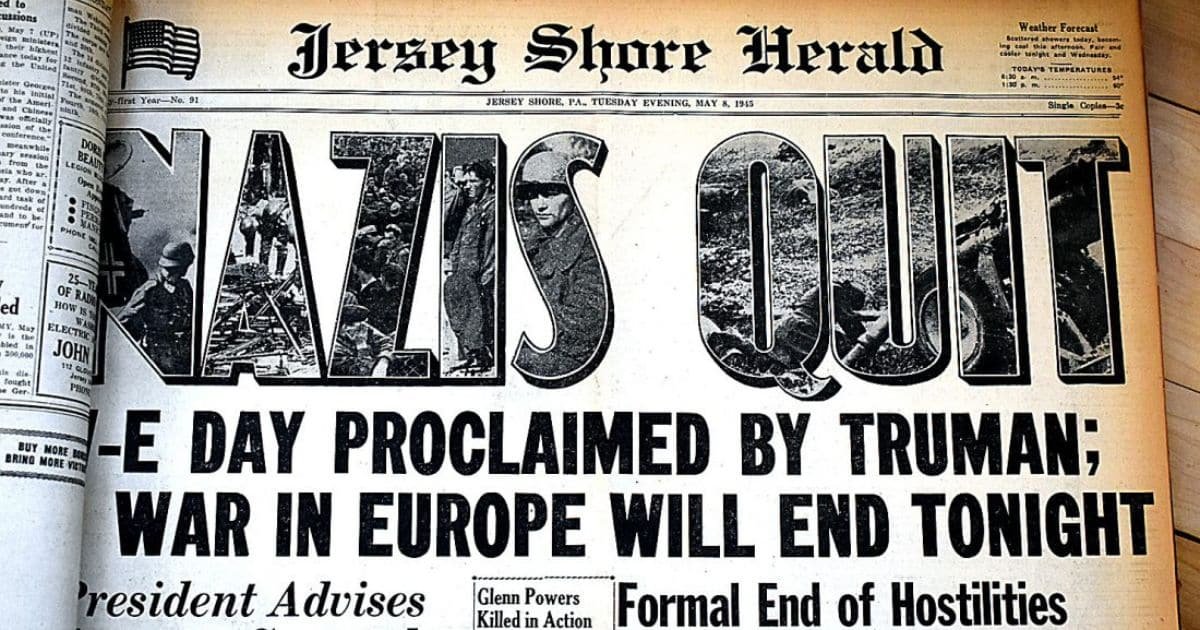
The world eventually witnessed the conclusion of the most devastating conflict in human history, World War II, on September 2, 1945. With this date, it also earned the name V-J Day, or Victory over Japan Day, as it seemed the actual day when Japan officially capitulated to the Allied powers. The Japanese gave up in Tokyo Bay on the American battleship USS Missouri. This act brought to an end a long and bloody war that had begun in 1939.
The events of August 1945 led Japan down a road to surrender that was devastating. The United States used two atomic bombs on Hiroshima and Nagasaki to inflict colossal damage and kill thousands of people. Meanwhile, the Soviet Union declared war on Japan and attacked it in Asia. All these pressures were forcing Japan to go somewhere.
Emperor Hirohito took the hard step of accepting the unconditional surrender by the Allies. To the Japanese, it was both a shock and a sad moment, and an opening of the door to peace after several years of agony. September 2 also marked the conclusion of a war as well as the start of a new period in history for the world.
You May Like To Read: Belgium to Recognize Palestinian State Amid Escalating Pressure on Israel
The Ceremony on USS Missouri
Soon after, the formal capitulation of Japan was recorded on September 2, 1945, onboard the American battleship USS Missouri, which anchored in Tokyo Bay. The reason behind this selection was that this ship symbolized American power, and it also had the name of the home state of President Harry S. Truman, Missouri.
It was a very plain ceremony, yet heavily symbolic. Japanese representatives were sent forward to sign the Instrument of Surrender, which recognised the fact that Japan had admitted defeat. General Douglas MacArthur represented the Allies as a leader. Military leaders and representatives of the nations of the United States, the Soviet Union, China, the United Kingdom, Australia, Canada, France, etc., joined him.
The purport of the USS Missouri, the signature was rather than a military formal something, it is the unmistakable stamp of a new era. It marked not only the end of violence, but also an optimism that countries could pick themselves up and make a step towards peace.
Reactions around the World
There were scenes of great celebration in the United States, Britain, Australia, and other Allied countries. Crowds in the streets held flags and embraced strangers and looked for ways to shout. The war was over at last, after years of intimidation, rationing, and death. It was like a new life to many.
In Asia, the responses were more complicated. In such countries as China, Japan had occupied, Korea, and the Philippines, the countries that had suffered devastating Japanese occupation, the surrender was interpreted as the freedom of the country and the chance of independence. To Japan itself, it was a day of humiliation and grief as the people were defeated, their cities destroyed, and the future was unsure. It was, however, also the initial step to peacefully rebuild their country.
The Consequences: Reconstruction of a New World Order
It is not that the fighting ended with the surrender of Japan on September 2, 1945; the surrender was opening the door to hundreds of subsequent ways of a new world order.
The United States occupied and rebuilt Japan. With the help of General Douglas MacArthur, Japan acquired a new constitution, extended more rights to its people, and became a peaceful democracy. Hundreds of factories and cities had been refastened, and a few decades later, Japan emerged once more as an influential economic power.
The world-system witnessed the coming of new international structures at the end of World War II. The United Nations (UN) was created in 1945 to ensure peace, mutual cooperation, and dialogue between nations. The whole world was hoping that this kind of organization would stop another war of the magnitude of WWII.
Meanwhile, the seeds of a third conflict were being sown. Soon, the US and the Soviet Union, which used to be allies in the midst of the war with Nazi Germany and Imperial Japan, ended up becoming their enemy. The result of this competition was the start of the Cold War, a period of political conflict, nuclear armament, and counter ideologies that defined the second half of the 20th century.
Legacy of September 2, 1945
September 2, 1945, is one of those reminders of the devastation that war can cause as well as the price of peace. Most Allied nations term it as V-J Day (Victory over Japan Day) and celebrate through memorials, ceremonies, and tales of the service and sacrifice of those who went to battle. And to veterans and their families, it will always be a sign of triumph and the end of hard work.
In Japan, the legacy is more complicated. The surrender was painful and humiliating, but it provided the nation with an opportunity to start again on new principles. A Japanese nation that had thrived out of the ashes of war came to represent the so-called modern Japan in the minds of the world.
The date around the world is connected with the fact that wars cause enormous losses, and sustainability only becomes possible through collaboration, dialogue, and respectful relationships between countries. The sealing of the USS Missouri is frequently regarded as a leadership lesson in history, as it demonstrates how the most burning confrontations might be resolved by signing an official treaty.
Even today, September 2 is a reminder to the world of how we need to safeguard peace, honor all war dead, and learn history so that if such a devastating war is ever witnessed in history, then learn about it.
You May Like To Read: SCO Leaders Condemn Terrorism | Khuzdar, Jaffar, and Pahalgham Attacks | Sign Key Security Agreements at SCO Summit