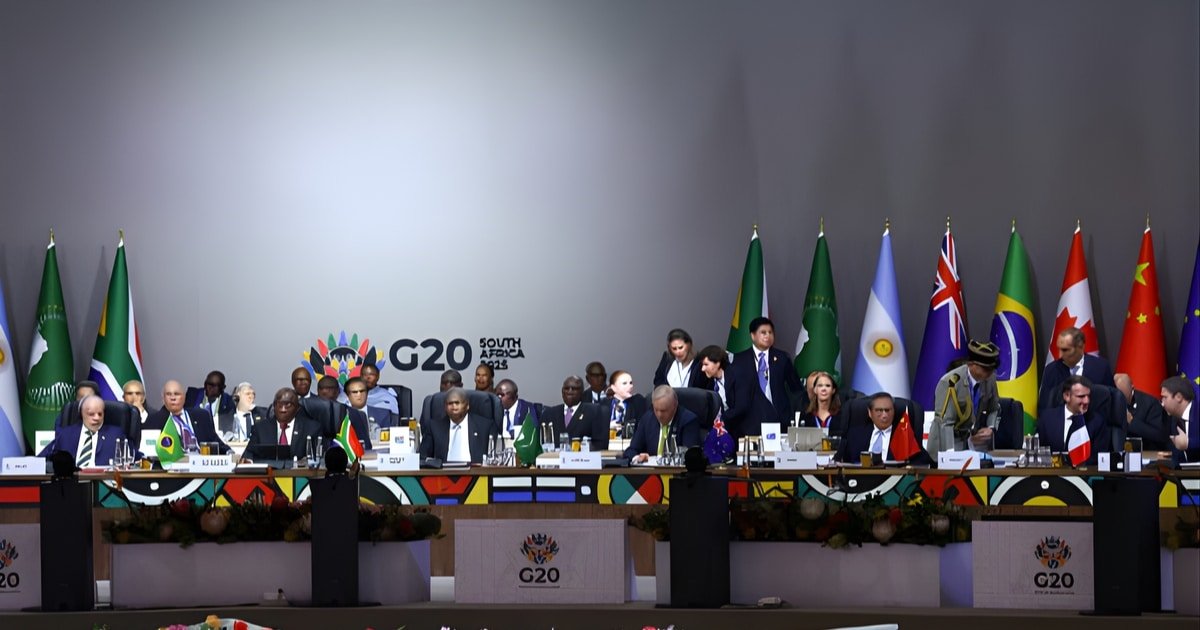





South African President Cyril Ramaphosa announced that there was “overwhelming consensus” among G20 member states to adopt a summit declaration, despite the United States boycotting the high-level gathering in Johannesburg.
The G20 leaders summit has adopted the declaration by overwhelming consensus. This was announced during the G20 Leaders’ Summit opening. pic.twitter.com/Httv6jbOK2
— SABC News (@SABCNews) November 22, 2025
Addressing the opening session of the G20 Leaders’ Summit, President Ramaphosa confirmed that envoys had successfully drafted a leaders’ declaration, reflecting broad agreement on key global challenges. He praised participating delegations for working with South Africa “in good faith to produce a worthy G20 outcome document” and stressed that nothing should be allowed to undermine “the value, the stature and the impact of the first African G20 presidency.”
You May Like To Read: Trump Hosts NYC Mayor-Elect Zohran Mamdani at White House, Signals Cooperative Start
The draft declaration reportedly includes references to climate change, despite strong objections from the administration of US President Donald Trump, which has rejected the scientific consensus on human-induced global warming. A senior White House official described the move to proceed without US input as “shameful.”
President Trump justified the US boycott by citing allegations against South Africa’s government, claims that have been widely discredited, and reiterated his opposition to the host nation’s agenda focused on climate resilience, clean energy transition, debt relief for developing nations, and multilateral cooperation.
While the absence of the United States cast a shadow over the summit, analysts suggested it could ultimately strengthen unity among remaining members if a substantive declaration is adopted. Three of South Africa’s four priority themes are closely linked to climate change, with the fourth focusing on fairer global borrowing systems for poorer countries.
President Ramaphosa also noted that South Africa will formally hand over the G20 presidency in 2026 to the United States, adding that he may have to pass the role to an “empty chair” due to Washington’s continued disengagement.