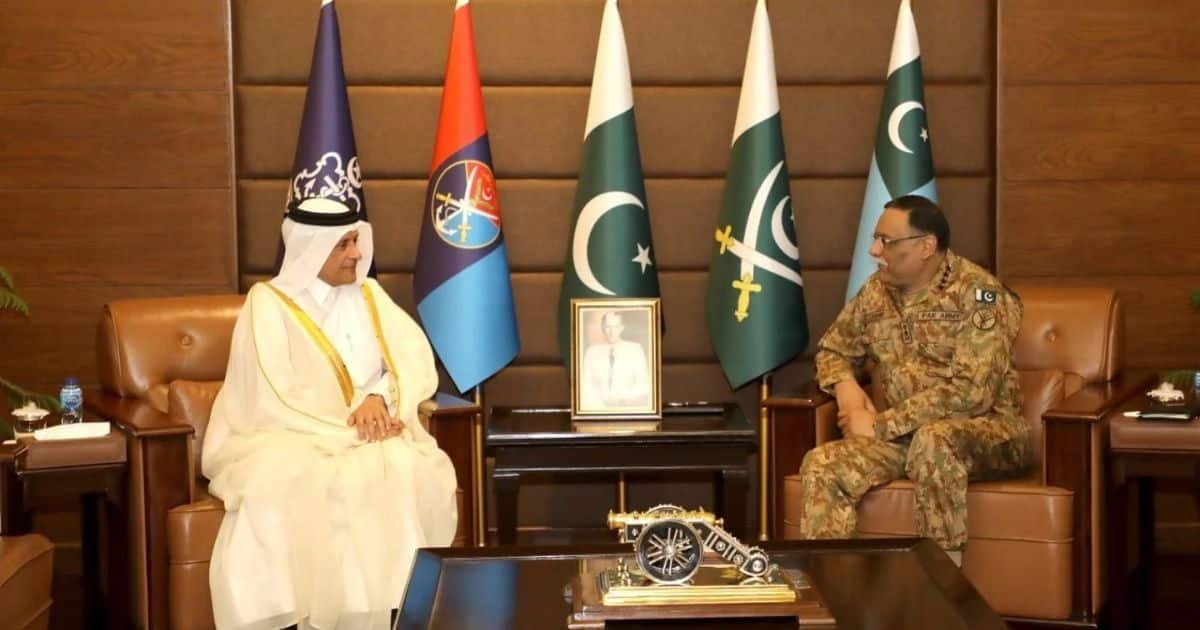


General Sahir Shamshad Mirza, NI, NI (M), Chairman Joint Chiefs of Staff Committee (CJCSC), concluded a pivotal official visit to Qatar today, where he led the second round of the Higher Military Cooperation Committee (HMCC) meeting. The visit, a testament to the enduring brotherly ties between Pakistan and Qatar, served to further institutionalize and expand the robust defense partnership between the two nations.
During his visit, General Mirza held significant meetings with His Excellency Sheikh Saoud bin Abdulrahman bin Hassan bin Ali Al Thani, Deputy Prime Minister and Minister of State for Defence Affairs, and Lt. General (Pilot) Jassim Mohammad Ahmed Al-Mannal, Chief of Staff, Qatar Armed Forces. These high-level interactions underscore the mutual commitment of both countries to a secure and stable regional environment.
The discussions encompassed a comprehensive review of the evolving regional security dynamics. Both sides reaffirmed their unwavering commitment to fostering peace and stability at both the regional and global levels. General Mirza highlighted the historic and deep-seated brotherly relations between the two nations, providing a foundation for a detailed discussion on the future dimensions of cooperation in the defense and security domains. The talks explored new avenues for collaboration, with a specific focus on leveraging the institutional framework of the Higher Military Cooperation Committee to achieve shared strategic objectives.
The civil and military leadership of Qatar extended their profound appreciation for Pakistan’s pivotal and responsible role in ensuring regional stability. They acknowledged the professionalism and immense sacrifices of the Pakistan Armed Forces in the ongoing global fight against terrorism, a recognition that reflects the high regard in which Pakistan’s military is held internationally.
Earlier, upon his arrival at the Qatar Armed Forces Headquarters, General Mirza was honored with a smartly turned-out military contingent presenting a “Guard of Honour,” a gesture symbolizing the respect and solidarity between the armed forces of both countries. The visit of the Chairman Joint Chiefs of Staff Committee is a significant step in reinforcing the long-standing strategic cooperation and promoting enduring institutional ties, laying the groundwork for a more integrated and mutually beneficial defense relationship in the years to come.
Significance of the Visit: Military Diplomacy in Action
The visit of General Sahir Shamshad Mirza, Chairman Joint Chiefs of Staff Committee (CJCSC), to Qatar is far more than a routine exchange. It is a prime example of Pakistan’s strategic use of military diplomacy to advance its foreign policy and security interests in a volatile geopolitical landscape. This event, particularly the second round of the Higher Military Cooperation Committee (HMCC) meeting, carries profound significance for Pakistan, both regionally and globally.
Institutionalizing a Strategic Partnership
The most crucial aspect of this visit is the institutionalization of military cooperation through the Higher Military Cooperation Committee. The fact that this is the second round of meetings indicates a long-term, structured commitment, moving beyond ad-hoc collaborations. This formal framework allows for a predictable and sustainable partnership, covering various domains from joint exercises and intelligence sharing to military training and defense procurement. For Pakistan, this provides a reliable and consistent security partner in a strategically vital region, bolstering its influence and presence in the Middle East.
Reinforcing Regional, and Global Standing
Qatar, as a major player in the Gulf region, holds immense geopolitical sway due to its vast energy reserves and strategic location. It also maintains a unique foreign policy, balancing relations with various global and regional powers. By strengthening ties with Qatar, Pakistan is not only diversifying its defense partnerships but also positioning itself as a reliable security provider in a region that is undergoing significant transformations. The Qatari leadership’s acknowledgment of Pakistan’s “pivotal and responsible role in ensuring regional stability” is a clear testament to the respect Pakistan’s military has earned. This public endorsement serves to enhance Pakistan’s image as a responsible and professional force, countering negative narratives and reinforcing its standing in the international community.
Economic, and Geopolitical Implications
The military relationship is inextricably linked to broader economic and geopolitical interests. Qatar is a significant economic partner for Pakistan, particularly in the energy sector. A strong military-to-military relationship builds trust and confidence, which can open doors for deeper economic collaboration, including trade, investment, and energy cooperation. This visit, therefore, can be seen as part of a broader strategy to solidify a comprehensive bilateral relationship that serves Pakistan’s interests on multiple fronts.
Furthermore, the emphasis on peace and stability discussed during the meetings resonates with Pakistan’s own foreign policy goals. By collaborating on these issues, Pakistan and Qatar can project a unified front on matters of shared concern, potentially influencing regional security dynamics and fostering a more stable environment for both nations. The shared resolve to learn from each other’s experiences and move forward as a cohesive team is a key indicator of the collaborative spirit that defines this partnership.
Professionalism, and Counter-Terrorism Contributions
The Qatari leadership’s appreciation for the “professionalism and sacrifices of Pakistan Armed Forces in fight against terrorism” is a significant diplomatic win. It highlights the successful efforts of the Pakistan military in combating extremism, which has been a major point of focus for the country. This recognition not only validates the sacrifices made by the armed forces but also positions Pakistan as a credible and indispensable partner in global counter-terrorism efforts. It showcases the military’s role beyond traditional warfare, emphasizing its contribution to international security and stability.
In conclusion, General Mirza’s visit to Qatar represents a masterclass in modern military diplomacy. It has not only reinforced a crucial bilateral defense relationship but has also contributed to strengthening Pakistan’s geopolitical standing, fostering economic opportunities, and solidifying its image as a key player in regional and global security. The focus on institutionalized cooperation through the HMCC ensures that this partnership will continue to yield strategic benefits for both nations for years to come.
You May Like To Read: