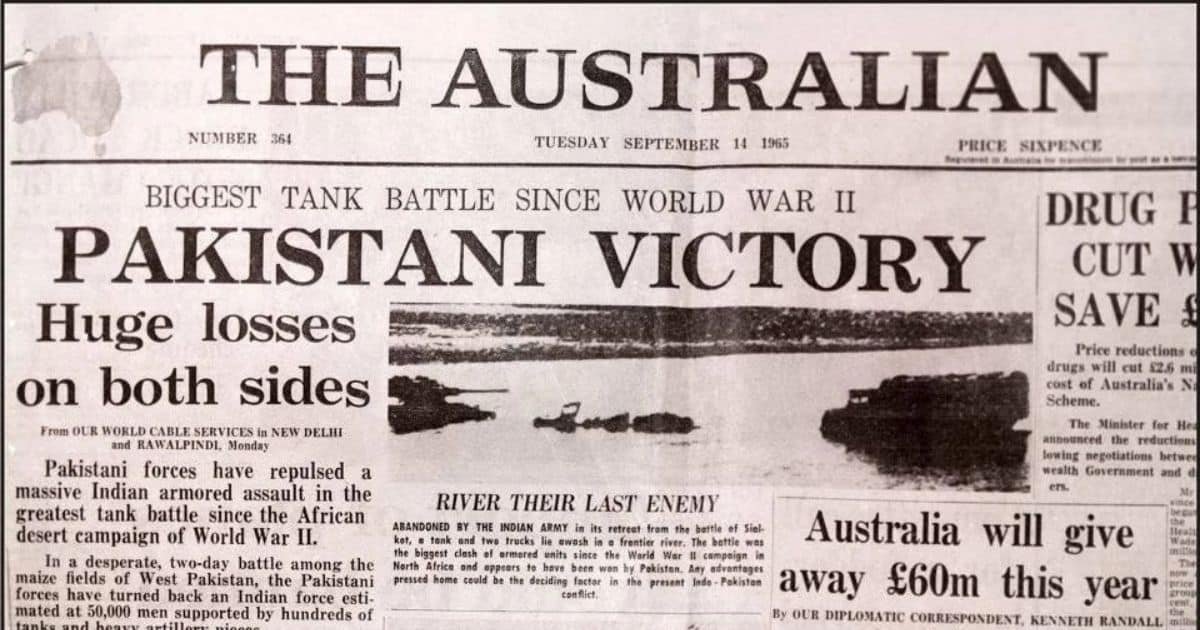





In a critical chapter of its history, Pakistan demonstrated exceptional valor and unwavering resolve during the 1965 Pakistan-India War. The conflict stands as a powerful testament to the military’s professionalism and the profound unity of a nation that stood united to defend its sovereignty against external aggression. The war, which saw a numerically superior enemy launch a surprise attack, was met with a fierce and coordinated response that defied all expectations. This press release provides an overview of the pivotal events and the heroic actions of the Pakistan Armed Forces during that defining period.
The Ground War: Defying the Odds
The ground conflict was characterized by a series of monumental defensive and offensive operations by the Pakistan Army. A key front was the Battle of Chawinda in the Sialkot Sector, which is recognized as one of the largest tank battles since World War II. Facing an enemy with a significant advantage in armor, the Pakistani armored divisions demonstrated superior tactical skill and determination. They turned the battlefield into a graveyard for enemy tanks, halting a major advance and securing a critical strategic position. This decisive victory underscored the fighting spirit and discipline of the soldiers.
Simultaneously, the defense of Lahore exemplified the steadfastness of the Pakistani forces. Despite the enemy’s aim to capture the city, the soldiers on the front lines, supported by the local populace, held their positions with unyielding resolve. Their bravery ensured that the enemy’s main objective was not achieved, forcing a strategic retreat and solidifying Pakistan’s defensive posture. The valor displayed at the BRB Canal and other key points along the border showcased a commitment to the homeland that went far beyond military training.
Air Superiority, and Naval Audacity
The Pakistan Air Force (PAF), though smaller in size, played a pivotal role in the conflict by achieving air superiority through a series of bold and decisive actions. Flying F-86 Sabres against more modern aircraft, PAF pilots showcased exceptional skill and training. A standout moment was Squadron Leader Muhammad Mahmood Alam’s (M. M. Alam) incredible feat of shooting down five enemy aircraft in a single sortie, four of them in less than a minute, an international record that remains unbroken. The PAF’s swift and damaging raids on enemy airfields and supply lines crippled their ability to sustain operations and provided crucial support to ground forces.
The Pakistan Navy, despite its limited size, executed a daring and strategically significant operation. On September 7, a small naval fleet carried out Operation Dwarka, a long-range bombardment of the enemy’s naval base at Dwarka. This surprise attack caused significant damage and served as a powerful psychological victory, demonstrating the Navy’s readiness to strike deep into enemy territory and highlighting the coordinated, multi-dimensional strength of Pakistan’s defense forces.
A Legacy of Courage, and Sacrifice
The 1965 War was not just a military engagement; it was a testament to the collective courage and spirit of a nation. The ultimate sacrifice was made by many brave individuals, whose heroism continues to inspire. The Nishan-e-Haider, Pakistan’s highest military award, was posthumously bestowed upon Major Raja Aziz Bhatti for his exceptional bravery. He held his position on the BRB Canal under relentless enemy fire for five days, embodying the steadfast leadership and unwavering commitment that defined the armed forces throughout the war.
The lessons and legacies of the 1965 War remain integral to the national ethos of Pakistan. The collective bravery, discipline, and profound love for the homeland demonstrated during this conflict continue to serve as the bedrock of the Pakistan Armed Forces. The war is a powerful reminder that the true strength of a nation lies in the unified resolve of its people and the courage of its defenders.
You May Like To Read: