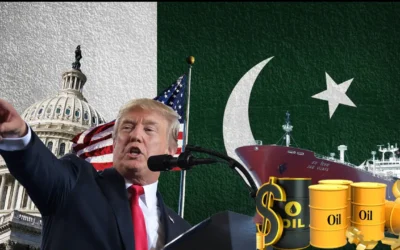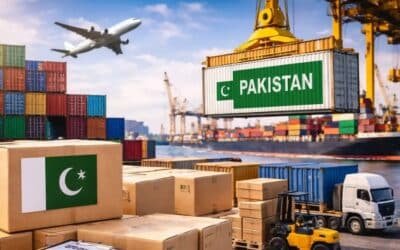





Pakistan’s economic journey in 2025 reflects a complex interplay of debt accumulation, development aspirations, and the intricate dynamics of global financial dependencies. The nation’s reliance on external loans, particularly from institutions like the International Monetary Fund (IMF), has sparked discussions about sovereignty and sustainable development.
You May Like to Read: Navigating the Post-IMF Era
The Debt Landscape: A Growing Burden
As of mid-2025, Pakistan’s external public debt stood at approximately $87.4 billion, with the total public debt nearing 75% of its GDP. A significant portion of this debt is owed to multilateral institutions such as the IMF, World Bank, and the Asian Development Bank (ADB), as well as bilateral creditors including China, Saudi Arabia, and the United Arab Emirates. In FY25, Pakistan secured a record $26.7 billion in foreign loans, underscoring the increasing dependence of our economy on external financial assistance.
The IMF’s Extended Fund Facility (EFF), approved in September 2024, is central to Pakistan’s stabilization efforts. The first review of this program, completed in May 2025, allowed for an immediate disbursement of approximately $1 billion, bringing total disbursements under the arrangement to about $2.1 billion. Additionally, a new arrangement under the Resilience and Sustainability Facility (RSF) was approved, providing around $1.4 billion to support Pakistan’s efforts in building economic resilience to climate vulnerabilities and natural disasters.
Development Goals Amidst Debt Constraints
Despite the heavy debt load, Pakistan has embarked on ambitious development initiatives. The “Uraan Pakistan” plan, launched in December 2024, aims to modernize the economy through reforms and investments across critical sectors. The plan focuses on enhancing macroeconomic stability, achieving export-led growth, promoting digital transformation, ensuring social equity, and addressing environmental challenges.
Key targets include doubling annual exports to around $60 billion by 2029, boosting GDP growth to 6% annually by 2028, and transforming Pakistan into a trillion-dollar economy by 2035. The plan also emphasizes the development of sectors like information and communication technology (ICT), renewable energy, and infrastructure.
You May Like to Read: Debt Servicing vs. Development: Pakistan’s Budgetary Balancing Act Under IMF
Sovereignty, and Structural Challenges
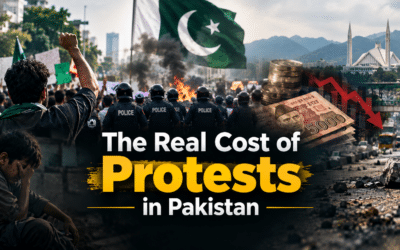
While international financial support is crucial, it often comes with stringent conditions that can impact national sovereignty. The IMF’s requirements, such as tax reforms, subsidy reductions, and privatization of state-owned enterprises, have been met with domestic challenges. For instance, the government’s decision to raise taxes by 40% in 2024 to comply with IMF conditions led to public protests and debates about the balance between fiscal discipline and social welfare.
Moreover, Pakistan’s economic model has faced criticism for its reliance on consumption-driven growth rather than investment in productive sectors. This approach has contributed to a widening trade deficit and limited export growth, exacerbating the debt burden. Structural issues, including inefficiencies in public sector enterprises and a narrow tax base, further complicate efforts to achieve sustainable development.
Navigating the Global Financial Cycle
Pakistan’s experience is emblematic of the broader challenges faced by countries in the Global South. The global financial cycle, characterized by fluctuating capital flows and shifting investor sentiments, can lead to periods of boom and bust for emerging economies. These cycles often result in increased borrowing during favorable conditions, followed by debt servicing crises when external conditions tighten. For Pakistan, this has meant navigating a delicate balance between securing necessary financing and maintaining economic stability.
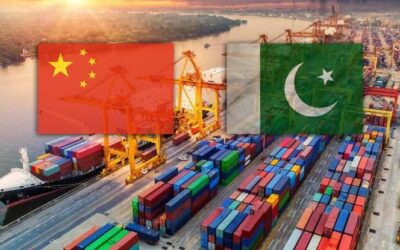
The nation’s reliance on external creditors, particularly China, has also raised concerns about debt sustainability and geopolitical implications. As of 2022, Pakistan owed China approximately $30 billion, accounting for nearly 30% of its foreign debt. This dependence on Chinese financing, especially under the China-Pakistan Economic Corridor (CPEC) projects, has led to discussions about the potential risks of a “debt trap.”
You May Like to Read: Pakistan Break Free from Low-Value Export Dependency?
Pathways to Financial Sovereignty
Achieving financial sovereignty requires a multifaceted approach. First, Pakistan must continue to implement structural reforms aimed at enhancing revenue generation, improving public sector efficiency, and fostering private sector investment. Broadening the tax base and reducing reliance on consumption-based growth can help mitigate fiscal deficits. Second, diversifying sources of external financing, including partnerships with multilateral institutions and regional development banks, can reduce dependency on any single creditor. Third, investing in human capital and technology sectors can drive innovation and productivity, contributing to long-term economic resilience.
Furthermore, international cooperation on debt relief and restructuring, as advocated by organizations like Debt Justice and the World Bank, can provide temporary relief to countries facing unsustainable debt levels. Such initiatives can help create fiscal space for essential investments in health, education, and infrastructure.
Conclusion
Pakistan’s economic trajectory in 2025 underscores the challenges and opportunities inherent in navigating the global financial landscape. While external financial support plays a pivotal role in stabilizing the economy, it is essential to balance this with domestic reforms and investments that promote sustainable development and financial autonomy. By addressing structural weaknesses and fostering inclusive growth, Pakistan can aspire to break free from the cyclical patterns of debt dependency and chart a path toward lasting economic prosperity.