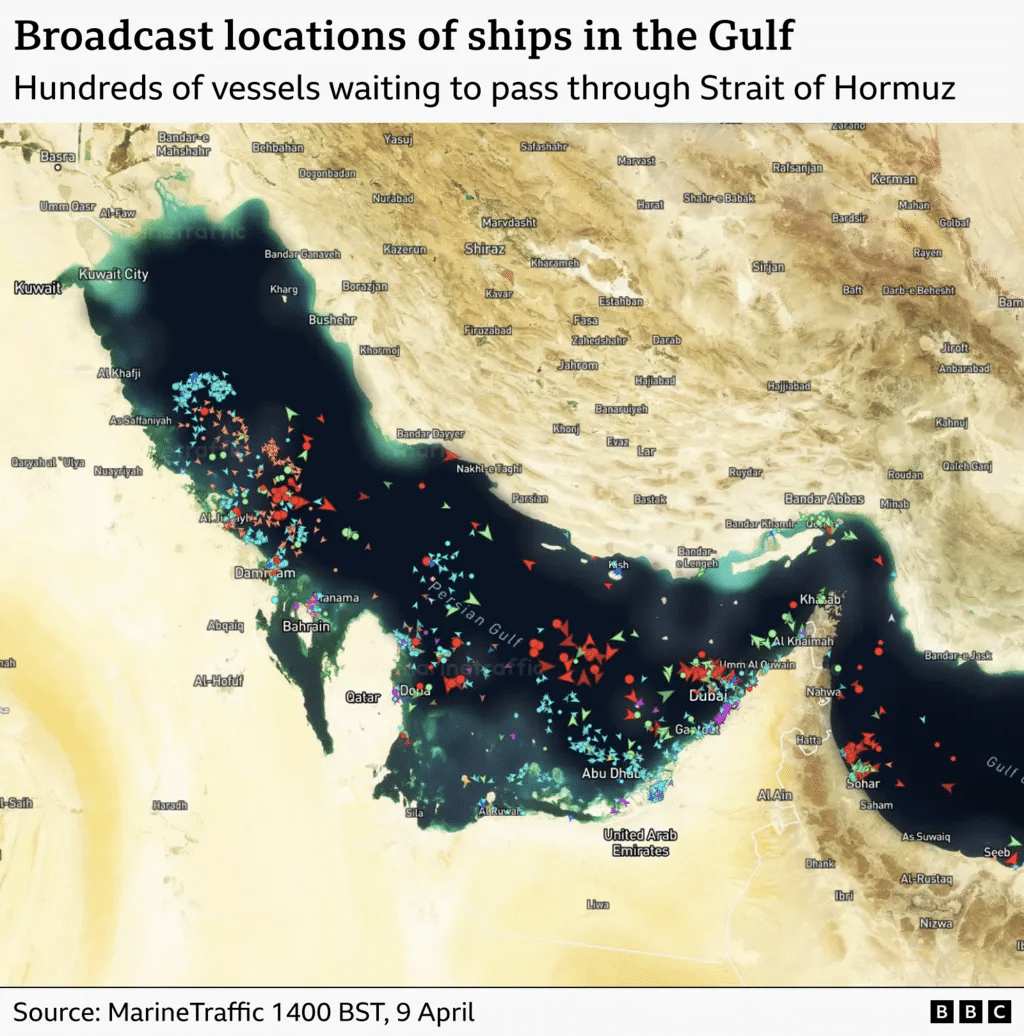





The Strait of Hormuz remains a graveyard for international trade as shipping companies hold back vessels despite the two-week ceasefire. While the agreement promised “safe passage” through the narrow channel, BBC Verify analysis shows that only eleven ships, including three tankers and one container ship have crossed the strait since Tuesday. This is a staggering drop from the pre-conflict average of 138 ships per day. Analysts warn that shipping lines are paralyzed by a lack of clear protocols, as crews continue to receive radio threats of destruction for attempting to transit without explicit permission from Iran’s Revolutionary Guard (IRGC).
A ceasefire meant to reopen one of the world’s busiest waterways has instead left shipowners waiting on the sidelines, with fewer vessels passing through the Strait of Hormuz than during the fiercest days of fighting. https://t.co/rDHq97gjIZ pic.twitter.com/fxYQhTD4th
— Financial Times (@FT) April 9, 2026
Adding to the chaos are reports that Iran is demanding tolls paid in cryptocurrency, a move that could force Western companies into a legal trap. Shipping lawyers note that paying such tolls might violate existing U.S. sanctions, creating a “catch-22” for owners desperate to move the nearly 800 vessels currently stuck in the Gulf. Furthermore, the discovery of potential sea mines along traditional southerly routes has forced the few brave vessels to navigate a northerly path within Iranian territorial waters. With the ceasefire set to expire in just fourteen days, many analysts believe a large-scale influx of new ships is unlikely as owners fear being trapped if the window closes before they can exit.