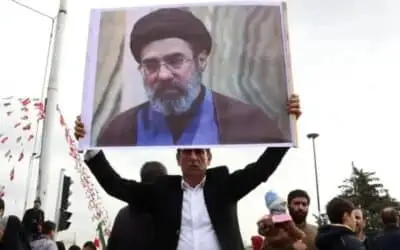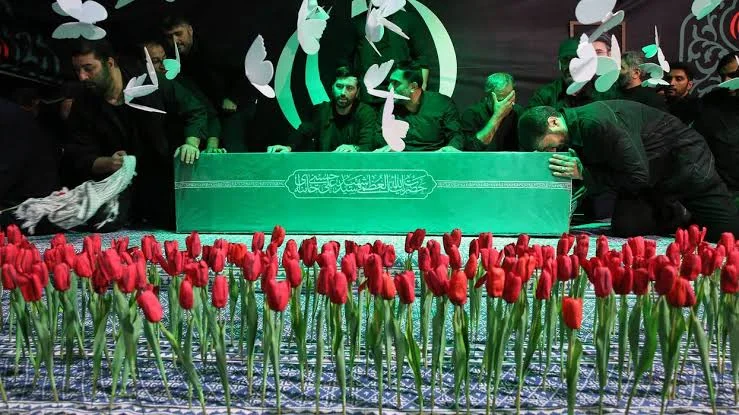





High-level diplomatic delegations and millions of mourners have gathered at Tehran’s Grand Mosalla to pay their respects as the body of former Iranian Supreme Leader Ayatollah Ali Khamenei lies in state. Khamenei, along with senior members of his family and close military advisers—including strategic counsel Ali Shamkhani—was assassinated in a U.S.-Israeli opening strike on February 28, 2026, which triggered a destructive regional war.
Prime Minister Muhammad Shehbaz Sharif and Field Marshal Syed Asim Munir, NI (M), HJ, Chief of Army Staff (#COAS) & Chief of Defence Forces (CDF) honor the martyred Supreme Leader Ayatollah Ali Khamenei#Iran #Pakistan #ISPR pic.twitter.com/X1bBuwjDsA
— Pakistan Armed Forces News 🇵🇰 (@PakistanFauj) July 3, 2026
The public commemorations, initially delayed at the height of the kinetic conflict, are unfolding under tight security protocols. The transition is protected by the fragile 60-day ceasefire established under the Islamabad Memorandum of Understanding (MoU), a critical peace framework brokered on Pakistani soil by Islamabad and Doha.
براہِ راست:وزیرِ اعظم کی ایران کے مرحوم سپریم لیڈر کی آخری رسومات میں شرکت https://t.co/bqeHEFxeti
— Government of Pakistan (@GovtofPakistan) July 3, 2026
Technical Coordination and the Pakistani Presence
The execution of the state funeral has drawn high-level delegations from around 30 nations. Pakistan’s attendance represents a highly coordinated, unified civil-military showing at the highest executive level:
-
The Civil-Military Contingent: Prime Minister Shehbaz Sharif and Chief of Defence Forces and Chief of Army Staff Field Marshal Asim Munir arrived in Tehran via separate flights, signaling a deliberate and high-security travel protocol. The Pakistani leadership was received at Mehrabad Airport by Iranian Interior Minister Iskandar Momeni and Pakistan’s Federal Interior Minister Mohsin Naqvi, who had traveled directly from his security summits in Riyadh to coordinate state protocols on the ground.
-
Broad Political Consensus: Prime Minister Shehbaz Sharif traveled with a prominent political delegation, including National Assembly Speaker Ayaz Sadiq, Deputy Prime Minister and Foreign Minister Ishaq Dar, Information Minister Attaullah Tarar, and PPP Chairman Bilawal Bhutto Zardari. Senate Chairman Yousaf Raza Gilani also arrived with a separate legislative group, demonstrating an absolute national consensus within Pakistan regarding long-term strategic solidarity with the Iranian state during this sensitive transition of power.
تہران: 3 جولائی 2026.
وزیراعظم محمد شہباز شریف کا دورہءِ ایران، وزیرِ اعظم کی ایران کے مرحوم سپریم لیڈر آیت اللہ سید علی خامنہ ای شہید کی آخری رسومات میں شرکت.
وزیرِ اعظم محمد شہباز شریف اعلی سطح وفد کے ہمراہ اپنے ایک روزہ دورہءِ ایران کیلئے تہران پہنچ گئے ہیں.
مہرآباد… pic.twitter.com/Jc400vw5Fh
— Prime Minister’s Office (@PakPMO) July 3, 2026
Multi-City Commemorations and the Narrative Domain
The public state funeral will span six days, moving across a series of highly symbolic geopolitical and religious landmarks before concluding with a final burial on July 9:
1. The Tehran Ceremony
The late Supreme Leader will lie in state for three days inside the colossal Grand Mosalla complex in central Tehran. The first public proceedings saw the return of key security personnel; Ahmad Vahidi, head of the Islamic Revolutionary Guard Corps (IRGC), made his first public appearance since the outbreak of the war in February, standing guard beside the coffin as millions of mourners from Iran, Iraq, and Afghanistan began pouring into the capital.
2. The Transboundary Spiritual Corridor
Following the formal state ceremonies in Tehran and the holy city of Qom, the funeral procession will cross international boundaries into neighboring Iraq. The coffin will transition through the highly revered holy sanctuaries of Najaf and Karbala, reinforcing the transnational ideological ties connecting the regional populations before returning to Iran for final burial.
3. The Mashhad Final Rest
The multi-city procession will officially conclude on July 9 with a final burial at the highly secure shrine of Imam Reza in the northeastern city of Mashhad, Khamenei’s historical birthplace. Iranian President Masoud Pezeshkian emphasized that this massive, disciplined public turnout serves as a decisive diplomatic response to external aggression, utilizing the mass mobilization to project an image of absolute internal stability and national unity to foreign observers.
Conclusion: The Enforced Truce
The high-profile presence of Pakistan’s top civil and military command at the Grand Mosalla underscores the deep strategic ties binding Islamabad and Tehran under the Islamabad MoU framework. By physically anchoring themselves within Tehran’s primary ceremonial venue alongside international delegations, Prime Minister Shehbaz Sharif and Field Marshal Asim Munir are actively demonstrating their commitment to regional stabilization.
As the technical committees in Doha continue their quiet work to unfreeze oil assets and formalize maritime transit protocols through the Strait of Hormuz, this unified diplomatic presence sends a powerful message to external actors: the current peace architecture is backed by serious regional powers, and any attempt to disrupt the somber transition of power will face unified, multi-state opposition. Following the conclusion of his brief state visit to Iran, Prime Minister Sharif is scheduled to fly directly to Turkiye to continue high-level consultations on regional security and economic cooperation.