




A Global Economy Testing Its Limits
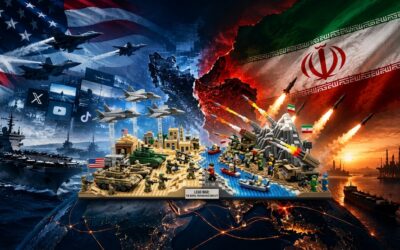
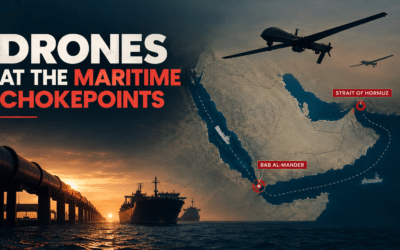
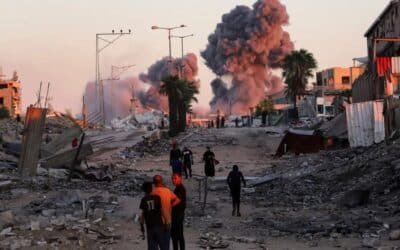
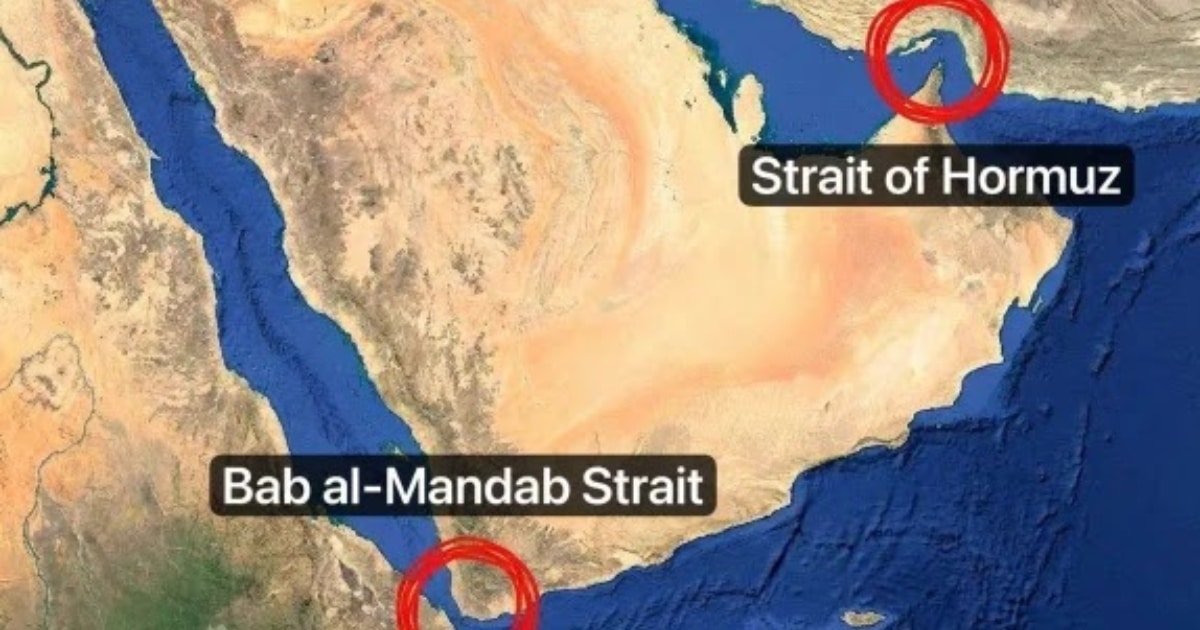
In March 2026, the global economy confronted a shock with deep‑rooted structural causes. For years, trade, energy and industrial supply chains operated on the assumption that key maritime chokepoints would remain open, reliable and secure. The narrow passes of the Strait of Hormuz and the Bab el‑Mandeb are linchpins of worldwide maritime traffic, carrying crude oil, liquified natural gas (LNG) and finished goods to markets from Asia to Europe and Africa. When the conflict in the Middle East escalated in late February 2026, culminating in broad military operations involving the United States, Israel and Iran, these critical routes were pushed to the brink of paralysis.
BREAKING: Yemen’s Houthi Group, an Iranian ally, says it is “ready to intervene” in the Iran War if new allies join the US and Israel or if the Red Sea is used to launch attacks on Iran.
The Houthis have strong influence over the Bab al-Mandab Strait which controls over ~6… pic.twitter.com/GjWAYkSvQA
— The Kobeissi Letter (@KobeissiLetter) March 27, 2026
Strait of Hormuz: From Trade Artery to Choke Point
The Strait of Hormuz is the world’s most important energy passageway, routinely handling about 20 % of all globally traded oil and gas supplies. In March 2026, proxy attacks, selective strikes and heightened naval warnings saw commercial traffic fall sharply as shipping firms avoided the area for safety and insurance reasons. By mid‑March, tanker movements dropped by more than 70% compared to early February levels, as carriers anchored outside the strait rather than risk missile, drone or naval dangers.
Oil prices responded accordingly. Brent crude, a global price benchmark, rose sharply above $100 per barrel for the first time in years, and volatility across energy markets increased as insurers classified the waters as “high‑risk,” sharply raising premiums. Exporting states from Iraq to Qatar declared force majeure on production, as tankers could not evacuate loaded cargoes safely.
These disruptions quickly filtered through global markets. Asia’s major importers, China, India, Japan and Pakistan, faced spikes in fuel and power costs, while European energy markets saw wholesale gas prices surge amid tightening supply fears. Economic analysts warned that prolonged closure could deepen inflation and weaken growth across exporting and importing nations.
BREAKING: Qatar has declared force majeure on LNG contracts through May 2026, canceling obligations to customers in Italy, Belgium, South Korea, and China.
Qatar is one of the world’s largest LNG suppliers, accounting for 20% of global LNG production.
— The Kobeissi Letter (@KobeissiLetter) March 27, 2026
A Second Chokepoint: Bab el‑Mandeb Enters the Fray
In parallel, the conflict widened into the Red Sea region when Houthis in Yemen began attacking maritime traffic and land targets. The Bab el‑Mandeb Strait, which channels around 12 % of all global shipping, including major container routes linking Asia with Europe via the Suez Canal, rapidly became another zone of danger for freighters and oil carriers. The first direct attacks by the Houthis on Israeli territory, reported on March 28 2026, marked a significant escalation with the potential to aggravate these maritime disruptions even further.
This dual nature of chokepoint risk, the Persian Gulf on one front and the Red Sea on another, transformed what might have been a regional freight disruption into a systemic global crisis. Markets began to price in the possibility that essential sea lanes could be unsafe for the months ahead, forcing shipping and logistics companies to reroute via longer and more expensive alternatives around Africa. Those detours add time and cost to every container and tanker voyage, with immediate consequences for inflation, production schedules and economic growth.
#BREAKING
Yemen’s armed forces announced the country’s official entry into the war with its first ballistic missile operation, targeting sensitive Israeli military sites in southern occupied Palestine on March 28, 2026https://t.co/RThFRk4jpk pic.twitter.com/wXnpq81s7a— Tehran Times (@TehranTimes79) March 28, 2026
Real Economic Stress Around the World
Countries dependent on energy imports felt the impact starkly. India recently warned that its growth forecast of around 7 % was at risk due to the conflict’s inflationary and import‑cost effects, a direct reflection of how disruptions in the Middle East ripple outward into Asia and beyond.
In the Philippines, heavy reliance on Middle Eastern oil sent the government to declare a national energy emergency as crude shipments became harder and costlier to obtain. Philippine officials said the country had enough supply only until June 30 at current usage rates, an extraordinary step in peacetime economics.
Even traditional global food and humanitarian aid chains have been affected. Delays in maritime logistics, higher freight costs and port bottlenecks have stranded crucial supplies for millions in Afghanistan, Sudan and other vulnerable regions. Aid agencies warn that both nutritional and medical shipments may not reach communities in time without stable shipping corridors.
Supply Chains Under Extraordinary Strain
Manufacturers with long, lean “just‑in‑time” supply models found themselves exposed to fragility that few had acknowledged before. Carriers paused regular container voyages through high‑risk waters; warehousing costs spiked; and factory lines that depend on just‑arriving parts began to slow. Major firms in electronics, automotive and materials processing are considering permanent diversification of their sourcing networks, even at higher cost, to reduce dependence on distant chokepoints.
This shift highlights an uncomfortable truth; decades of globalization have produced greater interdependence, but not necessarily greater resilience. With only a handful of narrow sea arteries underpinning much of international commerce, even temporary disruptions can now cascade into broader economic weakness.
Geopolitical Responses and Reconfigurations
Governments are responding in different ways. Western powers and alliances have increased naval patrols, proposed convoys, and explored diplomatic pressure to reopen key routes. At the same time, many developing economies are accelerating efforts to regionalise supply chains, seeking to reduce exposure to the Persian Gulf and Suez routes by fostering intra‑regional trade corridors or seeking alternate energy sources.
China, a chief energy importer with historically friendly ties to Iran, has engaged in discreet diplomacy to negotiate safe passage for its vessels through contested waters. This reflects a broader attempt by Asian states to keep trade flowing without being drawn fully into the conflict.
The Iranian Perspective in Context
From Tehran’s standpoint, the severe disruptions to shipping routes are rooted in conflict escalation and the presence of foreign military forces in the region. Iran’s actions, whether selective strikes on perceived military targets or defensive measures around its territorial waters, have been declared by Iranian officials as responses to direct threats and violations of sovereignty. Tehran has also presented alternative ceasefire and navigation proposals, although diplomatic progress remains limited.
Many observers in South Asia, Africa and parts of Asia see a deeper question beyond military engagement; whose security arrangements truly safeguard global trade? While Western alliances emphasise military pressure and force projection, Iran emphasises respect for regional autonomy, and multipolar cooperation. That narrative resonates where scepticism of unilateral military solutions is strong.
Fragility, Resilience, and the Future of Interdependence
The economic consequences of March 2026 make one point clear: global interdependence, long praised for efficiency and prosperity, is also a fault line in times of geopolitical stress. The concurrent threats facing the Strait of Hormuz and Bab el‑Mandeb demonstrate how local conflicts now instantly transmit economic shocks around the world.
For Pakistan and other emerging markets, this is not abstract theory but lived experience, reflected in rising fuel bills, fragile supply chains, and pressing decisions about strategic partnerships and energy security. The coming months will test whether nations can build more resilient systems that balance open trade with pragmatic diversification, or whether the world will see a prolonged period of slower growth and higher costs because of narrow chokepoint dependencies.
Concluding: Will the World Learn Hard Lessons?
The rumblings of a global recession in 2026 stem not only from inflation or central bank policies, but from a revealed weakness in the architecture of global trade itself. Chokepoints that once seemed permanent and secure can quickly turn into fault lines when diplomacy fails and local conflicts become global in effect.
The events of 2025 and early 2026 are a stark reminder: wealth and integration cannot substitute for security and strategic balance. Countries that recognised this early diversifying energy partners, building regional industrial capacity, and investing in resilient logistics, are faring better than those who rely on distant supply chains.
For Pakistan and other nations seeking economic stability, the message is clear. A balanced approach to trade, respect for regional dynamics, and diversified economic ties will be essential in a world where interdependence is both strength and vulnerability.
The global economy, once assumed unbreakable, now stands at a crossroads. How the world responds will shape growth and geopolitical alignments for a generation.
You May Like To Read: US and Iran Express Confidence in Pakistan to Mediate Peace as Regional Powers Convene for High-Stakes Summit
Check out our latest video: