




The International Monetary Fund (IMF) has projected Pakistan’s fiscal deficit at around 3.2% of GDP for the current and next fiscal year, while advising the government to phase out fiscally draining fuel subsidies, address contingent liabilities, and broaden the tax base to ensure medium-term sustainability.
The Fund estimated that the government revenue would remain unchanged at 15.8pc of GDP this year and fall to 15.3pc next year.https://t.co/3vtxmWcC5W
— Dawn Business (@dawn_business) April 15, 2026
In its twice-yearly Fiscal Monitor 2026, the IMF noted that Pakistan’s revenue has already peaked, with a downward but stable outlook through 2031. While public debt is expected to decline gradually, it will remain significantly higher than the limits set under the Fiscal Responsibility and Debt Limitation Act (FRDLA) 2005. Government expenditure is projected to stay stubborn.
The Fund forecasts the fiscal deficit falling from 5.4% in FY2025 to 3.2% this year and next, before easing further to 3% in FY2028 and 2.8% in FY2029. It then expects the deficit to rise again to 3.6% in FY2030 and 4.6% in FY2031.
The primary balance (revenue minus expenditure excluding interest payments) is projected to peak at 2.5% of GDP this year, slightly up from 2.4% last year, before declining to 2% next year and stabilising around that level for two more years. It is then expected to drop sharply to 1% in FY2030 and a negligible 0.1% in FY2031.
Revenue is forecast to remain unchanged at 15.8% of GDP this year before easing to 15.3% next year and stabilising around 15.5% thereafter. Expenditure is projected to fall from over 21% last year to 19% this year due to lower debt servicing costs following the drop in interest rates, and then hover around 18.5% for the next two years before rising to 20% by 2031.
Gross government debt is expected to decline from 72.8% of GDP last year to 70.1% this year and continue falling steadily to 58.2% by FY2031. Net government debt follows a similar downward trajectory, from 66.5% to 55% over the same period.
The IMF warned that the ongoing Middle East conflict represents one of the largest supply shocks in recent history, comparable to the demand shock during Covid-19. It could lead to higher food and fuel prices, tighter financial conditions, and increased defence spending, further straining government finances.
The Fund advised tightly calibrated, targeted support for vulnerable households and firms rather than broad-based subsidies, which are costly and difficult to unwind. It also emphasised the need for domestic fuel and gas prices to reflect international movements to support demand adjustment.
In the broader global context, the IMF noted elevated risks to financial stability due to the war, potential inflationary pressures, and tightening financial conditions. It warned that prolonged conflict could significantly increase global debt-at-risk.
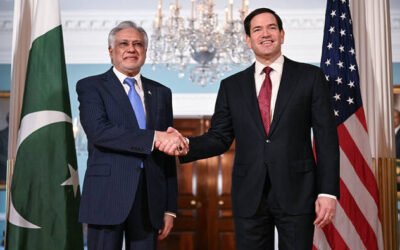
Finance Minister Muhammad Aurangzeb, currently attending the World Bank-IMF Spring Meetings in Washington, has been engaging with IMF and World Bank officials to discuss reform continuity, debt sustainability, social protection, and private-sector-led growth in light of these external shocks.
You May Like To Read: Israeli Strikes Kill Paramedics in Southern Lebanon Amid Ceasefire Efforts
Check out our latest video: