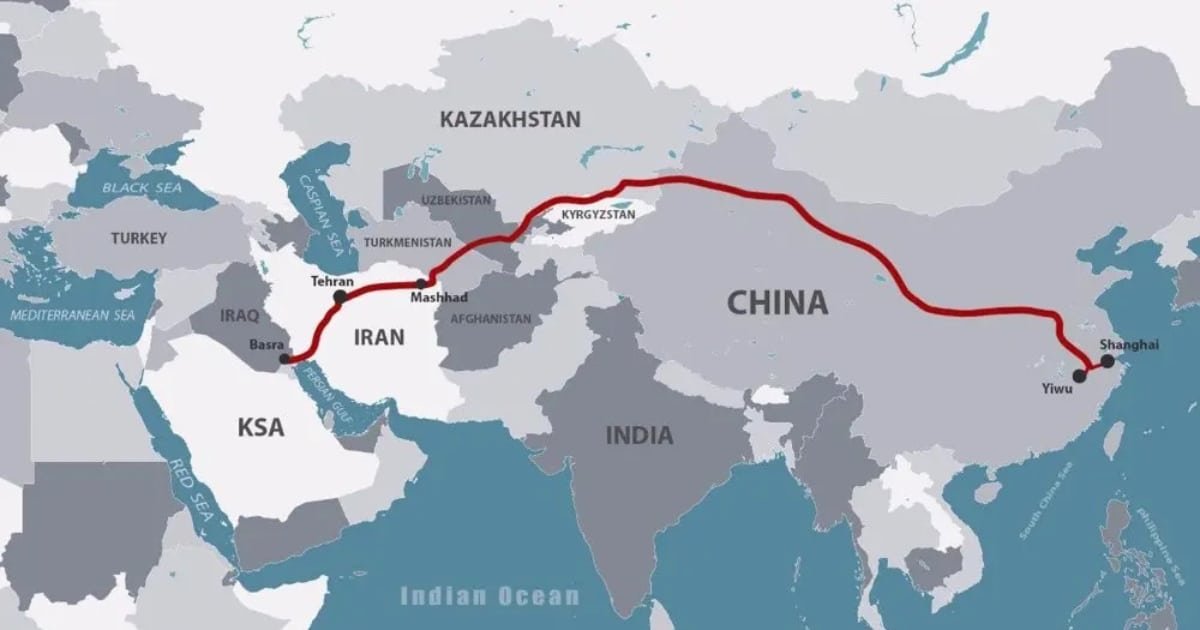





Iran has been formally designated the “golden gateway” for rail transit in a landmark multilateral agreement signed by representatives from China, Kazakhstan, Uzbekistan, Turkmenistan, Iran, and Turkey, paving the way for a surge in container traffic along the southern branch of the China-Europe corridor.
The pact, inked in Istanbul, commits the six nations to competitive tariffs, accelerated train speeds, reduced customs costs, and upgraded infrastructure to handle an expected share of the 60 million tons of annual goods transported between China and Europe. Last year (2024), rail freight on the China-Iran route alone grew 2.6 times in the first four months of 2025, signaling massive potential.
⚡️BREAKING
The China-Iran rail corridor has been put into operation
The first freight train from China arrived in Iran in 15 days, compared to 40 days by sea
Iran can now export oil to China through this corridor, and Chinese goods can also go to Europe unhindered by the US… pic.twitter.com/H3aHXrrGWS
— Iran Observer (@IranObserver0) May 25, 2025
Iranian Transport Minister Mehrdad Bazrpash hailed the deal as a “strategic win,” noting it reinforces Tehran’s central role in Eurasian connectivity. The corridor—spanning Central Asia, the Caspian, and the Middle East—offers a resilient alternative to maritime routes, cutting transit times by up to 15 days and boosting regional economies through fees and logistics hubs.
Key commitments include:
- Harmonized end-to-end tariffs for seamless pricing
- Infrastructure investments estimated at $8 billion, including electrification of the Razi-Sarakhs line
- Digital customs integration to slash delays
For Iran, the agreement could generate billions in transit revenues, supporting its North-South Corridor ambitions. China gains diversified export paths amid Red Sea disruptions, while Turkey eyes enhanced EU links.
You May Like To Read: Lakki Marwat Officials Visit Injured Police Following Suicide Attack
The signing follows a May 2025 Tehran meeting where the six parties approved initial parameters, amid surging demand: container traffic via Kazakhstan rose 2.6-fold year-on-year. With implementation targeted for 2026, this pact could redirect 20–30% of China-Europe rail volume southward, fostering trade resilience and economic integration across Eurasia.