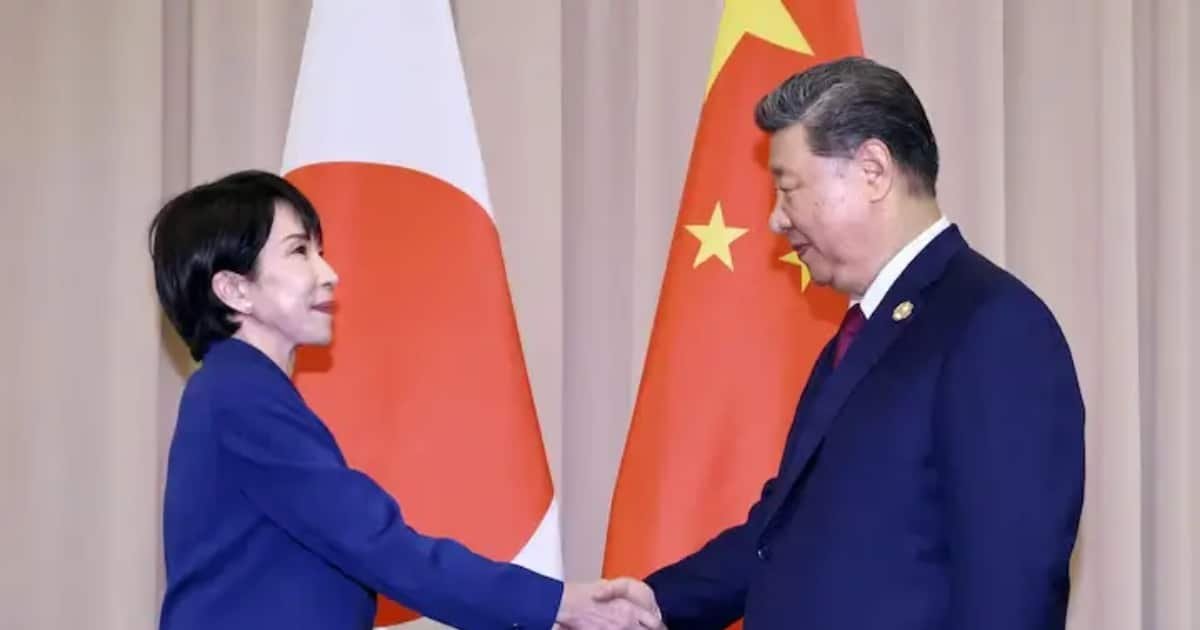





An off-the-cuff remark by Japan’s new Prime Minister, Sanae Takaichi, suggesting that a hypothetical Chinese attack on Taiwan could trigger a military response from Tokyo, has ignited the biggest diplomatic spat between Japan and its powerful neighbor, China, in years. Despite officials claiming the comment was unscripted and not intended to signal a new hardline stance, China has responded with steps designed to inflict economic pain.
Japanese Prime Minister Sanae Takaichi’s erroneous remarks concerning Taiwan are a blatant interference in China’s internal affairs, seriously violate the one-China principle, and threaten to undermine regional peace and stability, international experts have warned.… pic.twitter.com/g6iRdjNRgw
— CCTV+ (@CCTV_Plus) November 18, 2025
Beijing’s retaliation has included a boycott on tourism, a halt on imports of Japanese seafood, and the cancellation of diplomatic meetings and cultural events, signaling a “long winter ahead” for bilateral relations. Japan is struggling to defuse the dispute, as officials state Takaichi cannot retract her comment, even though she inadvertently boxed herself in by openly discussing a scenario that Japanese leaders previously avoided.
The incident highlights the growing tensions over Taiwan, which China claims as its territory. Japan, a key U.S. security ally, is motivated by concerns over regional stability and has been accelerating its defense build-up, targeting a 2% of GDP defense spending goal by the 2025 fiscal year.
The dispute is also having a cultural impact, with Japan-affiliated businesses in China lamenting the renewed tensions. Furthermore, Taiwan President Lai Ching-te publicly showed support for Japan by having a lunch of Japanese-sourced sushi, rejecting China’s use of economic coercion. Meanwhile, China has demanded Japan “behave” properly and postponed a scheduled trilateral culture ministers’ meeting with South Korea.
Check out our latest video: