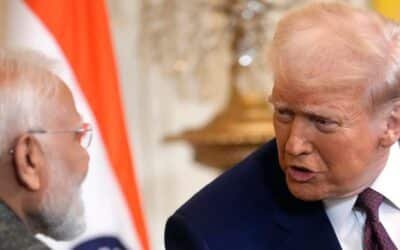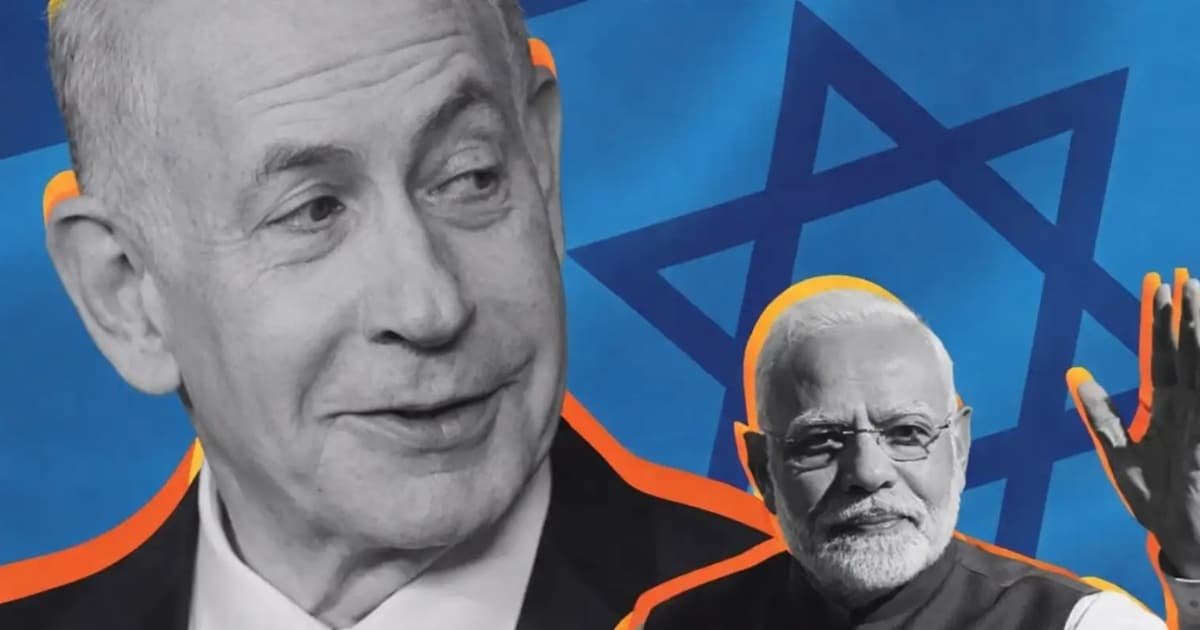




Prime Minister Narendra Modi landed at Ben Gurion Airport on Wednesday for a landmark two-day state visit to Israel, aimed at formalizing a new era of “multifaceted strategic partnership.” The visit comes at a pivotal geopolitical moment, as Israeli Prime Minister Benjamin Netanyahu seeks to integrate India into a “hexagon of alliances” designed to counter radical regional axes.
India’s PM Narendra Modi will mark his second visit to Israel, with the two countries having deepened ties under the Hindu nationalist PM.
🔴 Follow our LIVE coverage: https://t.co/TbobODRGLg pic.twitter.com/jq7q7eZpuu
— Al Jazeera English (@AJEnglish) February 25, 2026
The Diplomatic Itinerary: Knesset and Beyond
PM Modi’s visit, his second since the historic 2017 trip, is packed with high-level engagements:
-
Knesset Address: Modi is scheduled to become the first Indian leader to address the Knesset, Israel’s parliament.
-
Strategic Dialogues: Beyond one-on-one talks with PM Netanyahu, Modi will meet President Isaac Herzog and attend a high-tech innovation summit in Jerusalem.
-
Symbolic Gestures: The leaders will visit the Yad Vashem Holocaust Memorial, reinforcing the shared historical consciousness that underpins the right-wing “bromance” between the two leaders.
Defense and Economic Integration
The visit serves as the political engine for several critical bilateral files:
-
The “Hexagon” Doctrine: Netanyahu recently identified India as a cornerstone of his “hexagon” alliance, alongside Greece, Cyprus, and select Arab and Asian nations, aimed at countering both “radical Shia” and “emerging radical Sunni” axes.
-
FTA Negotiations: Concurrent with the visit, technical teams in New Delhi are conducting the first round of negotiations for an India-Israel Free Trade Agreement (FTA). Bilateral trade reached $3.62 billion in the 2024–2025 fiscal year, with both nations seeking to diversify beyond diamonds and chemicals into AI and quantum computing.
-
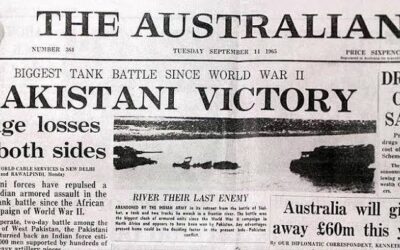
Battle-Tested Tech: The strategic depth of the relationship was underscored by the deployment of Israeli Harop and Harpy drones by India during the May 2025 border conflict with Pakistan (Operation Sindoor), which Netanyahu recently described as “working very well on the field.”
Domestic “Moral Cowardice” Charges
While the government celebrates the “vibrant” partnership, the Indian National Congress has launched a blistering critique of the trip’s timing and ethics.
‘We should not support a country that is committing genocide.’
People in India are divided over Indian PM Narendra Modi’s visit to Israel this week where he’ll meet with Israeli PM Benjamin Netanyahu. pic.twitter.com/fAzAuDsdjj
— Al Jazeera English (@AJEnglish) February 24, 2026
-
Priyanka Gandhi’s Challenge: The Congress leader urged Modi to use his Knesset address to demand justice for the 71,000+ Palestinians killed in Gaza, stating that India must not abandon its legacy of seeking “truth, peace, and justice.”
-
The “Modani” Connection: Jairam Ramesh accused the PM of “moral cowardice” and “brazenly embracing” a leader accused of war crimes. He specifically highlighted the “Modani connection,” referring to the Adani Group’s operation of Haifa Port, which remains a critical node in the stalled India-Middle East-Europe Economic Corridor (IMEC).
-
The Nehru Precedent: Ramesh contrasted the visit with Jawaharlal Nehru’s 1960 visit to Gaza, suggesting that the current administration has “abandoned” the Palestinian cause despite India being among the first to recognize the State of Palestine in 1988.
You May Like To Read: Pakistan Senate Unanimously Condemns Netanyahu’s Vision of a New Geopolitical Axis
Check out our latest video: