



European Firms Rethink China Reliance
Recent data shows a growing number of European companies are actively diversifying their supply chains away from China as Beijing’s push for economic self-reliance and expanding export controls create uncertainties for global business. According to a flash survey by the European Union Chamber of Commerce in China, roughly one in three EU firms affected by China’s export restrictions are planning to cultivate supply sources outside of the country, while many others are still weighing their options amid rising fears of production slowdowns or stoppages due to delayed export licences and other regulatory bottlenecks. This trend marks a significant shift from China’s long-held position as the world’s manufacturing hub and reflects broader strategic recalibrations in global supply chains.
You May Like to Read: China’s ‘De-risking’ Challenge: Can Pakistan Adapt to a Slowing BRI?
Beijing’s Export Controls and Policy Shifts
China’s recent tightening of export controls on key materials and intermediate goods has added pressure on European businesses. Materials such as gallium, germanium, and graphite, essential for semiconductors and advanced manufacturing, have seen export curbs that have raised concerns in Brussels and beyond. These restrictions, driven by China’s strategy to secure domestic technology supply chains and gain leverage in global high-tech markets, have interrupted established sourcing patterns for firms that rely on Chinese inputs. The result has been increased costs and logistic strain, prompting EU companies to consider alternative suppliers in ASEAN, South Asia, and other regions.
EU Policy Response and De-Risking Strategies
European policymakers have not been passive spectators. Brussels has signalled an intention to reduce systemic dependency on China for critical materials and technologies. The EU’s Critical Raw Materials Act, implemented in 2024, aims to ensure that strategic materials are partly sourced, processed, and recycled within Europe or from diversified partners, capping the reliance on any single third country at below 65 percent for key inputs. This legislative thrust is coupled with financial support mechanisms to help European firms build alternative supply networks, invest in local processing capacity, and secure long-term contracts with resource-rich countries like Canada, Australia, and Chile.
You May Like to Read: Macron Urges Xi to Cooperate on Geopolitics and Trade Rebalancing Amid EU Tariff Disputes
Trade Corridor Realignments and Global Implications
These shifts in supply-chain strategies are not happening in isolation but reflect wider transformations in global trade flows. Trade analysts note that geopolitical tensions, including rising tariff pressures and evolving trade agreements, are reshaping logistics routes and manufacturing nodes. For example, studies suggest one-third of global trade could change its corridor orientation by 2035 as firms pivot away from geopolitically distant partners and towards more regionalised or aligned markets. Such alterations could see increased commerce between Asia’s emerging economies and non-Western markets, even as trade between historically dominant corridors slows.
Asia’s Shifting Trade Landscape
China itself is adapting to these tectonic shifts. Recent trade data indicates that developing economies now account for just over half of China’s goods trade, up from 42 percent in 2017, with notable increases in imports from ASEAN and other Asian partners. This suggests that China’s own supply-chain diversification and market outreach, driven by both policy and strategic necessity, is integrating it more deeply with the broader Global South. This positioning may partly cushion Beijing from potential slippage in Western demand but also highlights an increasingly multipolar trade world.
Opportunities for Pakistani Exporters
For Pakistani businesses, especially in export-oriented sectors, these developments offer mixed implications. On the one hand, European firms’ search for alternative suppliers presents an opening for Pakistan’s garment, textile, and light manufacturing industries. Pakistan has competitive advantages in labour costs and existing trade linkages that could be leveraged to attract European sourcing contracts. Recent industry surveys show European buyers are already expanding sourcing in nearby regions such as Morocco, Egypt, and Tunisia, as they diversify away from Chinese supply hubs. Pakistani exporters could similarly benefit if they can meet compliance, quality, and delivery expectations.
Manufacturing and Quality Challenges
However, seizing these opportunities is not automatic. European buyers increasingly demand supply-chain transparency, traceability, and compliance with environmental and labour standards. The QIMA 2025 Sourcing Survey highlights that only a small fraction of global businesses have full visibility of their supply networks, a situation that European brands are trying to rectify as they reassess risk. To align with this trend, Pakistani manufacturers would need to invest in digital tracking systems, quality assurance frameworks, and certified compliance processes to remain competitive and trustworthy partners in diversified supply chains.
Strategic Positioning Through Trade Corridors
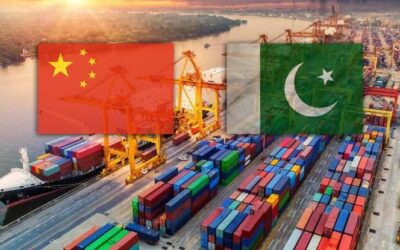
Pakistan’s geographic location and trade infrastructure could also play a strategic role amid these realignments. The China–Central Asia–West Asia Economic Corridor (CCAWEC), part of the broader Belt and Road Initiative, connects China with Europe and other markets through land and maritime links that traverse Central and West Asia. Enhanced utilisation of corridors such as this, coupled with improvements in ports like Gwadar and associated rail and road networks, could reduce transit times and costs for Pakistani exports bound for Europe and Africa. Over the long term, further integration into these trade corridors could position Pakistan as a key transit hub for regional commerce, aligning with global shifts towards diversified supply routes.
Challenges in Logistics and Infrastructure
Despite these opportunities, Pakistan must grapple with infrastructure and logistical hurdles. Road, rail, and port capacities need scaling to handle increased volumes efficiently, and customs processes must be streamlined to facilitate faster export flows. Additionally, Pakistan’s exporters may face competitive pressure from other emerging manufacturing hubs such as Vietnam, Bangladesh, and India that have already secured significant contracts from Western buyers seeking alternatives to China. Addressing these challenges requires both targeted public-sector investment and private-sector adaptation.
Political and Economic Context
The broader political economy also shapes how these supply-chain shifts play out. The European Union’s policy towards China is evolving under a climate of strategic competition and rivalry, as Brussels balances cooperation with defence of economic sovereignty. A combination of political pressures, regulatory changes, and industrial policy interventions will continue to influence where and how European firms source components and finished goods. Pakistan, therefore, must monitor these developments closely to align its trade diplomacy and market strategies with the shifting priorities of European buyers and policymakers.
Conclusion: A New Trade Dynamic
In 2025, the realignment of global supply chains represents both a challenge and an opportunity for countries like Pakistan. As European firms diversify away from China and global trade corridors evolve, Pakistan’s export industries can find new markets and integrate into reshaped logistics networks, provided they adapt to emerging standards, improve competitiveness, and leverage strategic infrastructure links. At the same time, navigating this changing landscape will require proactive policy measures, investments in quality and compliance systems, and enhanced trade diplomacy to capture the benefits of this fresh phase in global commerce. If crafted with patience and foresight, Pakistan’s role in the future global trade architecture could be significantly enhanced by the very supply-chain recalibrations now unfolding.
Check out our latest video: