


At an emergency session of the UN Security Council convened by France, Pakistan issued a stark warning to the international community, urging immediate diplomatic intervention to halt Israel’s rapidly expanding military campaign in Lebanon.
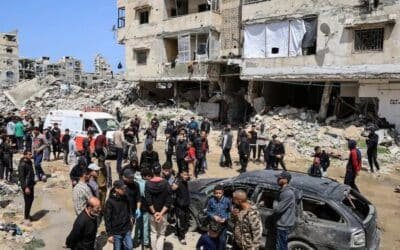
Addressing the 15-member Council on Monday night, Ambassador Asim Iftikhar Ahmad, Pakistan’s Permanent Representative to the UN, declared that the security and humanitarian landscape in the region is deteriorating at a catastrophic pace. Despite a U.S.-brokered ceasefire arrangement initially announced on April 17, Israeli ground forces have pushed deep into Lebanese territory, placing approximately 2,000 square kilometers—nearly 20% of Lebanon—under illegal military occupation.
“It seems it is the same strategy, the same playbook that we have seen elsewhere: indiscriminate killing, forced displacement, and occupation,” Ambassador Asim told delegates.
The emergency session, called by French Ambassador Jerome Bonnafont, was triggered by a highly symbolic and strategic escalation: Israeli forces advancing north of the Litani River into the “Yohmor triangle” and planting the Israeli flag on the historic Beaufort Castle—a fortress that served as a primary base during Israel’s previous occupation of southern Lebanon until 2000.
UN Assistant Secretary-General Martha Ama Akyaa Pobee reported a dangerous erosion of the cessation of hostilities, citing that the UN Interim Force in Lebanon (UNIFIL) recorded 992 Israeli projectile trajectories on May 30 alone—the highest volume since the April ceasefire agreement. Concurrently, Hezbollah has intensified its counter-offensive, deploying advanced, deadly fiber-optic drones, anti-tank guided missiles, and surface-to-air systems against Israeli assets while launching strikes deeper into northern Israel.
Reckless Israeli actions not only violate Lebanon’s sovereignty and territorial integrity, but also constitute a flagrant breach of international law. More than that, they seriously undermine diplomatic efforts aimed at achieving lasting peace and stability in Lebanon and the… https://t.co/2xniXSezx5
— Asim Iftikhar Ahmad, PR of Pakistan to the UN (@PakistanPR_UN) June 2, 2026
Critical Analysis: The Illusion of Ceasefires and the Cycle of Occupation
The emergency UN Security Council meeting exposes a profound disconnect between international diplomatic frameworks and the geopolitical realities unfolding on the ground. A critical breakdown of the conflict’s current trajectory reveals several key insights:
The Anatomy of a Flawed Ceasefire Architecture
The current crisis underscores the structural impotence of the April 17 cessation of hostilities framework. While Pakistan explicitly welcomed U.S. mediation efforts during the session, the reality on the ground demonstrates that without robust enforcement mechanisms, ceasefires in this theater function merely as temporary operational pauses rather than durable peace agreements. The record-shattering 992 projectile trajectories documented by UNIFIL on May 30 prove that both state and non-state actors are operating completely outside the bounds of the U.S.-brokered understanding.
The Beaufort Castle Incursion: A Dangerous Historical Regression
The capture and flag-raising at Beaufort Castle carries immense psychological and geopolitical weight. As French Ambassador Bonnafont noted, this headlong rush into Lebanon pulls the region back into a historical quagmire that many believed was obsolete.
| Metric | Conflict Impact Since March 2026 |
| Lebanese Territory Under Occupation | ~2,000 sq km (Nearly 20% of Lebanon) |
| Total Casualties | 3,400+ Killed |
| Civilians Displaced | More than 1 million people |
| Healthcare Infrastructure Damage | 125 Medical workers killed |
By advancing north of the Litani River, Israel is effectively dismantling the core tenets of UN Resolution 1701, which mandates a weapons-free zone between the Blue Line and the Litani River, occupied exclusively by the Lebanese Army and UNIFIL. Israel’s deeper territorial push risks shifting its strategic objective from a defensive border operation to a long-term, open-ended occupation.
Technological Escalation: The Fiber-Optic Drone Threat
The character of the military engagement has evolved significantly. The UN’s explicit mention of Hezbollah utilizing “increasingly deadly fiber-optic drones” highlights a critical shift in asymmetric warfare.
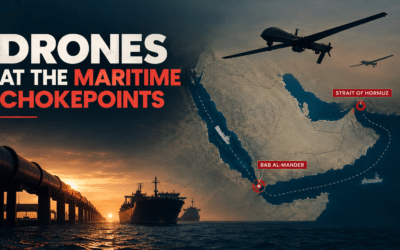
Unlike traditional radio-controlled or GPS-guided drones, fiber-optic-tethered drones are entirely immune to electronic warfare, signal jamming, and spoofing countermeasures. This technological adaptation allows Hezbollah to bypass Israel’s sophisticated electronic defense umbrellas, inflicting precise kinetic damage on advancing armored columns and guaranteeing a high-casualty environment that complicates an orderly Israeli withdrawal.
Pakistan’s Pivot as a Inter-Regional Mediator
Separately from the Security Council debate, Pakistan’s simultaneous address at the UN General Debate on Strengthening the Role of Mediation underscores a deliberate diplomatic pivot by Islamabad.
Positioning itself uniquely as a friendly neighbor to Iran, a brotherly partner to the Gulf states, and a long-standing ally of the United States, Pakistan is attempting to position itself as a neutral, cross-cutting mediator. By advocating for a stronger, centralized UN mediation architecture, Pakistan is signaling that unilateral Western or U.S.-only diplomatic tracks are no longer sufficient to stabilize a multi-front Middle Eastern crisis that threatens broader global trade and security.