




Changing Regional Geometry
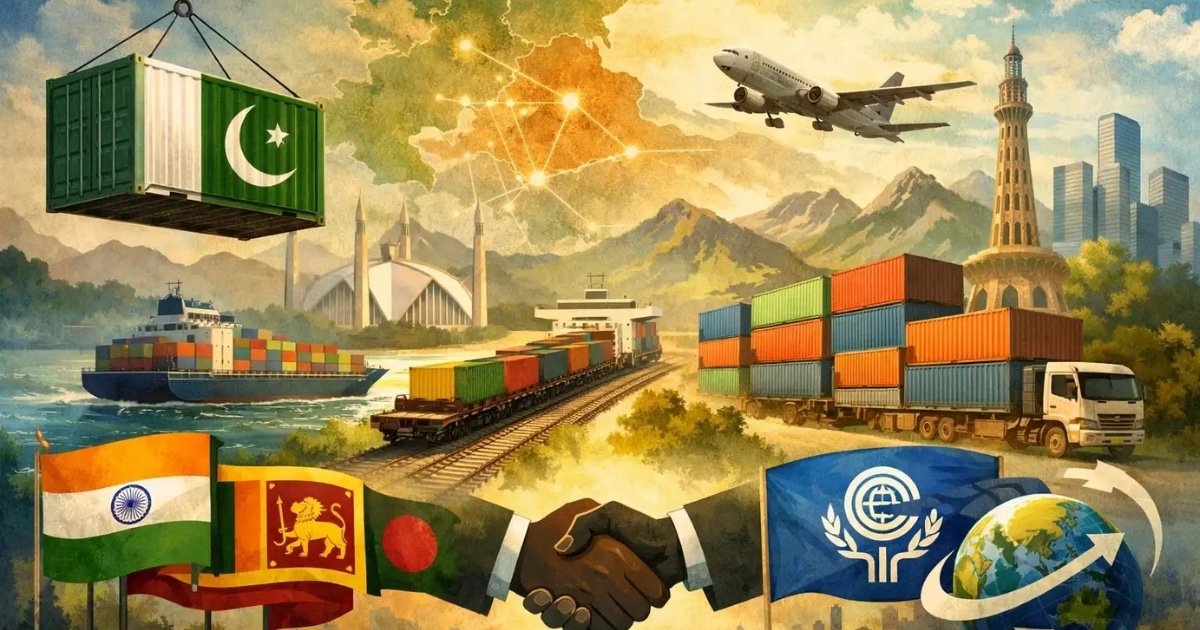
In late 2025 and early 2026, Pakistan’s trade diplomacy has shifted from narrow tariff deals to comprehensive engagement with multiple regional and extra‑regional economies. Traditional frameworks such as the South Asian Free Trade Area (SAFTA) and the Economic Cooperation Organisation (ECO) still form part of Islamabad’s broader export strategy, but they now operate alongside deeper bilateral talks with neighbours like Bangladesh, Central Asian partners such as Uzbekistan, and Gulf states including the UAE and Saudi Arabia. This multilateral and bilateral blend reflects Pakistan’s pragmatic recognition that no single regional bloc can deliver growth without strong connectivity and political support.
SAFTA’s Limited Progress, Yet Emerging Connectivity Talks
SAFTA was conceived as a flagship South Asian trade pact more than two decades ago, aiming to eliminate tariffs among SAARC members. Yet throughout 2025, Pakistan continued to grapple with SAFTA’s limitations. Political tensions with India and historical diplomatic inertia have meant that SAFTA is rarely the mechanism driving new trade surges. In fact, analysts still point to India’s suspension of certain SAARC initiatives and the wider diplomatic stalemate as a key reason intra‑South Asia trade remains low compared with other regions.
Despite these structural issues, recent dialogues with Bangladesh indicate there is momentum to make regional trade more practical, even if not yet through formal SAFTA mechanisms. In October 2025, Pakistan and Bangladesh held the 9th meeting of their Joint Economic Commission, the first in nearly 20 years, and agreed to enhance direct air, shipping and logistics links to reduce freight costs and boost trade beyond the slow‑moving SAFTA processes. Discussions included a potential trade deal that could go beyond SAFTA’s tariff framework, focusing instead on connectivity and mutual market access.
For Pakistan, leveraging SAFTA today means repurposing it as the backdrop for connectivity and logistics cooperation, especially where bilateral political engagement exists. Boosting direct transport links with Bangladesh could cut costs for Pakistani textile and agricultural exports, if the two countries succeed in implementing direct container shipping services and enhanced customs coordination.
ECO’s Revival: Connectivity and Freight Trains
The Economic Cooperation Organisation (ECO), stretching from Turkey and Iran through Central and South Asia, has long promised transit‑oriented trade opportunities. For Pakistan, ECO is uniquely positioned to connect its ports with Central Asian markets. A major development in this regard came at the end of 2025: Pakistan announced the resumption of the Islamabad‑Tehran‑Istanbul (ITI) ECO freight train service, set to restart on December 31, 2025. The revival of this train service is not symbolic; it directly addresses a key barrier in regional trade, costly and slow overland transport, and could unlock a predictable corridor linking South and Western Asia.
This effort aligns with Islamabad’s public statements encouraging business communities to take advantage of expanded rail connectivity. If operational realities match the political will, the ECO freight train could cut transport times for Pakistani exporters and importers alike, especially for non-perishable manufactured goods and intermediate inputs.
However, ECO’s impact remains tempered by institutional gaps in customs harmonisation and logistics infrastructure across member states. To truly harness ECO, Pakistan must work with partners like Iran, Turkey, and Central Asian states to adopt mutual cargo tracking systems and streamlined border handling, something still in early development despite the train’s relaunch.
Pakistan–Afghanistan Preferential Trade Agreement
In 2025, Pakistan and Afghanistan signed a preferential trade agreement (PTA) that cuts tariffs on several agricultural products, bringing rates down to around 27% from previous levels near 60% The deal, effective from July 1, 2025, reduced duties on Afghan fruit exports while cutting tariffs on Pakistani produce like mangoes and potatoes. This aimed to strengthen formal trade ties and lower prices at border markets.
Yet, by January 2026, this trading honeymoon was clouded by a major setback; prolonged closure of major border crossings driven by security tensions, which has halted trade flow, emptied markets in border cities, and dramatically raised prices for imported Afghan produce. This development underscores the reality that trade agreements alone are not enough, they must be backed by stable cross‑border operations.
Pakistan–Indonesia Cooperation and ASEAN Engagement
Pakistan and Indonesia agreed in late 2025 to expand trade, education, and services ties. A noteworthy outcome in early January 2026 was the establishment of an Indonesia‑Pakistan Joint Trade Committee, designed to deepen economic cooperation and explore market opportunities beyond traditional goods, such as halal certification and mutual investment frameworks. Logistics forums and business delegations were also highlighted for 2026 as part of this collaboration.
#BREAKING Pakistan, Indonesia agree on Joint Trade Committee as trade crosses $4bn. pic.twitter.com/7qjG1sVefQ
— Mansoor Ahmed Qureshi (@MansurQr) January 12, 2026
This committee offers Pakistan a pathway into the wider ASEAN market. While not part of SAFTA or ECO, ASEAN represents a dynamic economic bloc, and Pakistan’s bilateral committee with Indonesia could serve as a platform to pursue ASEAN‑Pakistan trade linkages in future years.
UAE and CEPA Talks
In January 2026, Pakistan and the United Arab Emirates agreed to fast‑track negotiations on a Comprehensive Economic Partnership Agreement (CEPA). The pact aims to deepen market access, broaden investment cooperation, and align regulatory frameworks to make trade and services flows smoother. The UAE’s position as a major financial hub and gateway to Africa and Europe makes a CEPA particularly strategic for Pakistani exporters targeting diversified markets.
Central Asia: Pakistan–Uzbekistan Trade Expansion
Building on long‑standing ties under ECO, Pakistan and Uzbekistan set an ambitious target in December 2025 to increase bilateral trade to $2 billion within two years. This plan focuses on priority sectors such as textiles, leather and pharmaceuticals, and includes technology transfer and joint ventures. Fast‑tracking their Preferential Trade Agreement (PTA) is a core part of this vision, reflecting Pakistan’s renewed emphasis on regional economic linkages with Central Asia.
You May Like To Read: China’s Private Space Race: InterstellOr Eyes 2028 Tourist Launch
Looking Forward: Strategy to Expand Markets and Reduce Barriers
Pakistan’s widening diplomatic and trade portfolio shows a clear strategic evolution. SAFTA, once touted as the anchor of South Asian economic integration, now plays a background role as bilateral engagements take lead positions. ECO remains vital for physical transit opportunities, especially with the ITI freight service relaunch. Meanwhile, bilateral deals with Afghanistan, Indonesia, the UAE, and Uzbekistan show that market expansion now relies as much on targeted agreements as on broad regional frameworks.
To leverage these opportunities effectively, Pakistan must prioritise strengthening cross‑border logistics and IT‑enabled customs systems to ensure agreements translate into real trade flows, Diversifying export profiles beyond raw agriculture and textiles, into value‑added goods and services, including halal products and digital services. Lastly, aligning tariff negotiations with investor certainty, particularly in partnerships like Pakistan–UAE CEPA, where predictable market access can attract capital.
Concluding
Trade frameworks only deliver results when backed by stable political channels, reliable infrastructure, and mutual trust. Pakistan’s recent engagements show momentum in this direction, reflecting not just a desire to expand markets, but an understanding that pragmatic trade diplomacy, both within regional groupings and beyond, is central to future economic resilience.
Check out our latest video: