




The global economy today remains volatile—shaped by COVID‑19 shocks, geopolitical tensions, and climate-related disruptions. In this landscape, Pakistan’s integration into international supply chains is both a strategic asset and a vulnerability. This article examines Pakistan’s role in global trade, its supply chain strengths and weaknesses, and the policy measures needed to enhance resilience.
You May Like To Read: The NADRA Paradox: Efficient Governance vs. Citizen Rights in the Digital Age
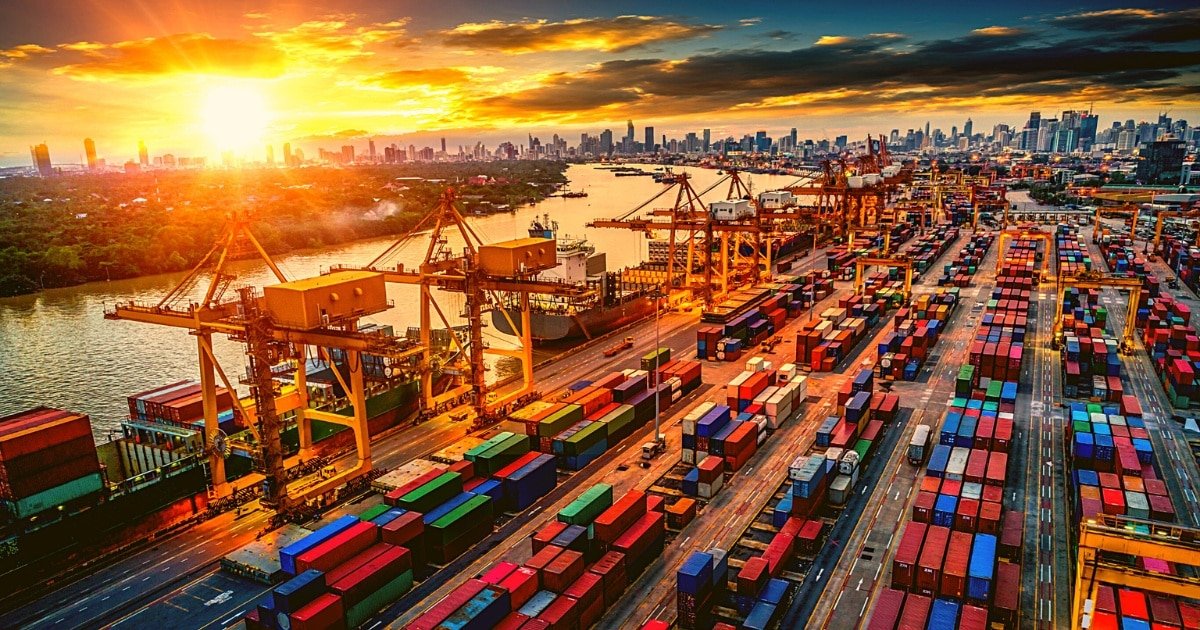
Pakistan’s Role in Global Supply Chains
Pakistan’s textile sector dominates its trade footprint:
- Employing nearly 25 million people, it contributes 8.5% of GDP and is among the top ten textile exporters in Asia, with high global spinning capacity.
- International buyers, especially in the US and EU, rely on Pakistani firms for cotton-based garments under GSP+ access, although demand has fluctuated post-pandemic.
The government has also initiated the Pakistan Single Window (PSW), digitizing cross-border trade to simplify licensing and clearance, reducing cost and processing time for import-export businesses.
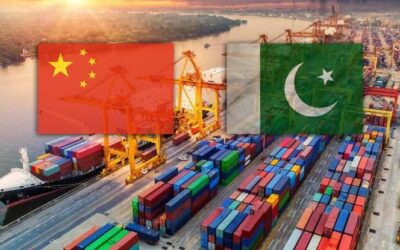
Moreover, China–Pakistan Economic Corridor (CPEC) infrastructure upgrades are positioning Pakistan as a regional logistics hub, linking South Asia with Central Asia and China, while strengthening energy and transport corridors.
Strengths and Opportunities
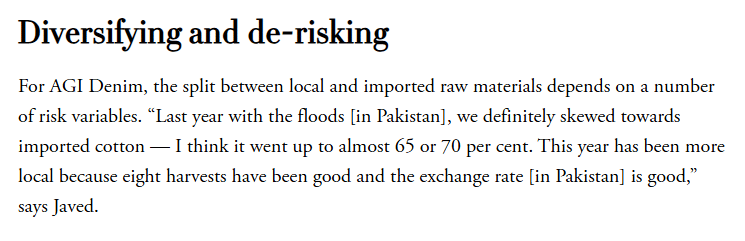
Vertical integration and traceability in textiles stand out as resilience enablers. For example, AGI Denim, headquartered in Karachi, sources a significant share of cotton domestically alongside imports, keeping facilities within a tight radius (≈10 km), thus shortening lead times and increasing quality control. Such integration has bolstered efficiency and reduced dependency on distant suppliers, according to Vogue Business.
Source: Vogue Business
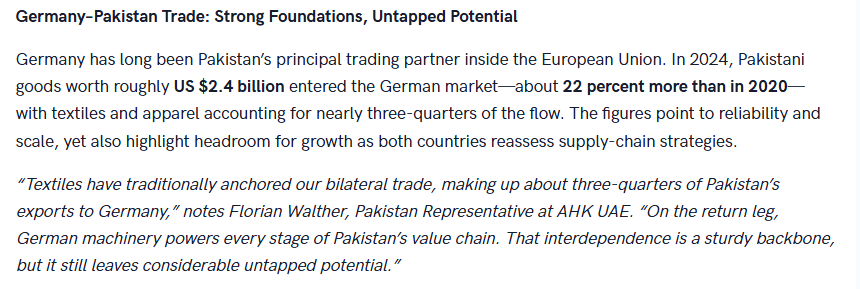
Strong bilateral trade relationships, notably with Germany—where textiles compose roughly three-quarters of Pakistan’s exports—are opening space for diversification. Germany’s demand for transparency, labor standards, and carbon accounting aligns with Pakistan’s evolving traceability infrastructure.

Source: Trade Wind Finance
Source: Trade Wind Finance
Challenges: Micro to Macro
Natural Disasters and Climate Risks
Historic flooding and extreme weather events—such as the 2022 floods—have disrupted farming, production, and logistics, underscoring climate vulnerability in raw-material sourcing.
You May Like To Read: Does Madrassa Only Produce Conservative People?
Supply Chain Vulnerabilities
Research on Pakistan’s large-scale manufacturing shows that resilience hinges on reforming resources and strengthening responsiveness to disruptions. Inadequate coordination and structural inefficiencies impair recovery capacity
Sectoral Weakness in Risk Management
A study of Pakistan’s textile firms found that greater supply chain resilience and robustness significantly improve firm performance, while risk‑management practices mediate disruptions—indicating widespread gaps in current SCRM frameworks across the industry.
Integration vs. Resilience: The Trade-off
Effective supply chain integration boosts flexibility and innovation, essential during crises—particularly for industries like textiles that serve fast-moving global markets.
However, integration focused solely on efficiency—without parallel investment in risk mitigation or diversification—can reinforce fragility. For instance, reliance on a narrow supplier base or concentrated geographic sourcing leaves supply chains exposed during local disturbances.
Policy Roadmap for Greater Resilience
To reinforce Pakistan’s integration into global supply chains while improving resilience:
- Broaden supplier networks and diversify sourcing regions, especially for cotton and textiles, to hedge against climate and trade disruptions.
- Enhance risk-management capacity in manufacturing firms through training, predictive analytics, and resource reform frameworks (as illustrated in DEMATEL‑ANP methodologies).
- Promote digitized supply‑chain platforms like PSW to integrate documentation, compliance, and tracking across agencies and logistics providers.
- Leverage multilateral trade ties: deepening partnerships with markets such as Germany and the EU can motivate stricter adoption of environmental, labor, and traceability standards that also build resilience.
- Encourage vertical integration among exporters where feasible—balancing the benefits of local supply control with diversification safeguards.
Pakistan sits at a pivotal junction in global supply chains—its textile and logistics sectors positioned for both growth and disruption. Integration through vertical sourcing models and trade facilitation reforms presents opportunity. However, without stronger risk management, diversification strategies, and climate adaptation planning, exposure to shocks will undermine gains.
In an era of increasing volatility—from geopolitics to weather extremes—Pakistan’s future resilience hinges on blending integration with adaptive capacity. Building robust, agile supply chains is not just an operational upgrade—it’s essential nation-building for economic stability.