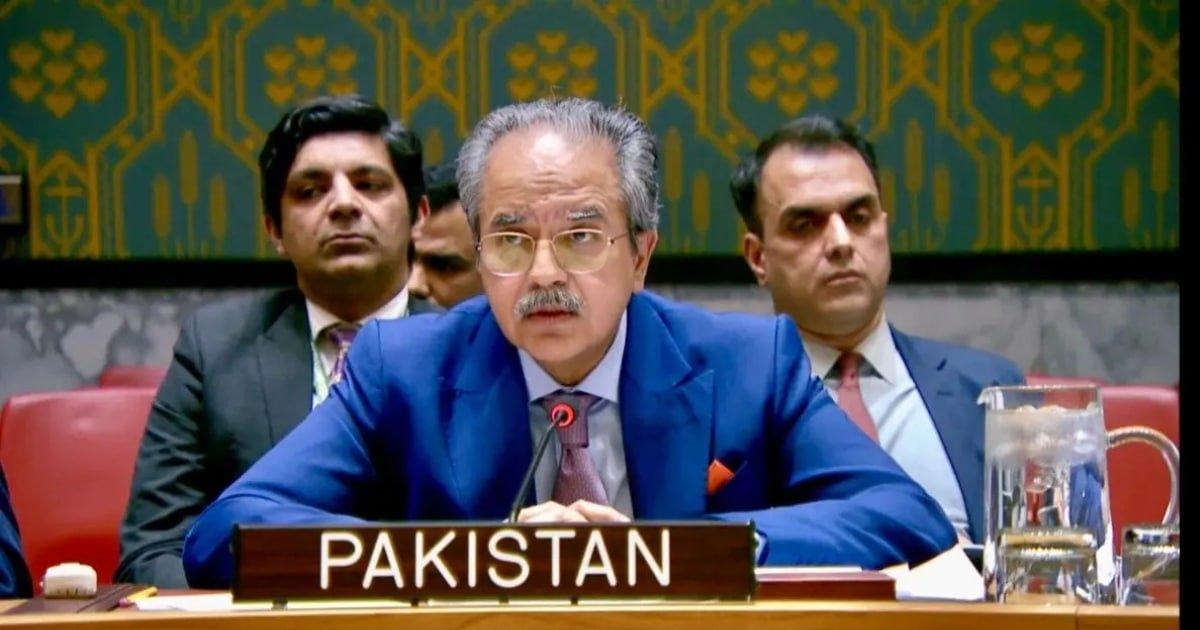





UNITED NATIONS, NEW YORK — In a high-stakes diplomatic confrontation at the United Nations Security Council (UNSC), Pakistan’s Permanent Representative, Ambassador Asim Iftikhar Ahmad, delivered a scathing rebuttal to Indian allegations, accusing New Delhi of being a “serial violator of international law” and the primary architect of instability in Afghanistan.
The exchange followed attempts by the Indian representative, Parvathaneni Harish, to characterize Pakistan’s legitimate counter-terrorism operations as violations of sovereignty—a narrative Ambassador Ahmad dismissed as a desperate attempt to protect India’s “terrorist franchise” on Afghan soil.
Further Statement by Ambassador Asim Iftikhar Ahmad,
Permanent Representative of Pakistan to the UN,
In Response to Remarks of Representatives of India and Afghanistan
At the UNSC Meeting on the Situation in Afghanistan
(9th March 2026)
************Thank you Madam President,… pic.twitter.com/h3GZLl5sCn
— Permanent Mission of Pakistan to the UN (@PakistanUN_NY) March 10, 2026
Exposing India’s “Terrorist Franchise”
Ambassador Ahmad lambasted India for its historical and ongoing role as a “spoiler” in the region, providing a detailed critique of New Delhi’s complicity in the Afghan security crisis:
-
Sponsoring Proxies: Pakistan accused India of actively supporting and financing terror groups operating from Afghanistan, specifically naming the Tehreek-i-Taliban Pakistan (TTP) and the Baloch Liberation Army (BLA).
-
The “Pain” of Lost Investments: The Ambassador remarked that India’s diplomatic outcry stems from “sensing the pain” of seeing its heavy investments in Afghan-based terror cells go to waste following Pakistan’s “precise and effective” strikes under Operation Ghazab-lil-Haqq.
-
Irrefutable Evidence: Pakistan reiterated that it has provided the international community with a dossier of irrefutable evidence linking Indian intelligence to the orchestration of violent attacks inside Pakistan from Afghan territory.
A Record of Rogue Behavior
Responding to India’s rhetoric on international law, the Pakistani envoy presented a harrowing list of India’s own transgressions, describing the state as a rogue actor on the global stage:
-
Illegal Occupations: India was cited for its ongoing illegal occupation of Jammu and Kashmir in defiance of multiple UNSC resolutions and the UN Charter.
-
Domestic Marginalization: The envoy highlighted India’s systematic marginalization of its own minorities and the use of hate speech as state policy.
-
Weaponizing Resources: Ambassador Ahmad accused New Delhi of “weaponizing water” with the malicious intent of starving the Pakistani population, alongside deploying global disinformation campaigns to destabilize its neighbors.
Defense of Sovereign Rights
Ambassador Ahmad clarified that Pakistan’s current operations are strictly in conformity with the UN Charter’s right to self-defense:
-
Neutralizing the Threat: The operations are not directed at the Afghan people but are essential measures to neutralize persistent threats that the Taliban regime has failed to rein in.
-
Selective Outrage: The Ambassador took exception to the “sequestered” remarks of Naseer Ahmad Faiq (Chargé d’affaires of the Afghan mission), noting that Faiq remained silent on the TTP and Al-Qaeda’s cross-border terrorism, which has claimed countless Pakistani lives.
Conclusion: A Call for Accountability
Pakistan urged the Security Council to recognize India’s “newfound friendship” with terror-friendly elements within the Taliban regime. The Ambassador vowed that Pakistan would never allow the “sabotage and subversion” from Afghan soil, nourished by Indian patronage, to harm its national integrity.
“India must cease and desist from its policy of stoking terrorism inside Pakistan. Its role as a spoiler is over; Pakistan will continue to act responsibly to ensure its own security and regional peace.” — Ambassador Asim Iftikhar Ahmad
You May Like To Read: WHO Director-General Warns of Severe Health Crises Amid Middle East War