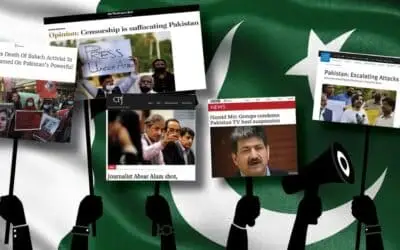





In many parts of the world today, political struggles involving Muslim communities are too often described first as “terrorism” rather than as political resistance, protest, or a reaction to occupation and deprivation. This is not merely a matter of language. The labels journalists and editors choose shape public opinion, influence policy decisions and can make violence against whole communities seem normal or justified. Recent studies and international statements show that the pattern of linking Muslim actors disproportionately to violence remains widespread and harmful.
You May Like to Read: Digital Battlefield: Pakistan’s Response Towards Online Extremism and Terrorist Propaganda
Historical patterns that persist
Since at least the post-9/11 era, mainstream news coverage in many Western outlets has tended to equivocate or criminalize political dissent when the actors are Muslim, while treating similar acts by non-Muslims in a different register. Academic reviews find that events involving Muslim perpetrators receive longer, more sensational coverage and that language choices, “militant,” “extremist,” “terror,” are used more readily and persistently in those cases. This creates a durable mental shortcut: Muslim = threat, resistance = terrorism. Such framing is not only a matter for scholars; it translates into social and political consequences for millions of people.
How framing works in practice
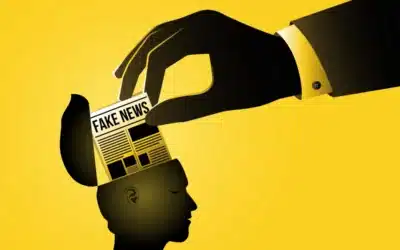
Framing happens through several simple newsroom mechanisms. Editors pick which images run on a front page; anchors choose which words to repeat; wire services set the tone that local outlets often copy. Research shows that outlets differ in how they name actors and actions.. Some label fighters as “terrorists” while others call them “resistance fighters” or “militants.” Visual choices, focusing on weapons, beards, or mosque backdrops, reinforce a narrative of inherent violence. During sustained conflicts, such labelling is rarely neutral. It assigns moral weight, defining who counts as a civilian and who is an enemy.
You May Like to Read: Fake News as Digital Warfare: Countering the Foreign-Backed Disinformation Campaigns
Recent events and media practice
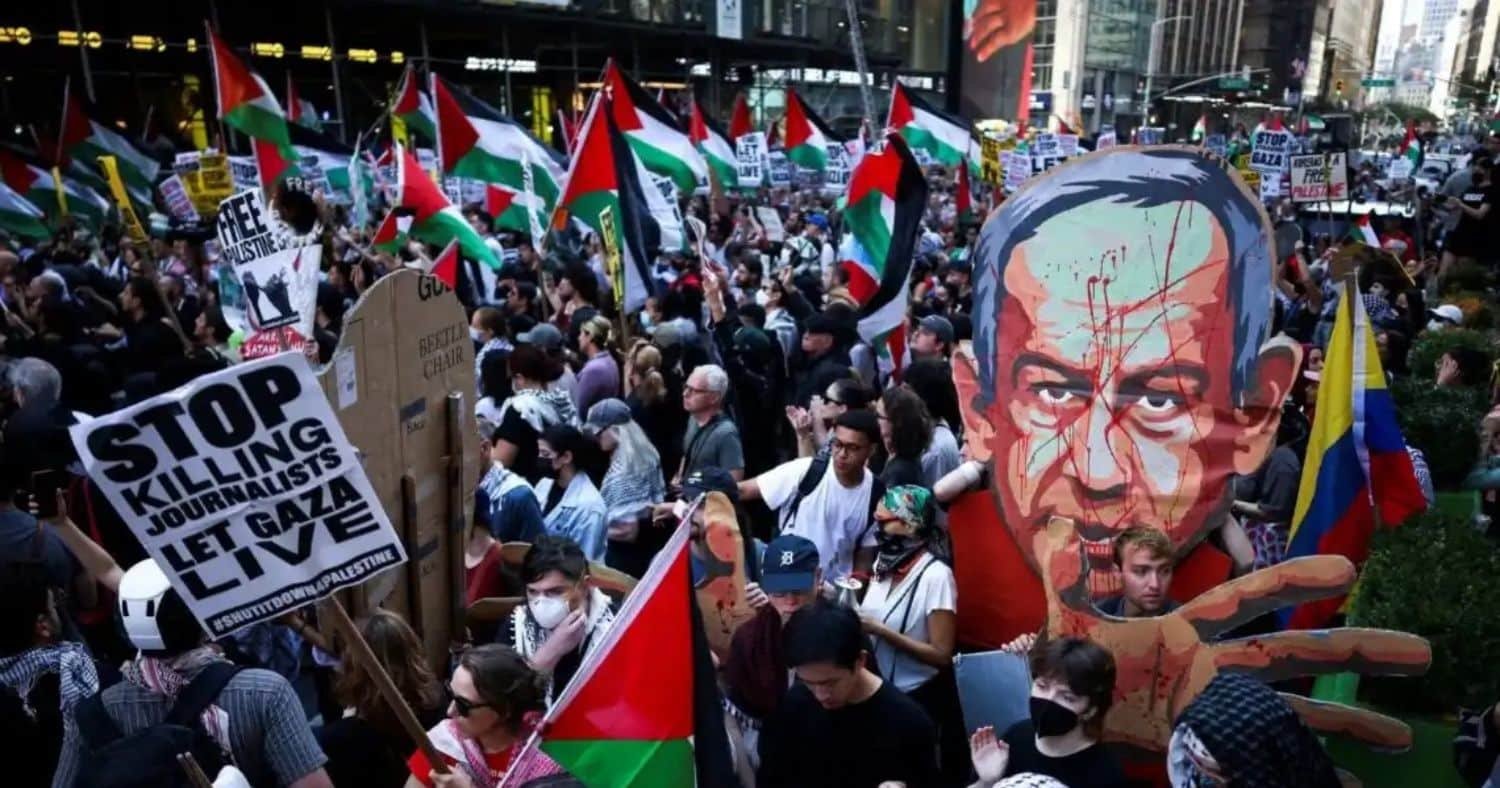
The Gaza war and global protests since 2023–2024 have made these dynamics starkly visible. Coverage often juxtaposes images of suffering civilians with headlines that foreground the actions of armed groups, or that emphasize the word “terror.” At the same time, thoroughly reported investigations and careful journalism have sometimes challenged official accounts and simplistic framings, showing that facts on the ground are more complex than immediate labels suggest. On August 25, 2025, an Israeli airstrike on Gaza’s Nasser Hospital killed 22 people, including five journalists.
While Israel claimed it targeted a Hamas surveillance camera, Reuters and BBC Verify investigations revealed the device belonged to Reuters, not Hamas. Visual evidence and official admissions exposed contradictions in Israel’s account, drawing UN condemnation and raising urgent questions about accountability, media targeting, and civilian protection in conflict reporting. Where independent verification rapidly gains traction, simplistic framing is exposed; where it does not, stereotypes harden.
UK Media Frames Pro-Palestine Activism as Terrorism
In 2025, one of the most telling examples of media framing occurred in the United Kingdom, where six people were charged under anti-terror laws for their alleged support of Palestine Action, a pro-Palestinian protest group recently proscribed by the government. The media coverage often emphasized terms like “banned organisation,” “terrorism support,” and “extremist” in headlines, while giving limited space to the activists’ claims of nonviolent protest or political dissent.
As the case entered court, many outlets led with the security framing rather than contextualising the debate about freedom of assembly, censorship, or Palestinian rights. Simultaneously, a London court dismissed a terrorism charge against Irish rapper Liam Óg Ó hAnnaidh (Mo Chara), who had been accused of displaying a Hezbollah flag during a concert. The judge found that the charge was filed after the six-month legal period had expired, undercutting the government’s attempt to criminalise his pro-Palestinian expression.
Consequences for policy and people
When mainstream media routinely frames Muslim political action as terrorism, the effects spill into law and policy. Policymakers and security agencies often cite media narratives when proposing emergency measures, surveillance or travel restrictions. At the societal level, research and UN experts have reported a rise in anti-Muslim bigotry and discrimination tied to conflict narratives and hostile coverage. Marginalized Muslim communities then face increased scrutiny, social exclusion and higher barriers to political participation, a cycle that can breed further alienation and, in worst cases, radicalisation.
You May Like to Read: Pakistan Establishes National Committee on Narrative Building to Combat Extremism, and Terrorism
Responsibilities for Pakistani and International Media
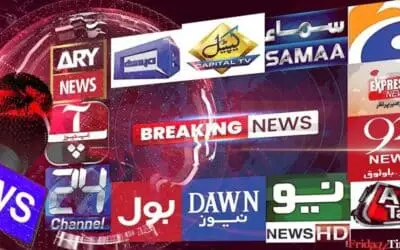
Pakistani media outlets have an added responsibility: to inform a public living near major regional fault lines without amplifying dangerous stereotypes. Fair reporting means naming actions precisely, checking claims from official sources, and giving space to context, history, occupation, blockade, economic collapse, that explains why people protest or resist. International outlets that treat Pakistani or Muslim voices as monolithic or inherently violent undermine both journalism and peace-building. At the same time, Pakistani newsrooms must resist the temptation to mirror sensational foreign headlines and instead invest in verification, local reporting and careful language.
You May Like to Read: Domestic Instability’s External Impact: How Internal Security Failures Strain Pakistan’s Foreign Relations
What better coverage looks like
Better coverage does not mean sympathy for violence; it means clarity and balance. Reporters should distinguish between criminal acts that target civilians and political violence in asymmetrical conflicts, avoid lazy labeling, and prioritise firsthand reporting and independent verification. Editors should ask whether adjectives like “terror” are being applied consistently across comparable events, and whether images or headlines are doing work that careful prose would not. Civil society, journalism schools, and media regulators also have roles in promoting standards that reduce bias.
Conclusion: language matters, accountability matters more
How a story is told matters as much as which story is told. For Pakistan’s readers, many of whom have family, moral ties or political stakes in regional conflicts, nuanced and responsible reporting is essential. Labeling resistance automatically as terrorism forecloses debate, hardens prejudices, and makes political solutions harder to find. Journalists who commit to precise language, rigorous verification and a deeper context will strengthen public conversation rather than narrow it. The urgent task for the media everywhere is to report facts without letting long-standing biases decide who is a combatant and who is a voice demanding justice.
You May Like to Read: