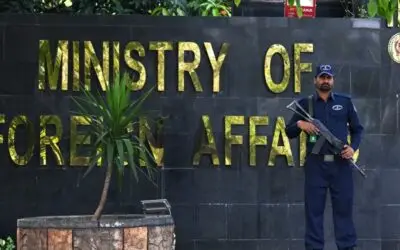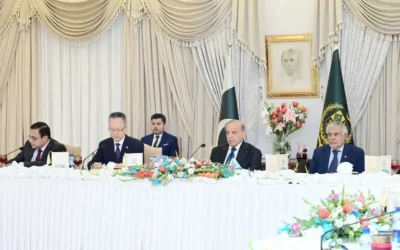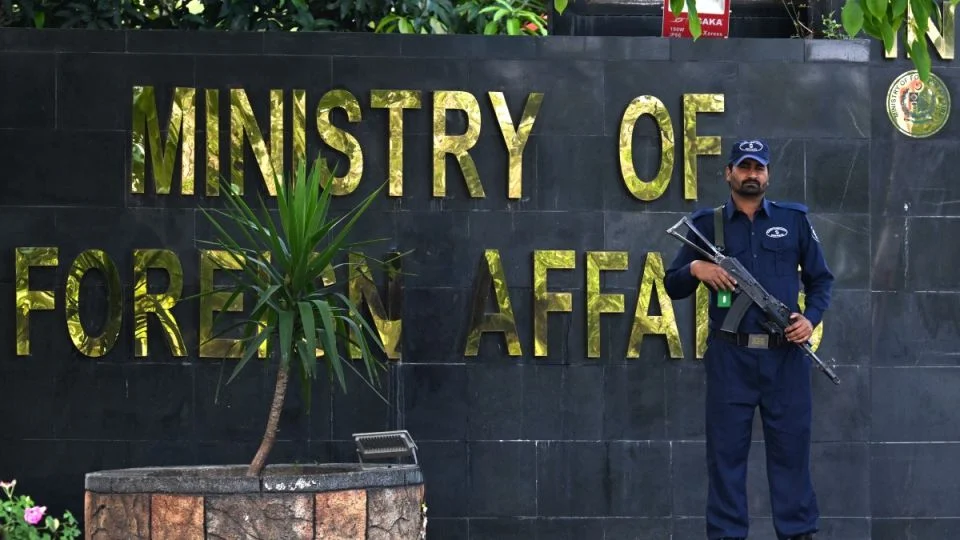




The Ministry of Foreign Affairs (MOFA) issued a firm response on Thursday to recent international assessments, expressing official “disappointment” over an European Union (EU) compliance report on Pakistan’s GSP+ status and “completely rejecting” an Amnesty International report regarding cross-border airstrikes in Kabul.
During the weekly diplomatic briefing in Islamabad, FO Spokesperson Tahir Andrabi outlined the government’s official positions across trade compliance, regional security operations, and upcoming multilateral engagements.
Disappointment Over EU GSP+ Regression Narrative
Addressing the European Commission’s global assessment of the Generalised Scheme of Preferences (GSP) for the 2023–2025 period—which concluded that Pakistan had “regressed in a number of areas”—Islamabad pushed back against the narrative while affirming its commitment to the framework.
-
Selective Focus: While appreciating the EU’s recognition of Pakistan’s legislative progress and adherence to 27 international conventions, Andrabi noted disappointment with an overall narrative that fails to present a balanced picture.
-
Understating Structural Reforms: The spokesperson stressed that the report understates the broad range of institutional and human rights reforms undertaken since Pakistan entered the GSP+ framework in 2014, placing disproportionate weight on lower progress in isolated sectors.
-
Economic Centrality: Reinforcing that GSP+ remains a mutually beneficial economic anchor, FO officials highlighted its direct role in driving exports, supporting employment, fostering women’s economic participation, and mitigating poverty.
Pakistan pledged to maintain constructive engagement with European Commission institutions while expanding bilateral cooperation across development, migration control, counter-terrorism, and climate resilience.
Complete Rejection of Amnesty International’s Kabul Report
Spokesperson Andrabi forcefully repudiated a report published by Amnesty International on July 21, which claimed that Pakistani military strikes on March 16 targeted a rehabilitation facility in Kabul and caused significant civilian casualties.
Pakistan’s Operational Response to Cross-Border Threats:
- Legal Basis: Self-defense under international law against cross-border terrorism
- Tactical Target: Exclusively directed at militant logistics hubs & drone storage
- Operational Doctrine: Strict adherence to distinction, precaution, and proportionality
- State Demand: International scrutiny on Afghan Taliban’s patronage of TTP & BLA
The FO clarified that all military actions conducted in mid-March were measures of last resort targeting certified logistics bases and ammunition hubs used by hostile groups. The spokesperson called on Amnesty International and the international community to direct their scrutiny toward the Afghan Taliban regime for maintaining a permissive environment for the Tehreek-i-Taliban Pakistan (TTP) and the Baloch Liberation Army (BLA) in violation of UN Security Council resolutions and the Doha Agreement.
Diplomatic Horizon: Ishaq Dar to Attend SCO Council of Foreign Ministers
On the regional diplomatic front, the Foreign Office confirmed that Deputy Prime Minister and Foreign Minister Senator Mohammad Ishaq Dar will arrive in Kyrgyzstan today for a two-day official visit to lead the Pakistani delegation at the Shanghai Cooperation Organisation (SCO) Council of Foreign Ministers (CFM).
As the third-highest decision-making body within the 10-nation Eurasian security alliance, the CFM meeting in Bishkek will center on regional security dynamics, counter-terrorism frameworks, and economic connectivity. On the sidelines, DPM Dar is scheduled to hold a series of bilateral meetings with regional counterparts and call on Kyrgyz President Sadyr Zhaparov.
Strategic Analysis: Navigating Trade Accountability and Border Realities
The Foreign Office’s briefing highlights a dual-track strategy aimed at protecting economic concessions while taking a hardline stance on national security:
Safeguarding the European Economic Anchor
With Pakistan navigating macroeconomic recovery and tight external financing conditions, maintaining access to the EU’s preferential trade status (GSP+) is an absolute economic necessity. By characterizing the EU’s latest compliance evaluation as “unbalanced” rather than rejecting it outright, Islamabad is signaling its intent to address governance and labor compliance gaps through diplomatic negotiation without allowing trade privileges to be prematurely eroded.
Establishing Uncompromising Security Red Lines in Afghanistan
The sharp dismissal of Amnesty International’s report reflects a broader, permanent shift in Pakistan’s cross-border security posture toward Afghanistan. By insisting that all kinetic actions strictly adhere to the principles of distinction and self-defense under international law, Islamabad is asserting its sovereign right to conduct preemptive strikes against cross-border terrorist sanctuaries whenever the Taliban administration fails to honor its international counter-terrorism commitments.