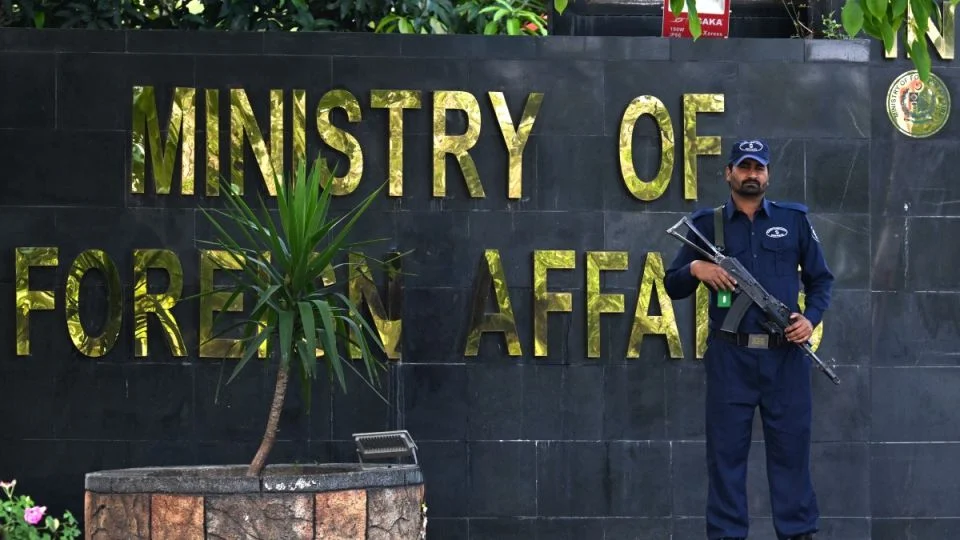
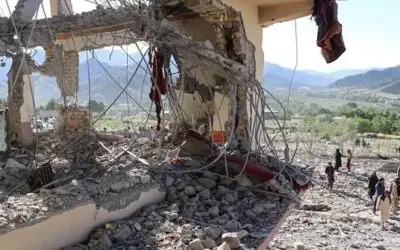


In a major diplomatic and military escalation, Pakistan has summoned the Afghan chargé d’affaires to lodge a severe formal protest following a brazen terrorist strike on a paramilitary installation in Karachi. The high-level diplomatic confrontation at the Ministry of Foreign Affairs (Mofa) occurred just hours after Pakistani forces unleashed a wave of retaliatory ground and air operations, code-named Operation Ghazb Lil Haq, targeting terrorist strongholds inside neighboring territory.
🔊PR No.1️⃣5️⃣6️⃣/2️⃣0️⃣2️⃣6️⃣
Statement by the Spokesperson https://t.co/eI70LICLBM
🔗⬇️ pic.twitter.com/QNdPCZk15B
— Ministry of Foreign Affairs – Pakistan (@ForeignOfficePk) June 29, 2026
With irrefutable forensic and custodial evidence linking recent urban terror grids directly to safe havens in Afghanistan, Islamabad has fundamentally changed its defensive posture. By pairing direct kinetic strikes with an uncompromising diplomatic demarche, Pakistan has signaled to the interim Taliban administration that the era of strategic patience regarding cross-border terrorism is officially over.
Pakistan has summoned the Afghan Chargé d’Affaires to Ministry of Foreign Affairs in Islamabad and a strong demarche was issued regarding the Karachi terrorist attack@ForeignOfficePk #News #RadioPakistan https://t.co/NJBT7WJ60p pic.twitter.com/vr8wdVNzAA
— Radio Pakistan (@RadioPakistan) June 29, 2026
Operation Ghazb Lil Haq and Counter-Offensive
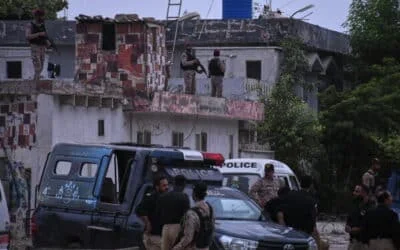
The latest flashpoint follows a highly coordinated assault on a Pakistan Rangers (Sindh) camp in Karachi, which resulted in the martyrdom of three security personnel. While security forces neutralized three attackers on-site, the live apprehension of a fourth operative, identified as Afghan national Usman Ali, completely altered the diplomatic calculus. Under interrogation, the captured insurgent revealed a logistical trail tracing directly back to Jalalabad, Afghanistan, operating under the explicit command of the UN-sanctioned Jamaat-ul-Ahrar (JuA) network.
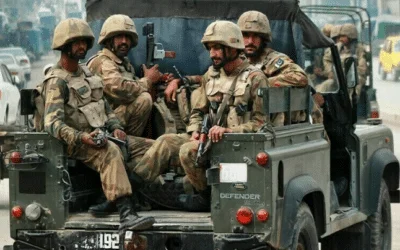
In a rapid, multi-theater response executed under the banner of Operation Ghazb Lil Haq, Pakistani security forces launched a sequence of highly calibrated actions. According to Information Minister Attaullah Tarar, the operational deployment began with an intelligence-based ground assault in the rugged border district of Bajaur, successfully neutralizing high-value JuA commander Khan Farosh (alias Zabal) and three close associates.
As Sunday night progressed into Monday morning, the operation transitioned into an aerial phase. Pakistani assets conducted highly precise strikes against active command nodes and logistics hubs belonging to JuA and Fitna al Khawarij (the state designation for the banned TTP) located deep within the eastern Afghan provinces of Paktia, Paktika, and Kunar. The strikes eliminated 25 verified terrorists and triggered massive secondary explosions, confirming the total destruction of hidden heavy weapon and ammunition stockpiles.
Critical Analysis: Strategic Deniability, Proxy Networks, and Kabul’s Broken Pledges
The Karachi attack and the subsequent cross-border retaliation expose the deep structural failure of sub-state deterrence along the western frontier. For over two years, the interim Taliban administration in Kabul has relied on vague diplomatic assurances, consistently denying the existence of anti-Pakistan militant infrastructure on its soil. However, the operational reality tells a vastly different story. The live capture of an Afghan national trained in Jalalabad and deployed directly into Pakistan’s primary economic hub proves that these terrorist groups are operating with a high degree of freedom, utilizing eastern Afghanistan as a secure base to plan, train, and launch high-visibility strikes.
This sophisticated threat model relies heavily on tactical decentralization. By utilizing breakaway factions and fluid entities like Jamaat-ul-Ahrar, the core leadership of Fitna al Khawarij aims to exploit geographic borders. This setup allows the political leadership in Kabul to maintain an appearance of compliance with international counter-terrorism standards while their proxy networks execute asymmetric operations designed to harm Pakistan’s domestic security and economic confidence.
Pakistan’s transition to the active hot-pursuit doctrine under Operation Ghazb Lil Haq is a direct, calculated response to this persistent defiance. By bypassing stalled diplomatic channels and launching high-precision strikes against known military facilities in Kunar, Paktia, and Paktika, Islamabad has effectively raised the strategic cost for Kabul. The military operations serve notice that Pakistan will no longer allow the Durand Line to be used as a one-way shield by hostile networks, demonstrating that any threat to Pakistani citizens will be neutralized at its geographic source.
Strategic Outlook: The Blueprint for Permanent Border Stabilization
To comprehensively neutralize the asymmetric threat and enforce long-term accountability on the western border, Pakistan’s security establishment is implementing a robust, three-pronged policy framework:
-
Institutionalization of the Hot-Pursuit Doctrine: Pakistan will maintain an active cross-border defense policy. By ensuring that any urban or border infiltration meets immediate, highly targeted kinetic strikes inside Afghan territory, Islamabad is dismantling the safe zones that these proxy networks rely on.
-
Geoeconomic Conditioning of Transit and Trade: Moving forward, Islamabad will leverage regional economic platforms and transit trade agreements to protect its sovereign interests. All future trade concessions, border market accesses, and diplomatic interactions with Kabul will be strictly conditioned on verifiable, independent proof of the complete destruction of TTP and JuA safe havens.
-
Absolute Border Isolation and Biometric Enforcement: The state is accelerating the deployment of strict border management protocols across the entire frontier. By establishing mandatory biometric verification at all international crossing points and enforcing strict economic isolation along unregulated border pathways, Pakistan will effectively cut off the logistical and financial support lines that sustain these cross-border cells.