




Federal Minister for Power, Sardar Awais Leghari, on Wednesday formally requested the Asian Development Bank (ADB) to provide substantive additional financing to address the country’s power sector debt and improve long-term grid stability.
In a high-level meeting with an ADB delegation led by Ms. Leah Gutierrez, Director General for Central and West Asia, the Minister proposed a strategic shift toward more affordable financing instruments to retire expensive commercial debt and the remaining Rs 1.7 trillion circular debt.
Strengthening Pakistan–ADB Partnership 🇵🇰🤝🌏
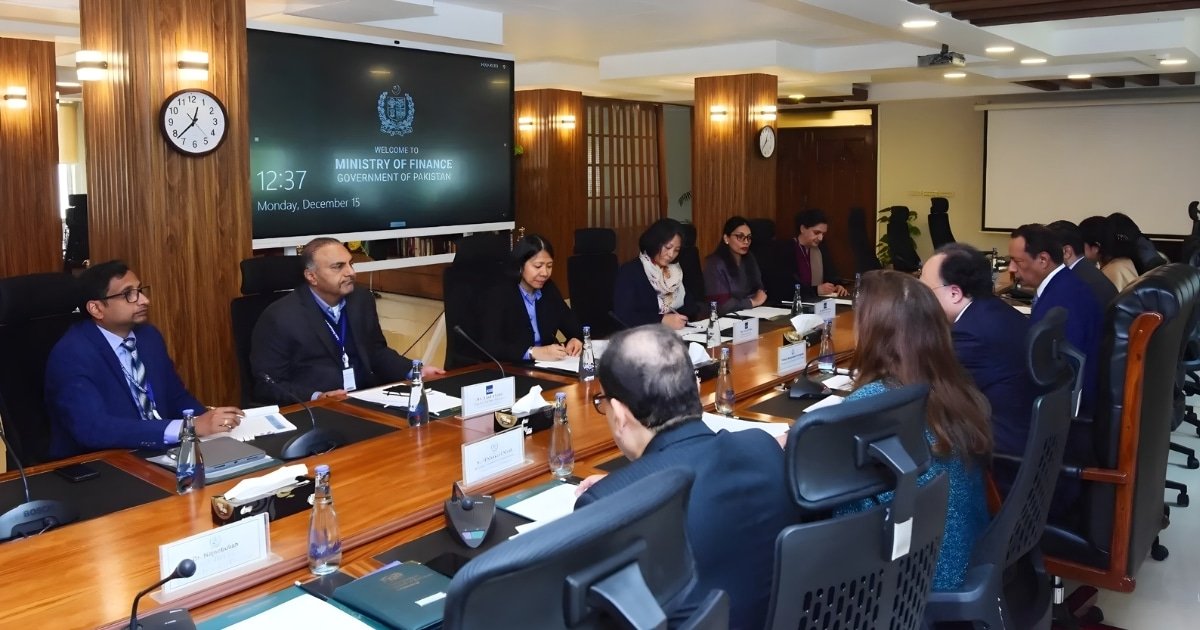
Federal Minister for Finance & Revenue, Senator Muhammad Aurangzeb, today held a comprehensive meeting with a high-level Asian Development Bank (ADB) delegation led by Ms. Emma Fan, Country Director, and Ms. Leah Gutierrez, DG… pic.twitter.com/jsna7MOv3V
— Ministry of Finance, Government of Pakistan (@Financegovpk) December 15, 2025
Key Strategic Objectives The government’s proposal focuses on three critical pillars aimed at reducing power tariffs and revitalizing the energy market:
- Debt Affordability: Replacing high-interest commercial financing with longer-term, lower-cost ADB instruments. This move is designed to lower the debt-servicing burden currently passed on to consumers through surcharges, thereby making electricity rates more competitive.
- Grid Stability and Modernization: Seeking external support for the expansion of smart metering across distribution companies (DISCOs) and implementing new technologies to manage the rapid growth of decentralized solar power.
- Demand Stimulation: Leveraging the “Energy Surplus Package” to encourage higher power offtake by the private sector, moving the country toward a competitive electricity market.
Transition to Green Energy Minister Leghari highlighted that Pakistan has successfully transitioned approximately 20GW to clean energy. However, he noted that this significant shift occurred without dedicated international financing for grid stability. The Minister underscored the need for global climate-related financial support to compensate for Pakistan’s contribution to lowering its carbon footprint.
You May Like To Read: AI-Driven Chip Shortage set to Dramatically Escalate Smartphone prices by 2026
Private Sector Integration The Ministry confirmed that it is actively engaging with the Pakistan Business Council to attract private investment in power transmission. Plans are also underway to roll out smart meters through Public-Private Partnerships (PPP), aimed at reducing line losses and improving billing efficiency.
Future Outlook The ADB delegation was briefed on the Indicative Generation Capacity Expansion Plan (IGCEP), which optimizes future procurement to avoid excess capacity. The Government of Pakistan remains committed to structural reforms that build investor confidence and ensure a sustainable, market-driven energy sector.
Check out our latest video:
https://youtu.be/312vjCgxUGg?si=HXF16s7qSdvUaP5O