




A Moment to Choose
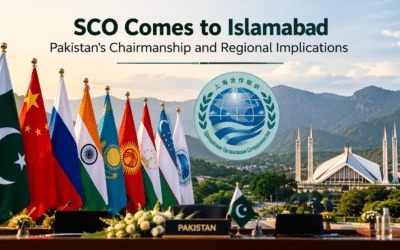
In the eight years since Pakistan became a full member of the Shanghai Cooperation Organisation (SCO) in June 2017, Islamabad has oscillated between flashes of diplomatic initiative and periods of low-key engagement. With China hosting the next Heads of State summit in Tianjin on August 31–September 1, 2025, Pakistan has another opportunity to turn multilateral optics into measurable outcomes. The question is whether we are ready to leverage the platform for trade, connectivity and counterterror cooperation, or continue treating SCO meetings as little more than photo-ops.
What the Record Shows
Factually, Pakistan is no fringe participant. Islamabad chaired and hosted the SCO Council of Heads of Government (CHG) on October 15–16, 2024, bringing prime ministers and senior officials to Pakistan for the organisation’s annual economic agenda-setting meeting. In the lead-up, Pakistan also convened the SCO Council of External Trade and Economy Ministers in September 2024. These were not ceremonial gatherings; they placed Pakistan at the centre of the bloc’s trade and connectivity discussions for a season.
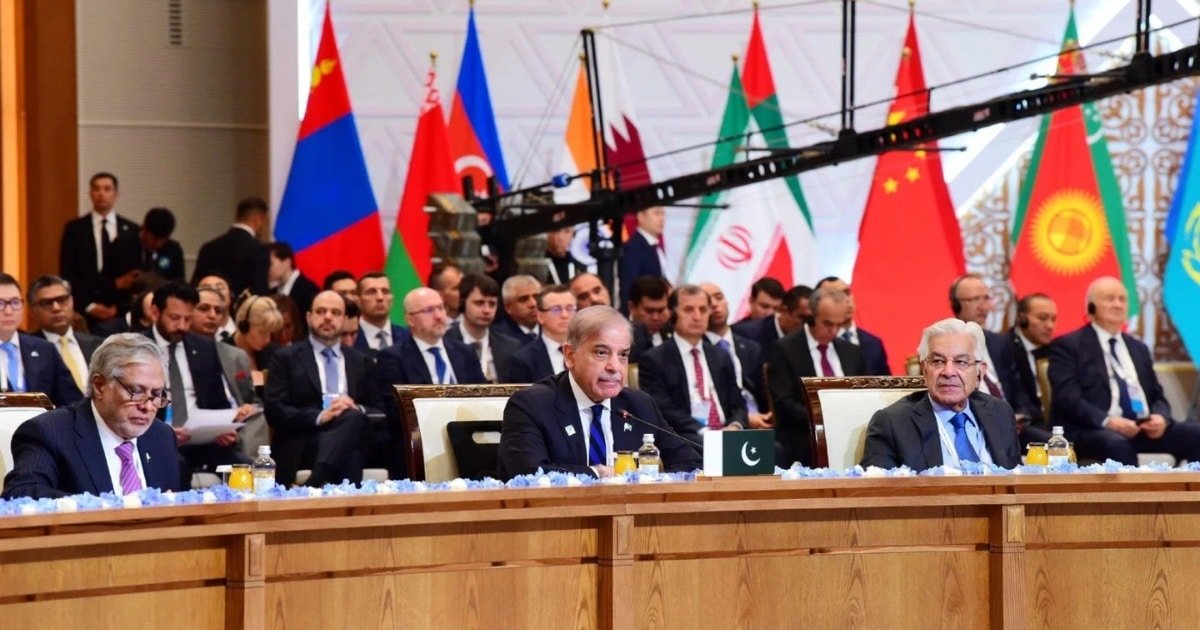
At the Astana Heads of State summit on July 4, 2024, Prime Minister Shehbaz Sharif delivered Pakistan’s national statement and used the margins for substantive diplomacy, including a meeting with Russian President Vladimir Putin. Belarus’ admission at Astana expanded the SCO to ten members, further increasing the grouping’s geographic reach and economic potential across Eurasia.
Security cooperation is another area where Pakistan has contributed. Through the SCO’s Regional Anti-Terrorist Structure (RATS), headquartered in Tashkent, Pakistan participates in intelligence sharing and joint drills; notably, Pakistan hosted the “Pabbi Anti-Terror 2021” exercise at its National Counter Terrorism Centre. Given our own struggle against cross-border militancy, this channel is not symbolic, it can be operationally useful if we sustain it.
The Untapped Potential
Yet, for all the stage time, Pakistan’s utilisation of the SCO’s economic promise remains modest. The SCO is not a development bank; it is a political-security forum that can lubricate trade and transit by aligning regulations, customs, and standards. Turning those conversations into lower logistics costs, shorter clearance times, and new market access requires domestic follow-through: customs modernisation, digital trade corridors, and predictable inland transport regimes. Hosting the CHG in 2024 gave Pakistan agenda-setting power; the test is whether key decisions from those meetings translated into bilateral or plurilateral agreements with Central Asian states on trucking quotas, rail linkage upgrades, or e-TIR expansion. On that score, progress is hard to point to publicly.
You May Like to Read: How the SCO is Becoming a Platform for Pakistan’s Diplomatic Strength
Connectivity with Central Asia remains constrained by Afghanistan’s security and sanctions environment. The SCO gives Pakistan a platform to build consensus around practical facilitation, safe corridors for transit, coordinated border infrastructure, and harmonised rules for cargo, yet outcomes have been incremental at best. The Tianjin summit’s run-up has seen China lay out a five-point push for the SCO’s future, emphasising security foundations and “win-win” development. Pakistan should be ready with concrete, bankable connectivity proposals that tap this momentum, rather than general affirmations of support.
Strategic Balancing, with Edges
Pakistan’s diplomacy inside the SCO has also required careful balancing. India’s presence as a full member makes consensus on terrorism language and regional narratives difficult; New Delhi’s sharper rhetoric in 2025 underscores the limits of what the SCO can adjudicate on bilateral disputes. Rather than letting this dynamic paralyse us, Pakistan can lean into technical cooperation that sidesteps politics: standards for digital trade, mutual recognition of phytosanitary certificates, coordinated energy grid studies, and joint disaster response protocols. The SCO’s expansion, to include Iran in 2023 and Belarus in 2024, gives Pakistan a wider field to pursue triangulated arrangements that complement the China-Pakistan Economic Corridor (CPEC) and open access to Eurasian markets.
Energy is a prime example. Meetings with Russia on the sidelines of Astana in 2024 were a reminder that the SCO can facilitate hard-nosed bilateral deals, long-term crude arrangements, refinery upgrades, or even structured talks on pipeline logistics, provided Pakistan moves beyond exploratory dialogues to execution. The platform is there; the discipline to close is what often goes missing.
You May Like to Read: Why SCO and BRICS Members Are Keeping Their Distance
From Presence to Performance
So, is Pakistan strategically leveraging the SCO or sitting on the sidelines? The evidence points to a mixed picture. On the plus side, we have hosted top-tier meetings, maintained active security cooperation through RATS, and used summit sidelines for purposeful bilaterals. On the minus side, trade facilitation outcomes are thin, regulatory harmonisation is slow, and our connectivity proposals often rely on restating CPEC’s promise without laying out time-bound, SCO-wide mechanisms to integrate it with Central Asian corridors.
Heading into Tianjin (August 31–September 1, 2025), Islamabad should table three deliverables. First, a Pakistan-led pilot on electronic customs data exchange with at least two Central Asian members under an SCO-endorsed framework; second, a trilateral agro-trade corridor agreement that standardises testing and certification to cut clearance times by a measurable percentage; third, a RATS-linked border security project that couples anti-terror coordination with freight-flow facilitation at key crossings. These are low-glamour, high-impact moves that convert speeches into spreadsheets.
You May Like to Read: OIC and Pakistan
The Bottom Line
Pakistan’s SCO story isn’t one of passivity, it’s one of incomplete execution. The bloc’s size and diversity can be a constraint, but it also gives Pakistan room to hedge, to anchor its China partnership in a broader Eurasian setting, and to transact pragmatically with Russia and Central Asia. If Islamabad arrives in Tianjin with specific, time-bound proposals and follows through at home, customs, rail, ports, and border management, the verdict can shift from “present” to “performing.” The alternative is another summit season of polite communiqués and lost leverage in a forum where others are quietly doing the hard work of integration.