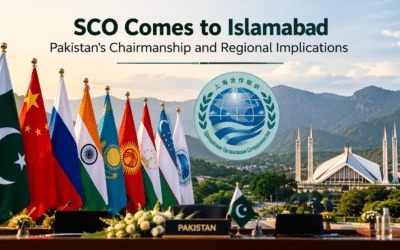
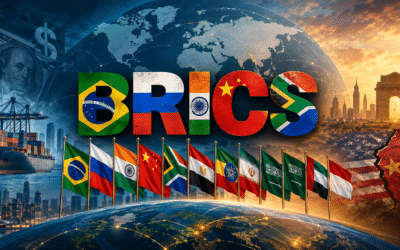
In the aftermath of Operation Sindoor, and the resultant global scrutiny over militant actions in Pahlgham-Kashmir, India finds itself navigating a conspicuous diplomatic aloofness. That too not from its traditional critics but also from the multilateral forums it once sought to dominate. As platforms like the Shanghai Cooperation Organisation (SCO) and BRICS+ prepare for high-level meetings in the second half of 2025, an interesting notable pattern has emerged: key member states are avoiding overt alignment with India, choosing silence over solidarity.
What was meant to be a period of geopolitical assertion for India — bolstered by its G20 presidency in 2023 and growing economic clout — is instead unravelling into a phase of subtle diplomatic distancing, particularly by the China-Russia-Turkey bloc. The fallout from the Kashmir crisis, especially the global media response to Operation Sindoor, has catalysed this reorientation. Thus, casting doubts over India’s ambitions for regional leadership within these multilateral coalitions.
The Fall from Narrative Control
India’s attempt to project Operation Sindoor as a calibrated anti-terrorism operation has found little public support from its partners in BRICS and the SCO. No joint statements from either organisation endorsed India’s actions or narrative—of blindly accusing Pakistan without any evidence. In fact, most member states have deliberately refrained from commenting altogether, a sharp contrast to the vocal support India historically garnered amid in cross-border clashes and conflicts.
This silence is not coincidental. It reflects a growing discomfort among key Eurasian powers with India’s unnecessarily aggressive approach to regional disputes. The adoption of silence by key regional players—in backdrop of conflicts in geostrategic flashpoints like Kashmir, where any escalation risks broader destabilisation—is deliberate and conscious.
Moreover, the human rights dimension, amplified by global watchdogs and UN special rapporteurs, has made overt support for India diplomatically costly. Especially for countries positioning themselves as defenders of multilateralism and international law.
China and Russia: Strategic Ambiguity as Policy
While China and India maintain a tense but functioning bilateral relationship — marked by border standoffs and economic competition — Beijing’s post-Sindoor posture has been evidently noncommittal. The Chinese Foreign Ministry amid India-Pakistan conflict emphasised the need for “regional stability and peaceful dialogue.” The selection of words by Beijing was very careful to avoid using any language that could be construed as validating India’s version of events.
🇨🇳🇵🇰 Victor Gao: China stands firm with Pakistan. Indian jets learned the power of this brotherhood, up close. 🛩️🔥 pic.twitter.com/rya0oYwmFD
— Mansoor Ahmed Qureshi (@MansurQr) June 17, 2025
Russia, often seen as a balancing power between China and India, has also treaded carefully. Though Moscow continues to maintain defence and energy ties with New Delhi, Russia has offered no diplomatic cover for India in international forums regarding Kashmir. Analysts suggest that with its deepening dependency on China post-Ukraine and growing outreach to the Muslim world, Russia is less inclined to antagonise Pakistan or appear indifferent to human rights abuses in a Muslim-majority region.
Instead, both China and Russia have leaned into institutional neutrality, preferring to keep the SCO and BRICS+ as consensus-based platforms that avoid internal fracturing over bilateral disputes. This approach implicitly sidelines India’s attempts to frame its actions as counter-terrorism measures worthy of collective validation or encouragement.
Turkey and the Emerging Islamic Bloc
Turkey has been an increasingly vocal stakeholder in regional and international affairs. Under President Erdoğan, Turkey has expanded its geopolitical visibility on Muslim issues worldwide. Following Operation Sindoor, Turkey’s foreign ministry issued a carefully worded statement expressing concern over “escalations in Jammu and Kashmir” and reaffirming support for “the rights and dignity of Kashmiri Muslims.”
Turkey is coming out openly in support of Pakistan even more than China. Extremist Islamic Thought Process is basis of this alliance. Time to extend open support to Kurds. pic.twitter.com/zj8rjbh9yD
— Maj Gen Raju Chauhan, VSM (veteran)🇮🇳 (@SoldierNationF1) May 4, 2025
Though Turkey is not a BRICS member, it has growing ties with Russia, China, and the broader SCO architecture. Turkey’s alignment with Pakistan on the Kashmir issue — politically, diplomatically, and through multilateral venues like the Organisation of Islamic Cooperation (OIC) — adds pressure on India’s narrative diplomacy, especially in forums where Turkey is gaining informal influence.
This is a reflection of a broader trend: Muslim-majority states, whether within or adjacent to BRICS/SCO circles, are recalibrating their stance on India, balancing economic interests with public opinion and ideological positioning on rights-based issues. Even Malaysia and Indonesia have shown silent solidarity by abstaining from endorsing Indian statements in recent UN deliberations.
India’s Strategic Missteps
India’s pursuit of “strategic autonomy” — its reluctance to be pigeonholed into US or China-led blocs — has allowed it to manoeuvre across geopolitical divides. However, the post-Sindoor fallout reveals the limitations of this hedging strategy. Attempting to suppress international scrutiny while expecting unqualified support from diverse partners has exposed a credibility gap.
In SCO and BRICS, India’s behaviour is considered increasingly deviant of the non-interventionist ethos at the core of these organisations. While India often criticises Western hypocrisy on human rights, its own efforts to control narratives, limit international access, and stifle dissent in Kashmir have drawn similar accusations, making its position less defensible in multilateral spaces designed to champion “win-win cooperation”.
Furthermore, India’s insistence on equating all dissent in Kashmir with terrorism has alienated even those states sympathetic to its security concerns. As a result, strategic partners are choosing ambiguity over alignment, preferring diplomatic restraint to the reputational risks of open support.
Pakistan’s Counter-Diplomacy and Narrative Wins
Pakistan has capitalised on this geopolitical recalibration with quiet but effective diplomacy. Rather than engaging in fiery rhetoric, Pakistan has leaned on legal, humanitarian, and multilateral arguments, citing UN resolutions, OHCHR reports, and the Geneva Conventions to frame the Kashmir issue as an unresolved international dispute.
By aligning its messaging with broader global values — human rights, rule of law, and freedom of expression — Pakistan has made it more difficult for neutral states to dismiss its position. At the recent SCO Regional Security Dialogue, Pakistan’s delegation refrained from naming India directly but alluded towards “state-sponsored demographic engineering and information warfare in disputed territories”, eliciting indirect support from multiple delegations, including Central Asian states wary of securitised governance.
Isolation by Design or Default?
India’s isolation within BRICS and the SCO is not a result of any formal sanctions or diplomatic rupture. Rather, it reflects a subtle but significant shift in how its actions are perceived by states that value regional stability over ideological alignment. The absence of solidarity in public statements, the reticence of strategic partners, and the diplomatic space afforded to Pakistan all point to a recalibration of India’s standing within these multilateral coalitions.
In a world where information and perception increasingly shape global influence, military operations cannot be disentangled from their political consequences. India’s attempt to project strength in Kashmir and in turn on Pakistan was a tactical and strategic failure; it has cost India the very multilateral goodwill it sought to build.