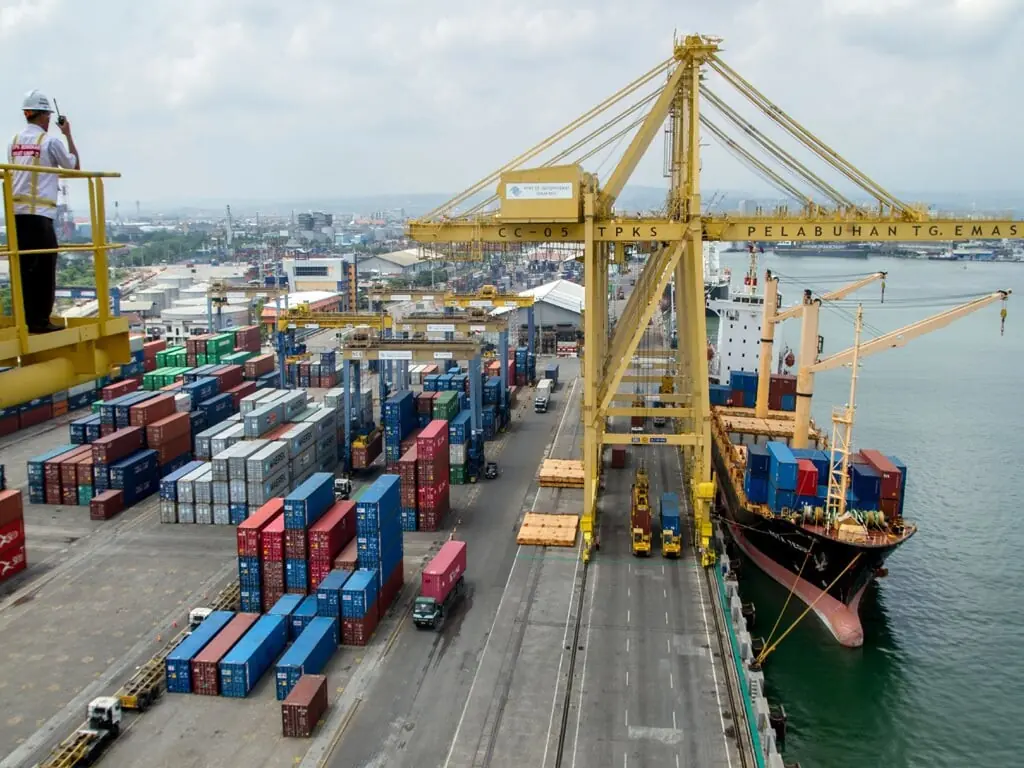




Pakistan’s annual trade deficit expanded by 25.2% year-on-year to reach $3.95 billion in July 2026, driven by an $1 billion surge in import payments that outpaced moderate export gains. Data released by the Pakistan Bureau of Statistics (PBS) highlights structural vulnerabilities in the external sector, where unilateral tariff reductions and fiscal incentive packages have yet to narrow the country’s persistent trade imbalance.
Exports climb 9.54% to $2.939bn while imports jump 18% to $6.887bn, PBS data shows
Read: https://t.co/PmzaAmzEkV pic.twitter.com/AeODIerugz
— Profit (@Profitpk) August 6, 2026
1. Trade Imbalance and Monthly Performance
-
Year-on-Year Expansion: The trade gap grew by $794 million compared to the $3.2 billion recorded in July 2025. Total imports climbed 18% from $5.8 billion to $6.9 billion, overwhelming export revenue growth.
-
Export Capacity Bottlenecks: Exports increased by 9.5% ($256 million) year-on-year to $2.939 billion, falling $61 million short of the $3 billion benchmark. Although exports previously crossed $3.05 billion in January 2026, momentum was not sustained in subsequent months.
-
Month-on-Month Contraction: On a sequential basis, exports recorded a sharp 31% increase ($697 million) relative to June 2026, while imports remained stagnant near $6.9 billion. This monthly rebound narrowed the sequential trade deficit by 15.2% ($709 million).
-
Full-Year Targets: For the current fiscal year, the federal government has set an export target of $32.5 billion against projected import expenditures of $70 billion. The resulting structural gap relies heavily on foreign remittance inflows and debt refinancing to maintain balance of payments stability.
2. Tariff Reform Discrepancies and Policy Critique
-
Misaligned Projections: The national tariff policy—guided by foreign consultants, the World Bank, and the International Monetary Fund (IMF)—projected a 14% boost in exports alongside a 7% import increase. Actual outcomes contradicted these estimates; total exports plunged 6% to $30 billion in the preceding fiscal year.
-
Premature Market Exposure: Critics point out that lowering tariff walls exposed domestic industries to foreign competition without establishing an enabling operational environment or providing cushions against import shocks.
-
Uncertain Factor Costs: Trade bodies cite a lack of medium-term policy visibility regarding exchange rates, interest rates, tax liabilities, and energy tariffs as key factors hindering export competitiveness.
-
Single-Exporter Limits: Despite decades of state support, no individual Pakistani enterprise has managed to achieve $1 billion in export revenue within a single financial year.
3. Government Incentive Packages and ECC Frameworks
-
Tax Rationalization: Prime Minister Shehbaz Sharif announced budgetary adjustments reducing minimum and advance taxes for exporters to 1.25%, while completely abolishing the 10% super tax on export proceeds.
-
Rs98 Billion Export Relief Package: The government formally approved a Rs98 billion relief package featuring three dedicated export enhancement schemes:
-
Export Financing Scheme (E-EFS): Offers six-month working capital loans at an effective interest rate of 8.5%. The state picks up a 5% interest differential, requiring an estimated subsidy of Rs58 billion.
-
Portfolio Expansion: The Economic Coordination Committee (ECC) expanded the short-term financing portfolio allocation from Rs1 trillion to Rs1.5 trillion.
-
Long-Term Growth Financing Facility: Provides capital investment loans at a subsidized 2% interest rate for the first two years, stepping up to a fixed 5% rate for the remaining eight years.
-
-
Performance-Based Rebates: Effective July 1, 2026, a performance rebate scheme carrying an annual allocation of Rs15 billion rewards incremental export growth. Firms achieving up to 10% annual export growth qualify for a 1% rebate on incremental value, while growth exceeding 10% earns a 2% rebate.
Strategic Analysis: Structural Vulnerabilities in Export Expansion
1. Dependence on Subsidies vs. Structural Competitiveness
The government’s heavy reliance on interest rate markdowns and tax rebates attempts to compensate for systemic cost pressures rather than rectifying root causes. Subsidizing working capital provides short-term liquidity relief but fails to address high utility tariffs, volatile exchange rates, and infrastructural deficits that impair long-term industrial productivity.
2. Tariff Rationalization Disconnect
The disparity between World Bank tariff modeling and real-world outcomes emphasizes the risks of liberalizing imports without domestic supply-side preparedness. Opening domestic markets prior to building input efficiency leads to import surges in consumer and intermediate goods, worsening trade imbalances before local manufacturing can scale for export markets.