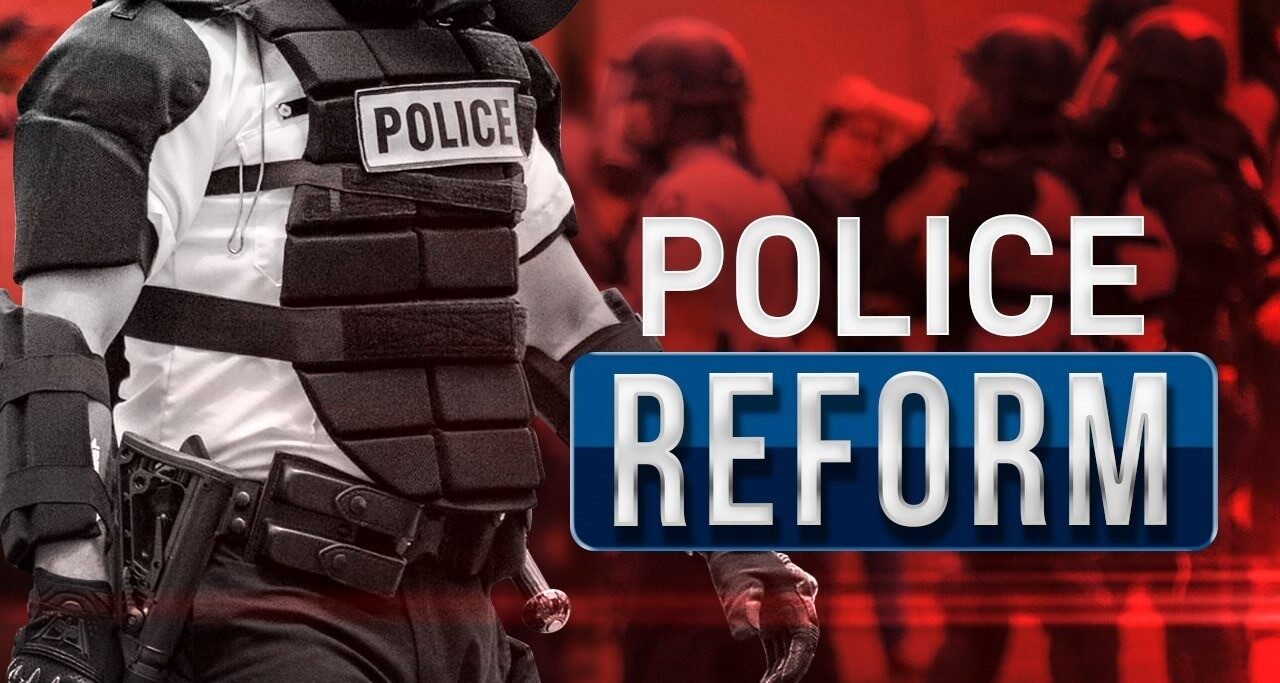



Despite repeated pledges of reform, Pakistan’s police have largely remained entrenched in the colonial-era status quo; marred by politicization, corruption, under‑resourcing, and weak accountability. Progress has been incremental, fragmented, and frequently reversed. As a result, crime‑fighting remains ineffective, and public trust in law enforcement continues to erode.
Historical and Legal Legacies
The police system in Pakistan is anchored partially in the Police Act of 1861, designed for suppression rather than service. Attempts to reform through newer legislation, particularly the Police Order 2002, introduced under General Pervez Musharraf, were initially promising.
Key features included merit‑based postings, independent oversight commissions (Police Complaint Authorities), and separation of powers, but most were systematically diluted by subsequent amendments in Punjab and other provinces. For example, politically appointed officials regained control over transfers and postings, undermining accountability and embedding political interference in police operations.
The fucntioning of the Police in Pakistan and in South Asia, generally, has revealed some unsettling patterns due to which debates of, policing institutions to be manifesting a colonial mindset, have emerged.
Political Interference and Corruption
A central obstacle remains illegitimate political interference, from appointments of key officers to transfers, promotions, and even day‑to‑day operations. Retired officers and analysts cite this as the single biggest brake on reform. Political control compromises police independence, leading to cases being manipulated for partisan gain, and policing used as an instrument of political power rather than public service.
Source: Dawn
Corruption compounds the issue. According to the 2023 Transparency International National Corruption Survey, police topped the list of perceived corruption in public services, 30 percent nationally, and reached 37 percent in Sindh and Khyber Pakhtunkhwa. High‑profile abuses, bribery, and extortion remain routine, fuelling distrust among citizens.
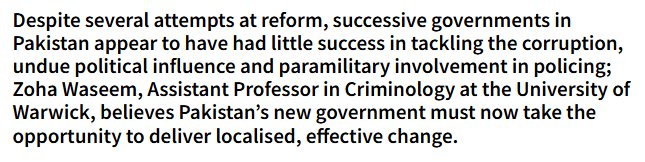
Source: Policing Insight
Training, Equipment, and Capacity Gaps
Even where legal reforms exist, training and resources are sorely lacking. Officers often receive outdated or insufficient training in criminal investigation, forensics, evidence collection, and community interaction. The prevalence of hierarchical bullying and poor morale further hinders professionalism.
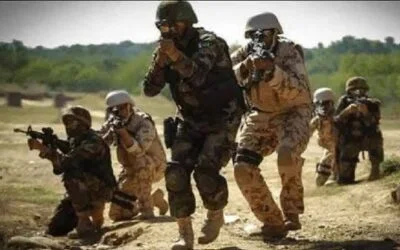
While infrastructure projects such as safe‑cities technology (Punjab Safe Cities) and the Joint Police Training Center (JPTC) at Nowshera have expanded capacity, particularly for training female officers, these remain uneven and under‑utilised. The female police‑officer quota target of 10 percent remains unmet, with women comprising under 1.5 percent of the force in KP even after investment in dormitories and training facilities.
New Initiatives: Symbolic vs Structural
Recent years have seen high‑profile initiatives: the Dolphin Force, launched in 2016 in Punjab, aimed at curbing street crime via specially trained motorcycle units. Despite lavish spending and modern gear, the unit has been criticized as a “white elephant,” plagued by maintenance issues, lack of spare parts, and continued bribery among its members. Crime in Lahore continued to rise post‑launch, undermining its credibility.
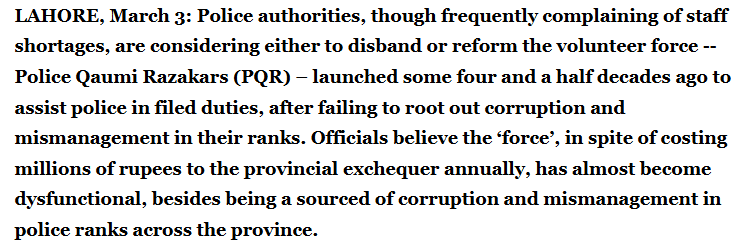
Sorce: Dawn
More recently, in February 2025, Punjab launched the Crime Control Department (CCD) through a Police‑Order amendment. With a Rs 5.56 billion budget and some 4,250 dedicated staff, CCD is assigned high‑profile organized crime such as kidnapping, extortion, and land grabbing. The new wing uses modern surveillance tools, including drone mapping and its own FIR and station infrastructure, though implementation is still nascent and faces political resistance.

Source: Dawn
Provincial Variations: Some Progress, Many Reversals
In Khyber Pakhtunkhwa (KP), PTI‑led reforms introduced in the early 2010s are often celebrated, yet many feels, especially policing in urban Sindh and Punjab, remain unreformed. Even in KP, corruption and political patronage have tainted outcomes, embezzlement cases involving police funds were investigated but resulted in acquittals, noted Policing Insight.
Public discussions reflect skepticism: as one Reddit commentator noted, “Police Reforms couldn’t carry reforms … You can’t undo 75 years of rot in 3 years” Reddit. Another user observed that Sindh police “must be modernized … corruption, ineffective policing, and extrajudicial killings have destroyed public trust.”
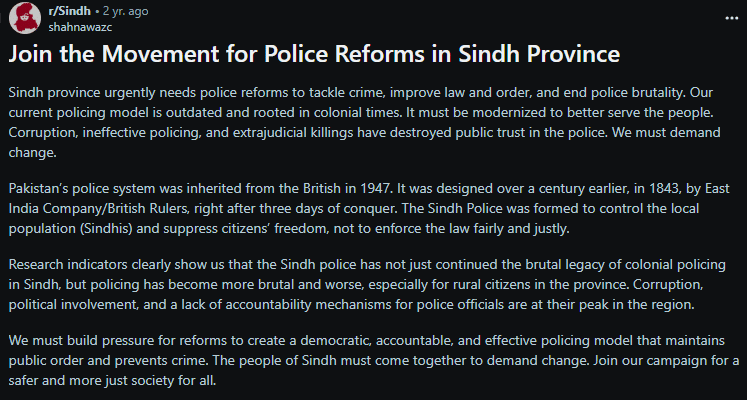
Source: Reddit
Accountability, Still Weak
Oversight mechanisms remain fragile. The Police Complaint Authority envisaged under Police Order 2002 was weakened by merging with political bodies, diluting its independence. Internal disciplinary procedures are also ineffective, often sidelined in favour of politically motivated decisions or ignored altogether.
At the same time, anti‑corruption agencies such as NAB, have had better conviction rates, yet tend not to prosecute lower‑level police corruptions and are often perceived as politicized themselves.
Recent arrests in May 2025 in Rawalpindi of seven police officials on corruption charges show intent, but also highlight how rare such accountability actions still are.
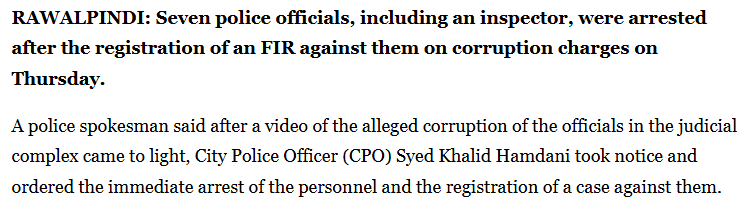
Source: Dawn
Why Reform Remains Stalled
The persistent failure of police reform in Pakistan is rooted in a combination of structural, political, and institutional challenges. At the forefront is political interference, which undermines the autonomy of the police by influencing appointments, transfers, and operational decisions. This erodes merit-based practices and enables a culture of patronage, where loyalty to political figures often outweighs professional competence.
Compounding, this is the chronic underinvestment in training and equipment, which leaves officers ill-prepared to deal with modern crimes, particularly in areas like cybercrime, forensics, and community engagement. Corruption, fueled by low salaries and weak internal oversight, further degrades professionalism and public trust, creating an environment where bribery is normalized and accountability is rare.
While some reform projects like the Dolphin Force or the Crime Control Department (CCD) have been launched, they often remain fragmented and disconnected from broader institutional changes, more symbolic than systemic.
Crucially, oversight mechanisms, such as the Police Complaint Authorities, are either dysfunctional or heavily influenced by political actors, making it difficult to hold officers accountable or address citizen grievances effectively. Together, these issues create a vicious cycle of dysfunction that continues to stall meaningful reform across Pakistan’s policing landscape.
Way Forward and Recommendations
To break this cycle, a comprehensive and sustained reform agenda is essential.
First, police autonomy must be protected by ensuring merit-based recruitment, depoliticized transfers, and independent leadership.
Second, there should be major investments in modern training, particularly in areas like forensics, cybercrime, human rights, and community policing. Improving salaries, career progression, and working conditions will also reduce incentives for corruption.
Third, strong and truly independent oversight bodies; such as revitalized Police Complaint Authorities, must be empowered to hold officers accountable without political interference.
Finally, reform should be holistic, with pilot projects integrated into long-term structural changes rather than treated as isolated successes. Only through such sustained and systemic measures can Pakistan build a police force that is professional, accountable, and capable of serving the public with integrity.
Conclusion
Despite various reform attempts and isolated improvements, Pakistan’s police system remains fundamentally flawed. Political manipulation, corruption, inadequate training, and weak oversight continue to cripple the institution’s ability to deliver justice and maintain public safety. Initiatives like the Crime Control Department or specialized units such as the Dolphin Force often serve as short-term solutions rather than components of a larger, coherent reform strategy.
Without addressing the deep-rooted structural issues, these efforts are unlikely to bring lasting change. The public’s trust in law enforcement remains low, and the system’s failure to evolve poses serious challenges to both rule of law and effective crime control.