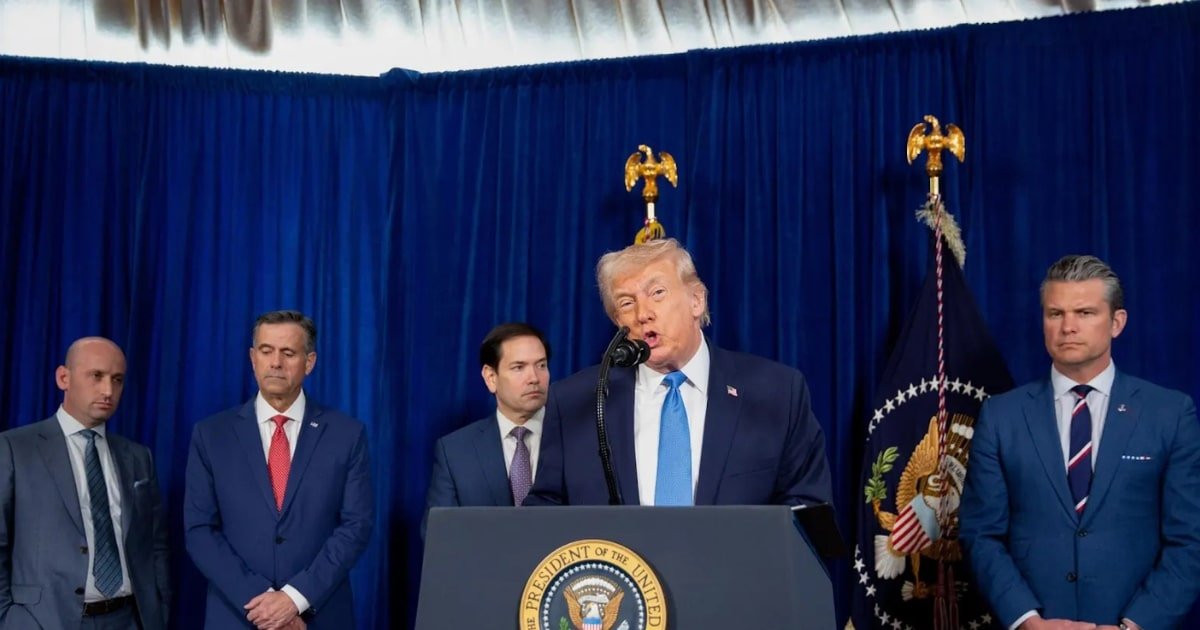



In a series of high-stakes statements aboard Air Force One, United States President Donald Trump has asserted that the U.S. is now “in charge” of Venezuela following the military capture of President Nicolás Maduro. The President warned that a second military strike remains a viable option if the remaining members of the Venezuelan administration do not “cooperate” with Washington’s efforts to “fix” the country.
Reporter: Are you considering U.S. Action in Cuba?
Trump: I just think it is going to fall. It is going down for the count. You ever watch a fight? They go down for the count. Cuba looks like it is going down. pic.twitter.com/Korgyc4UWT
— Acyn (@Acyn) January 5, 2026
Washington’s New Doctrine of Intervention
President Trump’s comments signaled a dramatic shift in regional policy, suggesting that the “capture-and-repair” strategy used in Venezuela could be expanded. The President specifically named Colombia and Mexico as potential targets for military action (“Operation Colombia”) if drug flow to the U.S. is not curtailed. Furthermore, he claimed that Cuba is “ready to fall” on its own, suggesting a total reconfiguration of the Latin American political landscape under U.S. direction.
The US has gone beyond piracy.
Trump has declared a full blockade of Venezuela, claiming the country must return “oil, land, and other assets they stole from” the US.
This is baseless lie to justify a regime change war.
Trump has taken the mask fully off of the US empire. pic.twitter.com/uzlaXergcq
— Danny Haiphong (@GeopoliticsDH) December 17, 2025
Contradictions in Caracas and D.C.
While the Trump administration insists it is dealing with a “new leadership” in Caracas—specifically naming interim leader and Oil Minister Delcy Rodríguez—the reality on the ground remains volatile:
- The U.S. Position: President Trump stated that elections “will have to wait” while the U.S. runs and “fixes” the nation, with a clear focus on securing access to Venezuela’s vast crude oil reserves.
- The Caracas Response: Despite U.S. claims of cooperation, Interior Minister Diosdado Cabello released a defiant audio message, asserting: “There is only one president, whose name is Nicolás Maduro Moros.” Defense Minister General Vladimir Padrino reported that U.S. forces killed soldiers and civilians “in cold blood” during the raid.
- Strategic Disconnect: Secretary of State Marco Rubio appeared to temper the President’s “regime change” rhetoric on Meet the Press, framing the operation as a war on drug traffickers rather than the state. However, he confirmed a massive naval blockade of Venezuelan oil exports would remain in place.
Humanitarian and Diplomatic Fallout
The capture of the 63-year-old Maduro, who was shown blindfolded and handcuffed in widely circulated images, has drawn comparisons to the 1989 invasion of Panama. The Cuban government has reported that 32 of its citizens were killed during the U.S. raid, further inflaming regional tensions.
You May Like To Read: “Stranger Things” Finale Shatters Records With $25M+ Theatrical Run
As Nicolás Maduro awaits a court appearance in New York on drug charges this Monday, the “Bolivarian” government continues to label the operation a “kidnapping.” Meanwhile, the Trump administration has warned Delcy Rodríguez that she may pay a “bigger price” than Maduro if she fails to align with Washington’s objectives.
Current Status
- Military: Venezuelan armed forces are activated; U.S. naval blockade is in effect in the Caribbean.
- Political: Delcy Rodríguez has assumed interim leadership per the top court, while Maduro remains in U.S. custody.
- Economic: Washington is demanding immediate opening for U.S. investment in Venezuelan oil sectors.
Check out our latest video: