

Since its inception in 1996, Pakistan Tehreek-e-Insaf (PTI) has projected itself as a movement for justice, anti-corruption, and the creation of an Islamic welfare state. Yet, over the decades, the party’s trajectory has revealed a stark pattern: confrontational politics, institutional destabilization, and divisive populism. The party’s narrative of “Naya Pakistan” ultimately gave way to actions that undermined democratic norms, weakened state institutions, and deepened polarization.
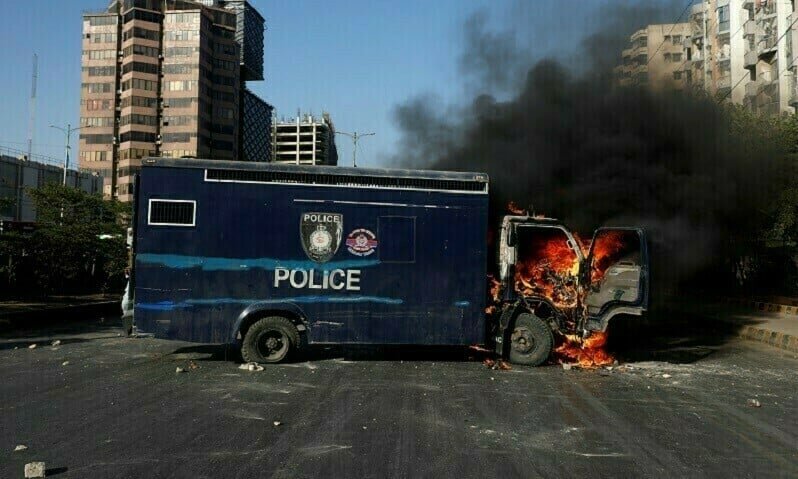
Burnt Police Van 09th May Protests
1996–2013: Foundations in Rhetoric, Confrontation in Strategy
From the outset, PTI adopted a politics of opposition defined not only by critique but also by aggressive delegitimization of rivals. In the early years, its electoral failures were offset by the cultivation of a purist moral stance. The boycott of the 2008 general election—framed as a stand against rigging—reflected an unwillingness to participate in the systems, but also signaled a recurring PTI approach: if the playing field was not advantageous, it would be discredited altogether.
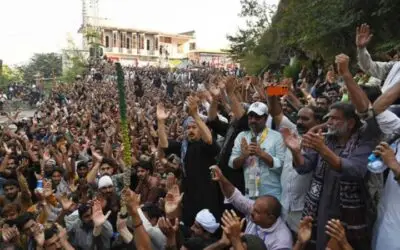
The 2011 rallies that transformed PTI into a major political force were notable for their size and energy, but they also cemented the party’s populist style—painting political adversaries not as competitors, but as existential threats to Pakistan’s future. This “Us versus Them” mentality would define PTI’s politics for the next decade.
2013–2018: Opposition Through Disruption
The 2014 Azadi March was PTI’s most visible assertion of confrontational politics. Alleging that the 2013 general election was rigged, Imran Khan led a march from Lahore to Islamabad, culminating in a 126-day sit-in that paralyzed the capital’s Red Zone. Roads were blocked, commerce halted, and the seat of government besieged.
You May Like To Read: The Political Discourse Deteriorates | Personal Attacks Replace Policy Debates
While street protest is a legitimate democratic tool, PTI’s tactics crossed into destabilization. Protest leaders used derogatory language against elected officials, inflamed tensions, and created an atmosphere that led to violent clashes with police and counter-protesters. These confrontations resulted in injuries and fatalities—yet PTI continued to frame the unrest as necessary for “justice,” embedding a precedent that governance could be held hostage to street power.
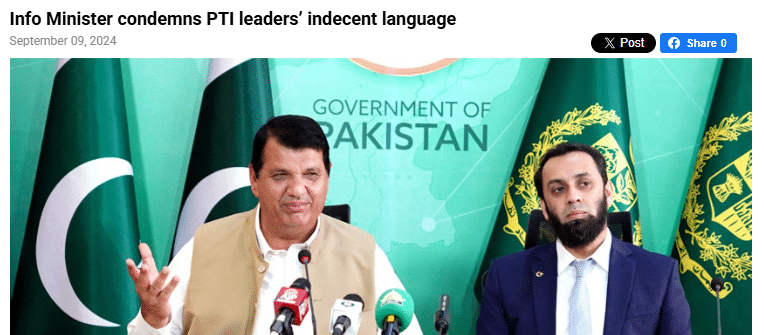
Source: Radio Pakistan
2018–2022: Confrontation from Within the Government
Coming to power in 2018, PTI had the opportunity to translate rhetoric into reform. Instead, the same combative style used in opposition was turned inward against the state apparatus.
Direct Assault on Institutions
PTI leadership attacked the judiciary and the Election Commission of Pakistan, questioned the legitimacy of oversight bodies, and encouraged civil disobedience. These moves were framed as resistance to “status quo corruption” but eroded the impartial authority of democratic institutions.
Undermining National Security
Engaging in talks with the Tehreek-e-Taliban Pakistan and amplifying anti-military rhetoric weakened a unified national security posture. The promotion of a “foreign conspiracy” narrative—blaming external forces for political instability—damaged diplomatic relations and distracted from governance.
Selective Accountability
PTI’s hallmark anti-corruption drive was applied disproportionately to political rivals, while allies facing allegations were shielded.
Erosion of Parliamentary Norms
Parliament was bypassed through ordinances, opposition voices sidelined, and civil service appointments politicized.
Economic U-Turns
PTI’s governance was marked by increasing debt, soaring deficits, and repeated reversals on key policies.
You May Like To Read: Efficient Governance vs. Citizen Rights in the Digital Age
2022–Present: From Opposition to Confrontation 2.0
Imran Khan’s ouster through a no-confidence motion in April 2022 marked the return of PTI to opposition—but with a sharper, more volatile edge.
#EXCLUSIVE: In another video of corps commanders #Lahore house, #PTI protestors seen burning furniture of corps commander house. pic.twitter.com/MTj1RlM2CC
— Asad Ali Toor (@AsadAToor) May 9, 2023
May 9th Riots
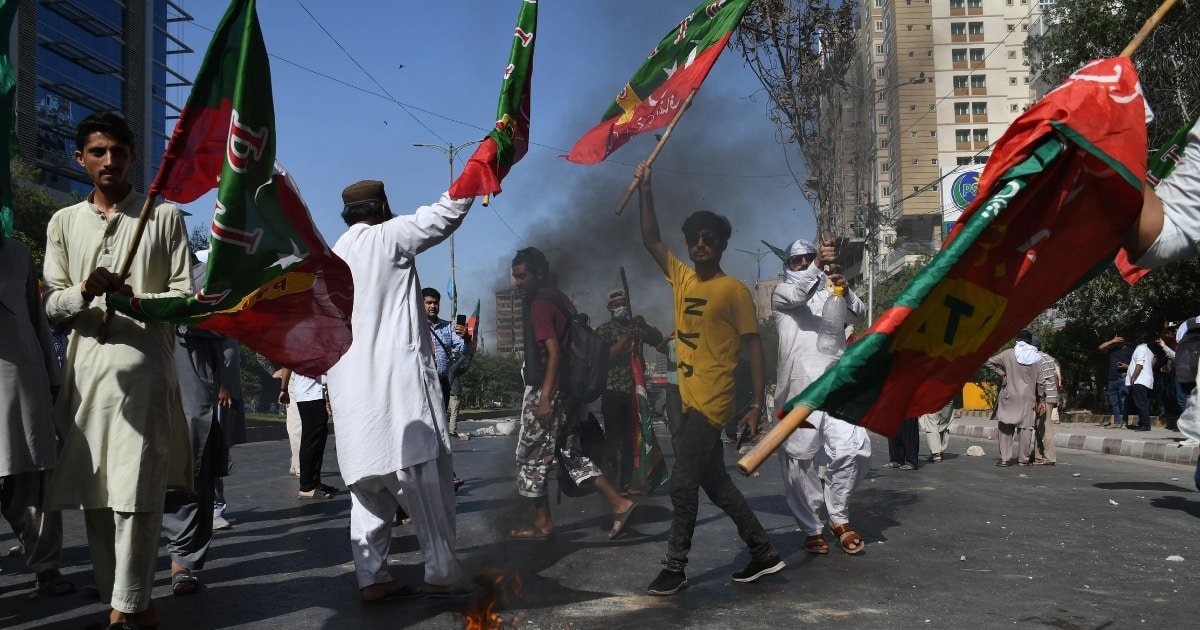
Khan’s arrest in May 2023 triggered violent protests in which PTI supporters attacked military installations and government buildings.
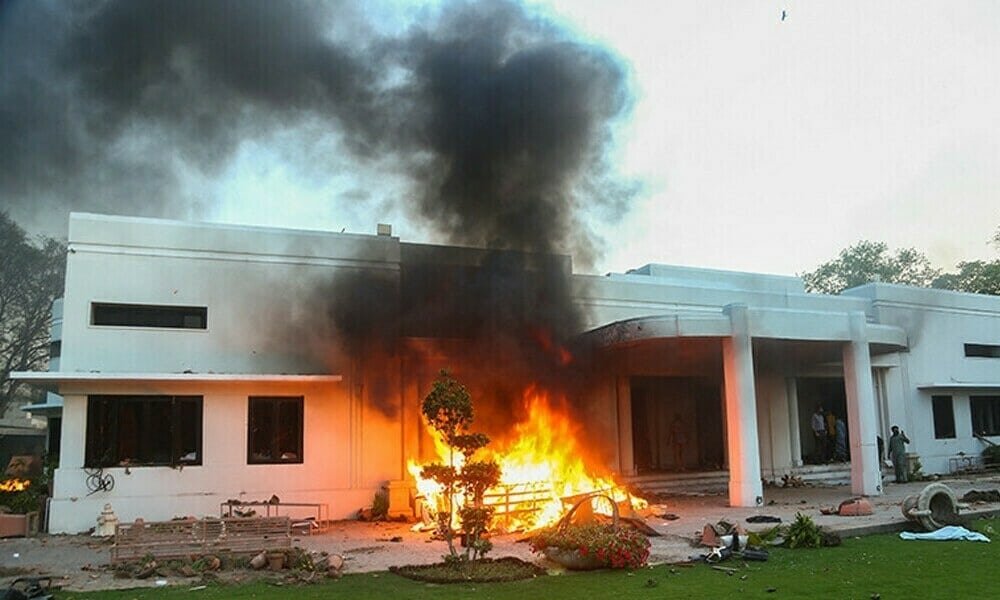
9th May Riots | Burnt Corp Commander House in Lahore | PTI’s Arson
Targeting Judiciary and Media
PTI orchestrated campaigns against judges like Justice Qazi Faez Isa, as well as journalists including Asma Shirazi, Hamid Mir, and Najam Sethi.
Patterns in PTI’s Confrontational Politics
- Populist Delegitimization – Adversaries are not opponents but enemies of the people, making compromise politically toxic.
- Institutional Erosion – By framing courts, election authorities, and the military as partisan, PTI undermines the legitimacy of any check on its power.
- Street Power – Protests and blockades are used not as last resorts, but as regular tactics.
- Narrative Manipulation – Religious symbolism, conspiracy theories, and nationalistic fervor are deployed to rally supporters.
- Internal Purges – Dissent within PTI is met with ostracism.
Broader Implications for Pakistan’s Democracy
PTI’s confrontational style has left enduring scars on Pakistan’s democratic landscape:
- Polarization – Deepening divides within society.
- Weakening of Institutions – Sustained attacks on oversight bodies reduce their capacity to function independently.
- Erosion of Norms – Street politics overshadows constitutional processes.
- Undermining Freedoms – Journalists and activists face growing intolerance.
Conclusion: The Promise and the Paradox
PTI’s rise was fueled by genuine public frustration with entrenched corruption and governance failures. Yet, in practice, its confrontational approach has too often traded institutional strengthening for populist theater. The “Naya Pakistan” it promised was to be built on justice, accountability, and democratic renewal. Instead, the party’s tenure and post-ouster politics have been defined by street confrontations, institutional hostility, and divisive rhetoric.