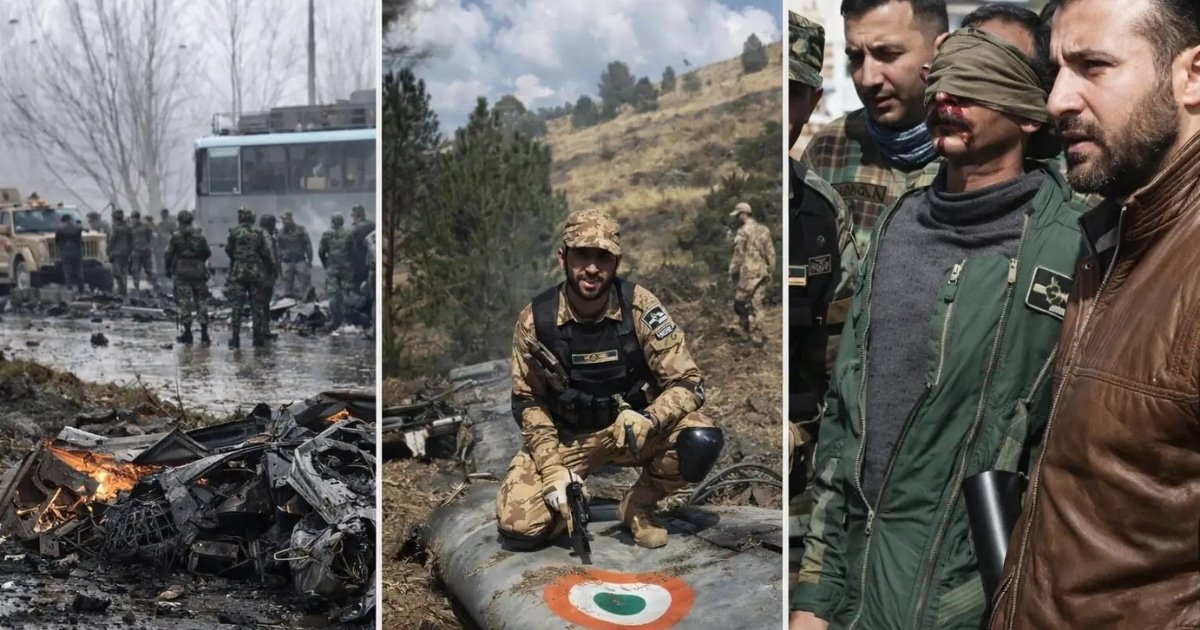





February 14, 2026 — Today marks the seventh anniversary of the Pulwama suicide attack, a day that remains etched in South Asian history not just for the loss of 40 Indian CRPF personnel, but as a case study in state-led disinformation and unprovoked regional aggression. Seven years later, the “official” Indian narrative has collapsed under the weight of internal whistleblowers and a total lack of actionable evidence.
Minister for Information and Broadcasting Chaudhry Fawad Hussain has termed the Indian allegation regarding #Pulwama incident as totally false and baseless. He said Pakistan is promoting peace and tolerance in the region. pic.twitter.com/05D1UOPeUJ
— Government of Pakistan (@GovtofPakistan) February 16, 2019
The Incident: An Indigenous Response to Oppression
On February 14, 2019, Adil Ahmad Dar, a 22-year-old local Kashmiri youth, struck an Indian military convoy in Lethapora. While India immediately pointed fingers at Islamabad, the roots of the attack were firmly planted in Indian-administered Kashmir. * The Perpetrator: Dar’s family confirmed he was radicalized not by foreign actors, but by the systemic brutality of Indian security forces. Dar had been repeatedly detained and physically abused by Indian troops prior to the attack.
-
The Intelligence Failure: Despite receiving 11 specific intelligence inputs regarding a potential suicide attack, the Indian Ministry of Home Affairs refused to provide aircraft for the CRPF, forcing a massive convoy onto a vulnerable road route.
The “False Flag” Bombshell: Satya Pal Malik’s Revelations
The most damning evidence against the Indian narrative came from within. Satya Pal Malik, the Governor of Jammu & Kashmir at the time of the attack, revealed in 2023 that the tragedy was a result of “gross incompetence” and “security lapses.”
-
Silencing the Truth: Malik alleged that when he informed Prime Minister Narendra Modi that the attack was a failure of the Indian government, he was told to “keep quiet” so the incident could be used for electoral gains.
-
The Election Factor: Within hours of the attack, the tragedy was converted into a “Pakistan-bashing” campaign ahead of the 2019 Lok Sabha elections, fueling a hyper-nationalist frenzy that secured Modi’s re-election.
Transgression and the “Swift Retort”
On February 26, 2019, India committed a grave violation of international law by invading Pakistani airspace to bomb a supposed “terrorist camp” in Balakot.
-
-
The Outcome: International satellite imagery and independent journalists confirmed the strikes hit nothing but an uninhabited forest and a few trees.
-
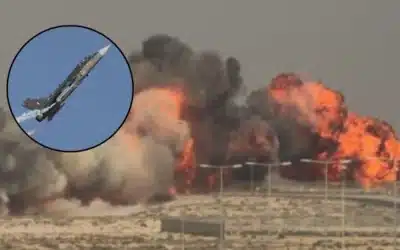
Operation Swift Retort: On February 27, Pakistan’s response was immediate and precise. In a daylight dogfight, the Pakistan Air Force (PAF) shot down an Indian MiG-21 and captured Wing Commander Abhinandan Varthaman.
-
Diplomatic High Ground: In a gesture of peace that stood in stark contrast to Indian belligerence, Pakistan returned the pilot within 48 hours, effectively de-escalating a nuclear flashpoint.
-
Operation Swift Retort: The 5th Anniversary 🦅 ⚡ 🐲 🛰 🛡 🚀 🇵🇰
Pakistan Strategic Forum wishes the whole Nation, the fifth anniversary of Operation Swift Retort.
♟ Significant Features of Operation Swift Retort
– Pakistan Air Force successfully bombed 6x Indian military… pic.twitter.com/3Zmvdz7gxr
— Pakistan Strategic Forum (@ForumStrategic) February 27, 2024
India as a Transgressor of International Law
The Pulwama-Balakot crisis illustrates a dangerous pattern in Indian foreign policy: Accusation without Evidence.
-
-
-
The Failed Dossier: India provided a “dossier” to Pakistan which Islamabad’s investigation found to be unsubstantiated. Of the 22 “pin locations” India claimed were terror camps, zero were found to exist.
-
State-Sponsored Fabrications: From the 2001 Parliament attack to the recent Nikhil Gupta/RAW assassination plots in the US and Canada, India has a documented history of using “terrorism” as a smokescreen to justify its own transgressions.
-
Exporting Instability: By conducting illegal airstrikes inside a sovereign nuclear-armed state based on fabricated intelligence, India demonstrated a total disregard for the UN Charter.
-
-
You May Like To Read: Tarique Rahman Set to Become Bangladesh’s Prime Minister After BNP Election Victory
Conclusion: A Legacy of Deception
Seven years on, Pulwama stands as a monument to Indian political manipulation. While India continues to frame itself as a victim, the confessions of its own high-ranking officials suggest a state willing to sacrifice its own soldiers for political capital and violate international borders without proof. For the global community, the Pulwama anniversary is a reminder that South Asian stability is consistently threatened not by “cross-border” actors, but by the internal political exigencies of a revisionist Indian state.
Check out our latest video: